World
Canadian pipeline firm to pay $26.9 million over major Kansas oil spill

This Video Is Trending Right Now
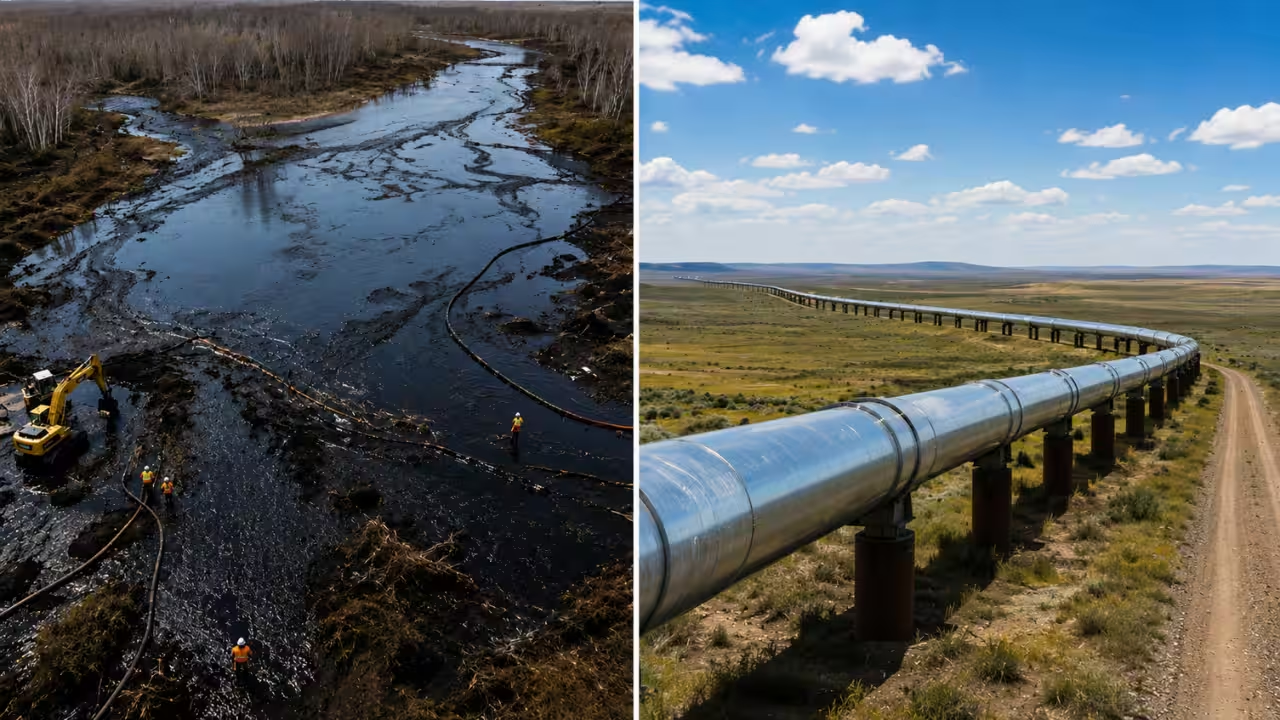
Just over three years since the biggest land-based pipeline spill in the United States in almost a decade, the company that manages the Keystone Pipeline System has reached an agreement with the U.S. government in a proposed settlement which calls for it to pay a $26.9 million civil penalty. This settlement comes after a pipeline rupture in December 2022 in Washington County, Kansas, which spilt approximately 13,000 barrels of heavy crude oil into the local creek. Beyond the payment of the civil penalty, the company has also pledged to make investments in safety measures, as well as restoration in Kansas.
Why is South Bow paying a $26.9 million penalty
As reported by Associated Press (AP), the proposed settlement resolves allegations by the US Environmental Protection Agency (EPA) and the State of Kansas that South Bow, the Canadian company now operating the Keystone Pipeline system, violated federal and state clean water laws.Under the agreement, South Bow will pay a $26.9 million civil penalty, spend approximately $40 million on measures designed to prevent similar accidents and contribute more than $3 million to Kansas for environmental restoration projects. The company stated that it had already completed environmental remediation by February 2024 and has since conducted more than 12,000 miles (19,000 kilometres) of pipeline inspections along with hundreds of excavations to assess and repair sections of the pipeline.
What happened in the 2022 Keystone Pipeline oil spill?
On December 7, 2022, the Keystone Pipeline ruptured near Mill Creek in Washington County, Kansas, releasing an estimated 12,937 barrels (approximately 543,000 gallons) of crude oil into the surrounding environment. According to the US Environmental Protection Agency (EPA), the spill affected about 3 miles (6 kilometres) of Mill Creek and its floodplain before emergency response teams contained the release. The incident remains the largest spill in the Keystone Pipeline’s history and one of the most significant inland crude oil spills in recent US history.
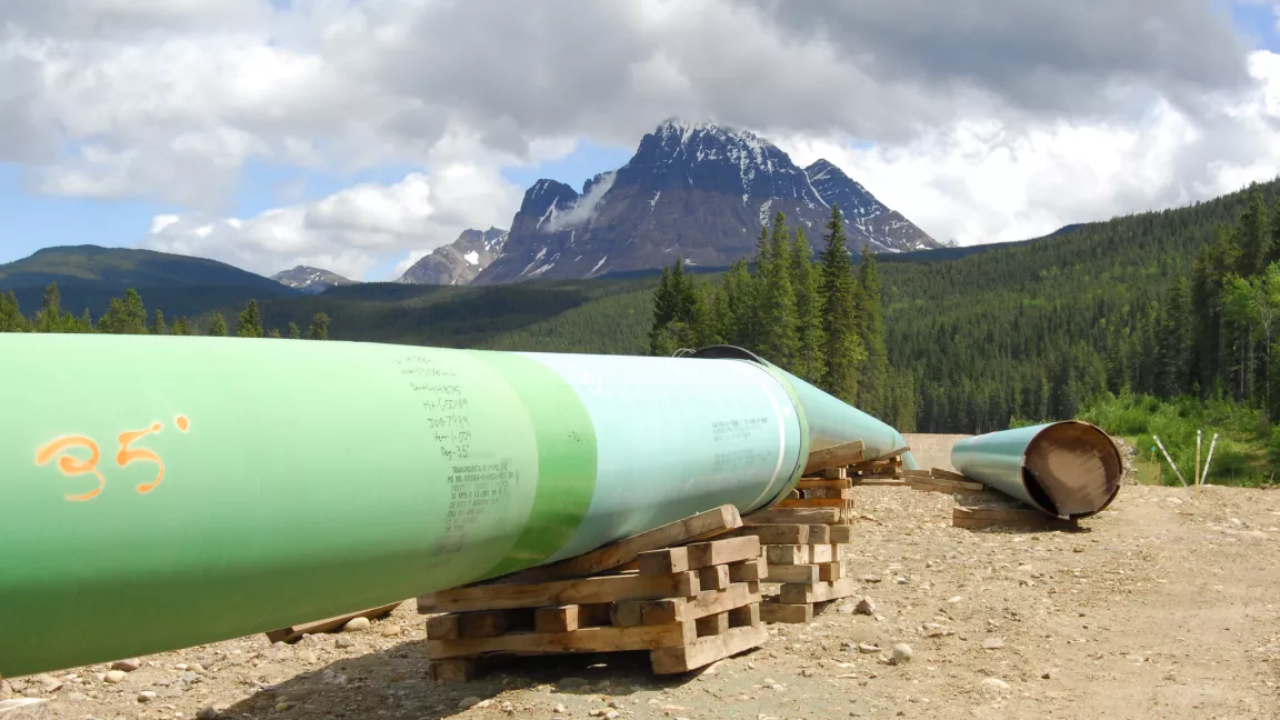
Image: NRDC
As detailed by the EPA, a large-scale response involving federal, state, local and tribal agencies, alongside the pipeline operator, was launched immediately after the rupture. More than 2,100 personnel participated in the cleanup effort, which included recovering oil from the creek, removing contaminated soil and vegetation, restoring affected habitats and continuously monitoring water quality. While there were no reported injuries or impacts to public drinking water supplies, the spill caused considerable environmental damage to aquatic ecosystems and wildlife. Cleanup operations continued for months, with long-term environmental monitoring and restoration carried out under EPA oversight.
What caused the Keystone Pipeline rupture?
The experts have found out that this pipeline failure was caused not by some external force applied to it but rather by some internal issues connected with construction. According to the research conducted by the United States Pipeline and Hazardous Materials Safety Administration (PHMSA), the cause of the failure was external loading downstream of the girth weld which caused excessive bending stress which existed throughout its operation period due to the installation in 2010. While installing the curved section of the pipeline, the ground under it was not sufficiently compacted, which led to uneven sinking and constant mechanical strain of the pipe.According to the court papers published by Associated Press (AP), even though the excavation happened in 2013, when the problems became known, no repairs were ever done to this particular damaged section of the pipeline. After several years of applying stress to this vulnerable pipe, a fatigue crack occurred in it, resulting in the burst on December 7, 2022.The proposed settlement aims to ensure that similar incidents are less likely to occur in the future. Along with the $26.9 million civil penalty, South Bow has agreed to invest approximately $40 million in additional pipeline safety measures, including enhanced integrity management, inspections and maintenance programmes. The company has also said it has completed more than 12,000 miles (19,000 kilometres) of inline inspections and carried out hundreds of excavations to assess pipeline conditions following the Kansas spill.The incident has also intensified debate over the safety of ageing oil pipeline infrastructure across North America. Environmental groups argue that the spill underscores the need for stricter oversight, more frequent inspections and stronger accountability for pipeline operators, particularly as major pipelines continue to transport millions of barrels of crude oil across environmentally sensitive areas. For regulators, the settlement is intended not only to address the environmental harm caused by the Kansas spill but also to reinforce compliance with federal pipeline safety and environmental protection standards, reducing the likelihood of similar failures in the future.


Turaki-Led PDP Hints at Reason Behind Court Ruling in Favour of Wike’s Camp

How Nigeria’s Anthony Ikenwe, Kevin Nwamma pulled off multimillion-pound crypto heist in UK

Tears Flow as Home Alone 2 Actress Brenda Fricker Dies at 81

Paul University Awka suspends Anglican Priest over alleged s3x scandal

Benue community holds mass burial for victims of deadly attack

Nigerian scholar Elvis Otobo joins UK’s ARA board

FIFA to award first-ever World Cup âWinnerâs Ringsâ at Sundayâs Final as Donald Trump confirms attendance

 Society3 days ago
35-Year-Old Man Breaks Down In Tears Like A Baby At Roadside After Wife Reportedly Goes Missing At Kasoa Market
- News2 days ago
Retiree’s Pension Jumps From N18,000 To N206,000 After Government Reform
- Investigation2 days ago
Suspected ISWAP logistics supplier arrested with food items bound for terrorists in Borno
- Investigation2 days ago
R Kelly officially asks President Trump to end his 30-year prison sentence for s 3x crimes
- National2 days ago
JUST IN: Senate to give N10million each to families of security operatives, teachers killed in Oriire rescue
- National2 days ago
2026 Ballon d’Or: Top 4 players to win award ahead of World Cup final
- Investigation2 days ago
âThereâs nothing more absurd than the âEmi Lokanâ sloganâ â Falz knocks slogan of current administration
- Investigation2 days ago
This DNA is a mustâ â Mohbadâs father says paternity test is key to uncovering singerâs death