News
Christian bodies reject proposed ban on bus preaching

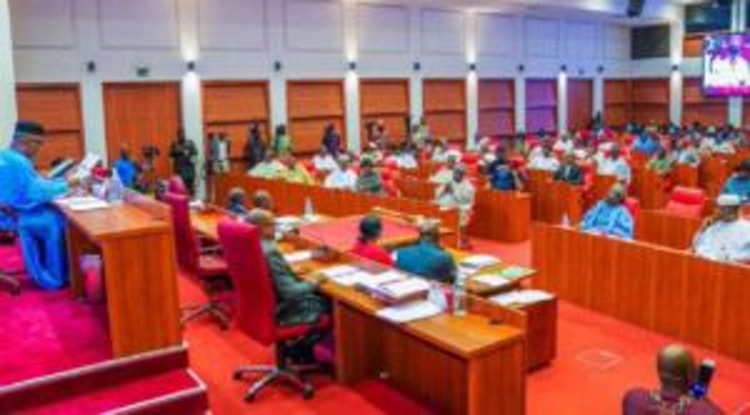
Christian organisations have voiced strong opposition to a proposed amendment to the Federal Road Safety Corps (FRSC) Act that seeks to criminalise preaching in commercial vehicles.
The groups, including the Christian Council of Nigeria (CCN) and the Organisation of African Instituted Churches (OAIC), warned that the legislation could infringe on constitutionally guaranteed rights and further worsen the economic challenges faced by vulnerable Nigerians.
The Senate on Thursday passed the Federal Road Safety Corps (Amendment) Bill, 2026, which proposes a fine of N50,000 for individuals convicted of hawking, trading, or preaching in commercial vehicles. The bill, aimed at strengthening road safety enforcement and reducing driver distractions, is awaiting presidential assent.
If signed into law, the legislation will also impose penalties—including a N50,000 fine, six months’ imprisonment, or both—on motorists who refuse to cooperate with FRSC officials during roadside breath tests conducted on reasonable suspicion.
Reacting to the development, the Christian Council of Nigeria expressed “deep concern” over the inclusion of preaching among the prohibited activities. In a statement signed by its General Secretary, Rev. Evans Onyemara, the council acknowledged the importance of road safety measures but cautioned against policies that could undermine fundamental freedoms.
“While we support all genuine efforts to improve road safety and reduce accidents, such measures should not come at the expense of constitutionally guaranteed rights,” the statement read.
The council argued that equating religious evangelism with commercial activities such as hawking raises serious constitutional and human rights concerns, particularly regarding freedom of religion and expression.
It further noted that commercial buses have long served as informal spaces where individuals share brief messages of faith, encouragement, and hope with willing passengers, stressing that any attempt to restrict such practices should undergo careful constitutional review.
The CCN also criticised the proposed fine on hawkers, describing it as a punitive approach that fails to address the root causes of street trading, including poverty, unemployment, and economic hardship.
“Many Nigerians engage in hawking as a means of survival. Penalising them without addressing underlying economic challenges risks criminalising poverty,” the council stated.
The body urged the government to consider more humane and practical alternatives, such as designated trading areas, targeted regulations, and sustainable economic empowerment initiatives.
Similarly, the Organisation of African Instituted Churches called on the President to withhold assent to the bill in its current form. In a statement signed by its President, Israel Akinadewo, the association described the proposed law as insensitive and inappropriate.
“Preaching is a constitutionally protected exercise of the rights to freedom of religion and expression. It should not be treated as a criminal or commercial activity,” Akinadewo said.
The group maintained that preaching in public spaces, including commercial vehicles, has long been a legitimate means of promoting messages of morality, hope, and peaceful coexistence.
It called for broader stakeholder consultations involving religious bodies, civil society organisations, and policymakers to ensure that road safety objectives are achieved without undermining fundamental freedoms.
While reaffirming its commitment to the rule of law and responsible religious conduct, the association urged preachers to carry out their activities in ways that respect public order and safety, even as it called on the government to uphold the constitutional principles that underpin Nigeria’s democracy.







Injured bald eagle rescued near Big Bear is believed to be Jackie

‘It gladdens my heart’ — Peter Obi hails troops for foiling kidnap of students

65 Battalion Cracks Lagos Oil Theft Ring, Arrests Six as Army Moves to Choke Illegal Bunkering Network

At 65, Obi reflects on service, donates ₦10m to rural hospital

Gunmen kidnap pastor’s wife, three children in Borno

2026 Ballon d’Or: Top 4 players to win award after World Cup final revealed

Kano NDC senator meets APC chair, Barau amid defection rumours

 Society2 days ago
Heartbroken Girlfriend Storms Studio To Remove Portrait Tattoo Of Cheating Boyfriend From Her Back
- Breaking2 days ago
Ondo police arrest father for burning his 10-year-old daughter’s private part with hot iron over bedwetting
- Investigation3 days ago
Woman forced to dance as punishment after allegedly being caught sneaking into a compound in Awka
- Investigation3 days ago
Nigerian Pension Funds Anchor Oversubscribed â¦20.69bn Series II Issuance of the FCMB-TLG Private Debt Fund
- Investigation3 days ago
Supreme Court orders final forfeiture of Emefieleâs properties
- Investigation2 days ago
âI canât date a man who earns less than me. Iâve supported men financially before, and Iâm done with thatâ â Mercy Eke
- National3 days ago
“Two Men Arraigned Over Alleged ₦63.7m Shipping Container Fraud” — Lagos Court Grants ₦10m Bail Each
- Society3 days ago
“Marry Me and Get ₦10 Million” — 41-Year-Old Nigerian Woman Publicly Searches for Husband