National
Court adjourns for judgment in suit challenging Duke’s PRP presidential candidacy

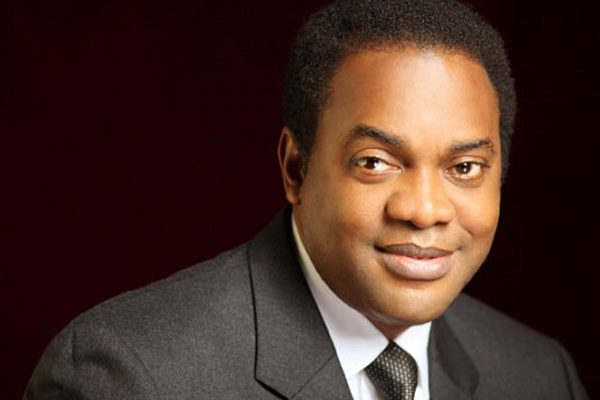
The Federal High Court has adjourned until November 2 for judgment in a suit challenging the emergence of former Governor of Cross River, Donald Duke as presidential candidate of the Peoples Redemption Party (PRP) for the 2027 general elections.
Justice Mohammed Umar fixed the date on Tuesday in Abuja after counsel for the plaintiff, Abdullahi Muhammad; Duke’s lawyer, Noah Abdul, and Azubuike Ogochukwu, who appeared for INEC, adopted their processes in the case.
An aspirant, Dr Yakubu Kingsley, filed the suit to challenge the emergence of Duke as presidential candidate of PRP.
Kingsley, through his lawyer, sued the PRP, Duke and INEC as 1st to 3rd defendants respectively.
The plaintiff, in the suit marked: FHC/ABJ/CS/1234/2026, sought three questions for determination in the originating summons filed on June 10.
The plaintiff wants the court to determine whether Duke was duly returned as the presidential candidate of PRP in the May 25 primary election, in which its result was declared on May 26, having not been a registered member of the party as at May 4, when the PRP’s membership register was submitted to INEC.
He also prayed the court to declare over voting in states like Bauchi, Gombe States and Kwara.
He, therefore, sought a declaration that the ex-governor, not being a registered member of PRP, cannot participate in the party’s primary election held on May 25 where he was declared the winner on May 26.
He sought a declaration that Duke ought not to have been cleared for the presidential primary election contest, having not complied with the guidelines of the party to physically present for the screening at its national secretariat.
Kingsley prayed the court for an order setting aside the results of the presidential election conducted in Bauchi, Gombe and Kwara respectively on the ground of over voting.
He sought for an order declaring him as the presidential candidate of PRP for 2027 general elections, having complied with all the party’s guidelines and been a registered member of the party.
He also sought an order directing the commission not to recognise Duke as PRP’s presidential flagbearer or to delete his name from its database as the presidential candidate of the party.
The plaintiff further sought an order directing the electoral umpire to recognise him as PRP’s presidential candidate.
In the affidavit in support of the suit deposed to by Kingsley himself, the aggrieved aspirant said he is a registered member of PRP with membership card number: 2A8D8B20B2.
The plaintiff, who described himself as a “politician,” said he is of Auchi III Ward, Etsako West Local Government Area of Edo State, but presently in Abuja, FCT.
He averred on oath that Duke was not a dully registered member of PRP as at May 4 when the membership register of the party was submitted to INEC.
He said he validly purchased the party’s Expression of Interest Form and Nomination Form for the office of president of the Federal Republic of Nigeria and paid a total sum of N20 million to the party.
Duke and PRP, in a preliminary objection jointly filed June 23 by their lawyer, Noah Abdul, challenged the jurisdiction of the court to hear the case.
Giving seven grounds why their application should be granted, Abdul argued that Kingsley’s suit “as constituted is purportedly a pre-election matter within the meaning of Section 285(14) (a) of the Constitution of the Federal Republic of Nigeria, 1999 (as amended).”
The lawyer submitted that by Section 285(9) of the constitution, every pre-election matter ought to have been filed not later than 14 days from the date of the occurrence of the event, decision or action complained of.
According to him, the cause of action in this suit arose on 26 May 2026, being the day the result of the presidential primary election of the 1st defendant was declared.
He, however, said that the instant suit was filed on June 11, 17 days after the accrual of the cause of action.
“The instant suit was filed outside the mandatory 14-days period stipulated by Section 285(9) of the constitution, and therefore statute-barred.
“The 14-days period under Section 285(9) is jurisdictional and cannot be extended or enlarged by the court or waived by parties,” he said.
Abdul argued that issues relating to membership of a political party, as is the instant case, are matters strictly within the domestic affairs of a political party.


Sowore Withdraws DSS Subpoena as AGF Leads Tinubu Defamation Prosecution

Helen Toner: the Hugging Face hack was just a matter of time and exposes a huge blind spot in AI policy

Cassie Ventura Scores Major Legal Win In Ex-Escort’s ‘Freak Off’ Lawsuit
Abiodun orders full probe into Ajuwon building collapse, warns against violation of regulations

250 Foreign-Trained Doctors and Dentists Cleared to Practice in Nigeria

Iran, Oman, Saudi Arabia strengthen cooperation on Strait of Hormuz

Nigerian Student Jailed 7 Years in UK Over Robbery and Blackmail Case

 Breaking2 days ago
âIf my son ever gets a girl pregnant, he’s leaving my house immediatelyâ â Cardi B shares parenting stance
- Breaking2 days ago
âI used to think love was about finding the right person, but at 30, I don’t believe that anymoreâ â BBN star, Sheggz.
- Investigation2 days ago
âThe Olodo uprising term was not coined by meâ â Nigerian musician Ycee
- News3 days ago
African nations adopt plan for cheaper internet, smartphones
- Investigation3 days ago
Ebola d3aths in DR Congo surge past 1,300 as v!rus âspreading like a wildfireâ
- Society3 days ago
Russia expects another 30,000 North Korean soldiers – Zelensky
- Society2 days ago
Ballon d’Or 2026: ‘They’re ahead of Kane’ – Petit names three favourites to win award
- Breaking3 days ago
NDA alerts Plateau, Kaduna residents on camp highland exercise