News
DR Congo opposition mobilises protests against president’s third-term bid

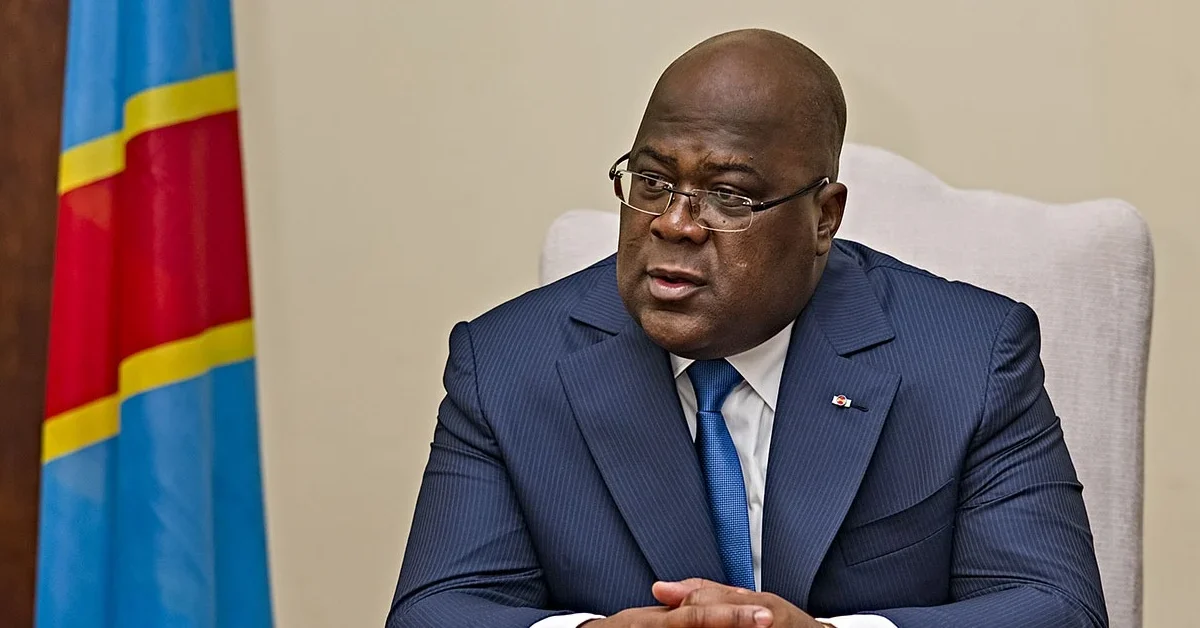
The opposition in the Democratic Republic of Congo has called for demonstrations in the capital and other cities on Wednesday to demand the resignation of President Felix Tshisekedi, accusing him of attempting to cling to power by changing the constitution.
Political tensions have been rising, more than two years before the vast Central African country, grappling with decades-long conflict and an Ebola outbreak in its east, heads to the polls.
Tshisekedi, 63, came to power in 2019, and his second — and, under the current constitution, final — five-year term is due to end in late 2028.
However, at a rare press conference in May, Tshisekedi appeared to confirm what the opposition had alleged for months.
“If the people want me to have a third term, I will accept,” Tshisekedi, popularly known as “Fatshi”, declared.
The dispute now centres on a bill outlining the framework for a referendum on constitutional amendments. The bill was passed by Parliament last month, where the presidential bloc holds an overwhelming majority.
In the DRC, “parliamentary oversight is rarely exercised”, the Ebuteli research centre said in a recent report.
On Tuesday, Tshisekedi announced in an Independence Day address that he had “referred this law to the Constitutional Court for review of its constitutionality”.
A review by the Constitutional Court — whose independence has frequently been questioned — is the final step before the president decides whether to sign the bill into law.
“Over the years, the perceived politicisation of certain judicial bodies, particularly the Constitutional Court, has fuelled debate over how effective this independence truly is,” the Ebuteli Centre said.
The bill has galvanised the opposition, which emerged weakened and fragmented after the 2023 presidential election, which Tshisekedi won with 73 per cent of the vote.
In May, the C64 coalition was formed. Its name refers to Article 64 of the constitution, which allows citizens to oppose any seizure of power deemed unconstitutional.
A key figure in the coalition is former presidential candidate Moïse Katumbi, a wealthy businessman and former governor of Katanga Province, who now lives in exile.
Other prominent members include former minister and lawmaker Delly Sesanga and Martin Fayulu, who also contested the 2023 election and continues to claim victory in the disputed 2018 poll.
“History will be unforgiving towards those who chose ambitions of power over the defence of the nation,” Sesanga said recently.
“We will not give in; we are ready to do whatever it takes for the good of the nation,” Fayulu warned.
Sesanga and Fayulu were injured during a June 12 rally in Kinshasa against what the opposition described as a “constitutional coup d’état”, when clashes erupted between pro-government supporters, opposition demonstrators and the police.
The United Nations said at least one protester was killed.
Congolese political analyst Trésor Kibangula said opposition to constitutional amendments could rally public support and “allow the opposition to regain levers for political remobilisation”.
Pressure from street protests and the international community forced former President Joseph Kabila to abandon an attempt in 2015 to extend his rule beyond the constitutional two-term limit by amending the electoral law.
However, public engagement in the country of about 100 million people remains generally low. Voter turnout in the 2023 election was just 43 per cent.
Observers say the low turnout reflects widespread distrust of the political elite, as well as the daily struggle of many citizens to meet basic needs in a country rich in mineral resources but where about two-thirds of the population lives below the poverty line.
In a recent statement, the country’s influential Catholic bishops urged Tshisekedi to “honour the oath he took” to uphold the constitution.
In Africa’s most populous Roman Catholic nation, the Church has traditionally been a vocal critic of those in power. It wields significant influence through its extensive presence across the country and its longstanding role in education, particularly in areas where state institutions are weak.
The bishops also called on the clergy to “awaken” the conscience of the faithful to “resist manipulation” and urged Congolese citizens to “oppose by all legal and peaceful means any attempt to amend” the constitution.
Since colonial times, the Church has held “moral ascendancy” in the DRC and has often served as “a kind of recourse for major questions of national interest”, political scientist Christian Moleka told AFP.
Meanwhile, the government has banned large public gatherings in four provinces, including Kinshasa, because of an Ebola outbreak in the country’s northeast.
It remains unclear whether Wednesday’s opposition march will be covered by the ban.




Xenophobic attacks: 4th batch of Nigerians fleeing South Africa arrives Lagos

Businesswoman Sophia Momodu responds to allegation of selling her body

Delta Rep loses N150m to FG as court orders final forfeiture

David v Goliath: Cape Verde chases World Cup history against Messi’s Argentina

Government Promises Electricity Boost as Mini Grid Expansion Targets Underserved Communities

Another batch of Nigerians evacuated from South Africa arrive Lagos
Crocodile wedding: A Mexican mayor marries a caiman every year, but the real story is about people and nature

 Society24 hours ago
Iyabo Obasanjo clarifies father’s real age
- World2 days ago
Boy, 3, pulled alive from rubble six days after Venezuela earthquake disaster
- Society2 days ago
Outrage As Video Of Primary Schoolgirls Smoking And Drinking Surfaces Online
- Breaking2 days ago
Nigerian nun in tears as she’s released after being arrested by ICE while walking to Mass in the US (video)
- Investigation3 days ago
âBabcock university, I heard you guys are looking for me but I wonât show up unless you pay N100,000 ticket for me to show upâ â Content creator Carter Efe replies Babcock universityâs lawsuit
- Breaking2 days ago
"I would have contacted HIV or Hepatitis B if I had stayed" – Nigerian woman says as she reflects on her failed marriage
- Investigation3 days ago
âIâm 22 and no man has ever asked me to be his girlfriend, let alone his wifeâ â X user opens up about her dating experience
- Investigation3 days ago
Groomsman âshoots twoâ at wedding in fight over eating meatballs with his hands