News
Foundation urges Tinubu to end seven-month delay on audit bill

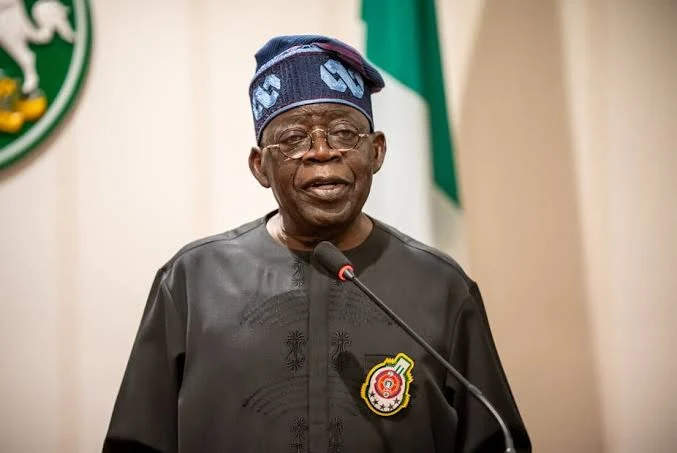
The AdvoKC Foundation, a youth-led civic technology organisation, has urged President Bola Tinubu to assent to the Federal Audit Service Bill without further delay, saying the legislation has remained unsigned for more than seven months after it was passed by both chambers of the National Assembly.
The foundation’s Project Director, Habib Sheidu, in a statement on Sunday, said the proposed law would repeal the colonial-era Audit Ordinance of 1956 and establish an autonomous Federal Audit Service and Federal Audit Board.
He added that it would also strengthen the powers of the Auditor-General for the Federation and introduce timelines and sanctions to improve accountability in public finance management.
Sheidu stated that the bill would address longstanding weaknesses in Nigeria’s audit system by giving the Auditor-General stronger enforcement powers.
“Right now, the Auditor-General can tell Nigerians where public money has gone missing, but has no dependable way of making anyone answer for it.
“That is the difference between a watchman and an enforcer. This Bill finally gives the office teeth. Every month it sits unsigned is a month in which that gap stays open,” Sheidu noted.
The group linked its call to the International Monetary Fund’s 2026 Article IV Consultation report on Nigeria, which found that capital expenditure equivalent to about two per cent of the country’s Gross Domestic Product, estimated at N8.8tn, was executed outside the formal budget in 2025 and did not appear in official budget documents or implementation reports.
According to the foundation, the IMF recommended reforms to strengthen Nigeria’s budget process, fiscal reporting, public financial management and accountability, including the regular publication of audited government accounts.
Sheidu argued that the recommendations aligned with the objectives of the proposed audit legislation.
“The IMF report does not mention this Bill by name, but it does not need to. It describes, almost line for line, the very reform this Bill would deliver: a budget process that runs on schedule, accounts that are reconciled and published as a matter of routine, and an audit institution with the independence to enforce that discipline.
“You cannot separate the mess of overlapping and re-enacted budgets from the absence of the audit law that would have caught the slippage before it required a repeal-and-re-enactment exercise to correct after the fact,” he added.
The organisation noted that the legislation has been before successive National Assemblies for nearly two decades, describing the current version as the fifth legislative attempt to establish a modern federal audit framework.
According to the statement, the bill was first introduced during the 6th National Assembly between 2007 and 2011 but failed to pass.
Similar attempts during the 7th and 9th National Assemblies also stalled, while the version passed by the 8th National Assembly in January 2019 lapsed without presidential assent.
Sheidu added that the current bill was introduced afresh in the 10th National Assembly in October 2023 and passed by both chambers by December 2025.
The foundation also cited Section 58(4) of the 1999 Constitution (as amended), which provides that the President should assent to a bill or communicate reasons for withholding assent within 30 days of its presentation.
Sheidu said the prolonged delay risked sending the wrong signal about the administration’s commitment to governance reforms.
“Every additional week of silence gets read as ambivalence about reforms this administration says it champions.
“Signing this Bill costs nothing and buys a great deal: it tells the IMF, the World Bank and international investors that Nigeria’s fiscal reforms rest on institutions, not just announcements. And it tells Nigerians that a report from the Auditor-General will finally mean something,” it added.
The organisation urged the President to sign the bill immediately and, upon assent, constitute the Federal Audit Board within 90 days, publish a timeline for appointing the Director-General of the Federal Audit Service and release a plain-language summary of the new law.
He concluded that it would monitor the implementation of the proposed reforms through its platform.
The call by AdvoKC joins the list of voices clamouring for the speedy assent to the bill.
The PidomNigeria reports that former Vice President Atiku Abubakar gave President Tinubu a seven-day ultimatum to comply with what he described as his constitutional obligation by either signing the Federal Audit Service Bill into law or formally notifying the National Assembly of his reasons for withholding assent; failing that, Atiku said, the president should resign.
Atiku had also accused Tinubu of violating the 1999 Constitution (as amended) by failing to act on the bill within the period prescribed by law, warning that continued inaction undermines democratic governance and public accountability.







Maine Democrats Are Replacing an Oysterman With a Lumberjack. It Might Just Work.

NNL: Bayelsa United start preparations for new season

Veteran with ‘anti-ICE’ views targeted federal building in New York, FBI says

NPFL: Finidi targets title succes with Rivers United

Mamdani Eyes a McKinsey Partner to Lead Economic Development Team

Police nab two suspects over ₦39m bank account theft in Borno

GOP lawmaker creeped out female staffers by gifting them pink and blue guns: report

 Society3 days ago
Heartbroken Girlfriend Storms Studio To Remove Portrait Tattoo Of Cheating Boyfriend From Her Back
- Breaking3 days ago
Ondo police arrest father for burning his 10-year-old daughter’s private part with hot iron over bedwetting
- Society19 hours ago
2026 Ballon d’Or: Top 4 players to win award after World Cup final revealed
- Investigation2 days ago
âI canât date a man who earns less than me. Iâve supported men financially before, and Iâm done with thatâ â Mercy Eke
- Society15 hours ago
Pepper Seller Caught On Camera Applying Pepper On Newborn Baby As Rituals To Usher Her Into The Business
- World1 day ago
Spain earns $51 million for World Cup win and runner-up Argentina gets $34 million as total payout for all 48 teams hits record-high $871 million
- Investigation2 days ago
US President Trump questions Thomas Tuchelâs tactics in England World Cup loss to Argentina
- Society2 days ago
Man Finds Beautiful Lady Stripped Totally ‘Nɛkɛd’ In Deep Forest, Says She Doesn’t Know How She Got There