World
Horror discovery as space ship opened after astronauts landed perfectly on earth

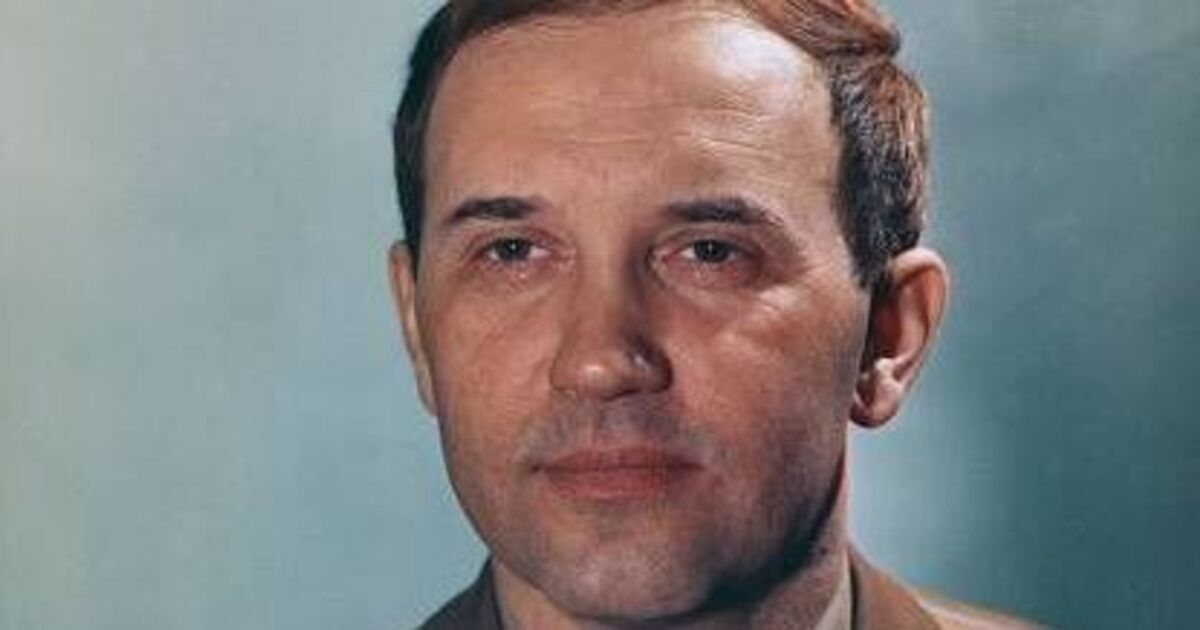
Ukranian-born Soviet cosmonaut Georgi Dobrovolsky died on June 30 1971 aboard the Soyuz 11 spacecraft (Image: Rolls Press/Popperfoto via Getty Images)
A chilling discovery was made when a spacecraft carrying dead astronauts executed a flawless landing on Earth – after they had already died more than 100 miles above in the sky.
On 30 June 1971, commander Georgi Dobrovolsky, flight engineer Vladislav Volkov and research engineer Viktor Patsayev met a terrible end that nobody could have anticipated for the space heroes.
The cosmonauts were found dead in their seats aboard the Soyuz 11 spacecraft following what seemed to be a textbook landing back on Earth.
Soyuz 11 was the only crewed mission to dock with the world’s first space station, Salyut 1, launching on 6 June 1971. In a cruel twist of fate, the crew on board were actually the reserve cosmonauts for this mission – called up after a medical X-ray examination four days before launch suggested that original flight engineer Valery Kubasov might have tuberculosis.

Research engineer Viktor Patsayev, commander Georgi Dobrovolsky and flight engineer Vladislav Volkov (Image: AFP via Getty Images)
According to mission protocol, the prime crew was replaced with the back-up crew – yet it subsequently transpired that Kubasov did not have TB at all, reports the Irish Mirror.
The reserve crew had spent 24 days in space, which at the time represented the longest anyone had ever remained beyond Earth’s atmosphere – but it ended in devastating tragedy.
NASA confirmed that shortly before their re-entry into the Earth’s atmosphere, “tragedy struck” and “the cosmonauts died as a result of the sudden depressurisation of their spacecraft”.
Explosive bolts “separated the Soyuz into its three components, with the crew inside the middle bell-shaped descent module”. Remarkably, the spacecraft’s automated flight computer remained completely intact, meaning the vessel was still capable of executing a near-perfect re-entry and landing.

A 2023 Soytuz rocket launch (Image: Russian Space Agency Roscosmos/A)
Its parachutes deployed successfully and it touched down without fault in the fields of Kazakhstan. The full horror of what had occurred, however, only became apparent to the investigative team upon opening the hatch doors.
“On opening the hatch, they found all three men in their couches, motionless, with dark-blue patches on their faces and trails of blood from their noses and ears… Dobrovolski was still warm. The doctors gave artificial respiration”, an Investigative Report Excerpt said.
Tragically, as Dobrovolski’s body remained warm to the touch despite having perished 30 minutes earlier, rescue doctors desperately performed CPR for almost an hour in a frantic bid to resuscitate him.
In a chilling twist of fate, the haunting final words of the doomed men were transmitted from within their spacecraft.
Soviet Air Force representative to the space programme Nikolai Kamanin officially spoke with the crew at 12.16am, signing off by wishing them well for a smooth landing.
Yet space historian Peter Smolders later claimed in 1971 that Dobrovolsky made one final transmission to confirm he was “beginning the descent procedure.”
Contributing to the bewilderment was Soviet cosmonaut Alexei Yeliseyev, who had been communicating with the crew from the Yevpatoria control centre in Crimea and had earlier helped them resolve a previous issue with the hatch door of the Soyuz 11 descent module.
Yeliseyev documented that Volkov had made a two-word request, light-heartedly asking flight controllers to “prepare cognac”, which was considered a customary welcome-home present, before signing off with “see you tomorrow!”.

Those on earth were not made aware of the horror until they opened the hatch (Image: Russian Space Agency Roscosmos/A)
Tragically, the entire crew died inside the spacecraft.
Concerning the crew’s deaths, NASA explained: “The shock from the explosive bolts jarred open a pressure equalisation valve that normally opened only once the spacecraft was descending on its parachute, well inside the atmosphere.
“But in this case, the valve opened to the vacuum of space and the capsule’s air escaped in less than one minute. There’s evidence the cosmonauts tried to respond to the emergency by manually closing the valve, a process that took several minutes.
“They rapidly lost consciousness as the pressure continued to drop and died [within] two minutes. Not wearing pressure suits, they had no hope of surviving.”


2027: Jonathan speaks on alleged receipt of ₦500b to split South South votes

At least 10 killed in large-scale attack on Kyiv day before NATO summit begins

Tremendous progress has been made towards the rescue of abducted Ogbomoso pupils and teachers – Chief of Army Staff

Dr. Hamzat: Politicians challenging Tinubu lack his vision
Dr. Hamzat: Politicians challenging Tinubu lack his vision

Aiyedatiwa urges Nigerians to celebrate loved ones while alive

COAS rallies African army chiefs, seeks unified forces against threats

 National2 days ago
Against Nigerian Law, CBN Deputy Governor Emem Usoro Allows Her Eleven Years Old Twin Daughters To Be Company Boss
 Investigation3 days ago
Inside American businessman Michael Rubinâs annual White Party with A-list celebrities in attendance (photos/video)
- World2 days ago
Girl, 16, repeatedly raped by her older brother who 'saw his late wife in her'
- Investigation3 days ago
Oyo state govt denies VDMâs claim of paying ransom for release of abducted students and teachers
- Investigation2 days ago
"Sometimes a man can genuinely love a woman and still not marry her because his spirit isn’t at peaceâ â X user shares opinion
- Investigation2 days ago
âWhatâs my sin?â â TV host Morayo Afolabi-Brown reacts after caller cÂ¥rses her over questions asked during interview
 Society22 hours ago
Sad Video emerges showing Kenyan Lady working in the Middle East crying in distress
- Investigation3 days ago
âSheâs ignoring my late husbandâs will and trying to take all his propertiesâ â Demola Serikiâs third wife, Sholape, calls out co-wife Wosilat Okoya Seriki