World
Jordan intercepts Iran missiles as US and Saudi Arabia target militias in Iraq

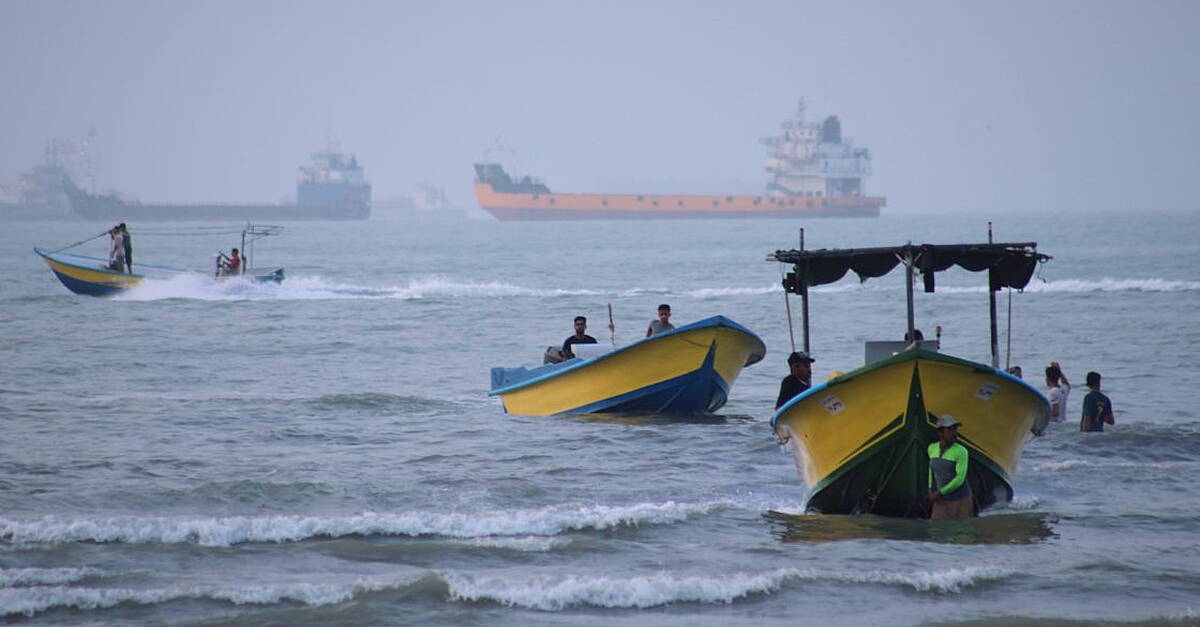
Jordan’s air defences intercepted five missiles launched from Iran on Wednesday, the country’s military said, hours after the US military said it had knocked down an Iranian missile barrage launched against American forces in the Middle East, shattering a brief pause in fighting.
The Jordanian military said the missiles had been “intercepted and destroyed”.
Iran’s state-run IRNA news agency carried a statement from the paramilitary Revolutionary Guard saying its Aerospace Force fired ballistic missiles at the Muwaffaq Salti Air Base and the headquarters of the US military’s Central Command in Jordan.
Hours earlier, the US Central Command said its forces “remain vigilant and at a high state of readiness”, and that they had also worked with Saudi Arabia’s forces to strike sites in Iraq that Tehran-backed militias have used to launch attacks in recent days.
In announcing the strikes in Iraq, the US warned that further attacks on American troops or Saudi Arabia’s energy infrastructure risked additional action.
Iraqi Prime Minister Ali al-Zaidi called an emergency meeting of the country’s National Security Council on Wednesday to discuss the strikes.
The United States and Iran had experienced a period of calm, during which neither announced attacks for about three days following weeks of escalation over the strategic Strait of Hormuz, the Persian Gulf waterway and narrow chokepoint through which 20% of the world’s traded oil normally flows.
The fighting flared at the end of a month packed with multiple pressure points on US President Donald Trump.
In recent weeks, four US troops died during the fighting, while the Pentagon asked an increasingly sceptical Congress for money to cover the conflict’s ballooning costs.
“US and Saudi fighter aircraft struck multiple terrorist logistics and weapons sites across eastern Iraq in a strong response to over 30 IRGC-directed aerial drone attacks in the last 72 hours,” US Central Command said, using an acronym for Iran’s paramilitary Revolutionary Guard.
It said the Revolutionary Guard “and its terrorist proxies must cease these attacks to avoid further US military response”.
The Saudi Defence Ministry acknowledged the strikes in a post on social media, warning that “the Kingdom emphasises that it does not seek escalation but will respond to any aggression it faces”.
https://x.com/CENTCOM/status/2082231500318114110?ref_src=twsrc%5Etfw
The Popular Mobilisation Forces (PMF), a coalition of primarily Shiite, Iran-backed armed groups that is officially under the command of the Iraqi military, said in a statement that US-Saudi attacks on several of its sites had “resulted in the martyrdom of a number of personnel and injuries to others, as well as material damage to several buildings and properties”. It did not specify the number of casualties.
The groups making up the PMF joined in the fight against the so-called Islamic State group after it seized large sections of Iraq in 2014.
In 2016, the Iraqi government designated the PMF as an “independent military formation” within the Iraqi armed forces, but in practice the member militias have continued to operate with significant autonomy. Some of them have launched attacks on US facilities.
Saudi Arabia said on Tuesday that it shot down drones fired by Iran-backed militias in Iraq for a second day, while Iran-backed Houthi rebels in Yemen claimed to have forced a Saudi oil tanker to turn around as part of their announced blockade of the kingdom.
Iraqi leader Mr al-Zaidi ordered security agencies to investigate after the Saudis alleged a similar attack on Monday. The Iraqi military said the country is committed to “preventing Iraqi territory from being used as a route or launching point for any attack targeting brotherly or friendly countries”.
The Iraqi militias have denied any role in the drone attacks. The Islamic Resistance in Iraq, an umbrella group of Iran-backed armed groups, called the Saudi claims “fabrications” and implied that Monday’s attacks were carried out by the Houthis, who had themselves claimed to have attacked Saudi oil facilities.
Iran’s state-run IRNA news agency reported on Wednesday that the Revolutionary Guard’s navy claimed it had struck and stopped three oil tankers in the Strait of Hormuz.
It said the strikes came after the vessels allegedly ignored repeated warnings and continued sailing along what it described as an “unsafe and illegal route”. The report did not identify the tankers or the flags they were sailing under.
On Tuesday, the Houthis claimed to have fired missiles at the Saudi oil tanker NCC Ghazal in the Red Sea, forcing it to turn back. There was no immediate comment from Saudi Arabia on the claim.
Last week, the Houthis announced a blockade of Saudi shipping, putting another key Middle Eastern waterway — through the Bab el-Mandeb strait leading to the Red Sea — at risk.
The United Kingdom Maritime Trade Operations Centre said late Tuesday that a tanker reported hearing explosions while travelling in the southern Red Sea the previous day.
It did not name the tanker but said the crew and vessel were safe. It did not report strikes against tankers in the Strait of Hormuz on Wednesday.
The rebels fired on at least one Saudi tanker in the Red Sea last week.


Trump broke his promise to lower — and eliminate — the national debt. A top investor thinks he’s the ‘worst-spending president in history’

Violent thugs murder residents, snatch phones in Kano – Shehu Sani recounts experience

Argentina Stars Hire Security After World Cup Win Over England

I felt irritated by Peter Obi’s recent interview — Aisha Yesufu + Video

Parents of cerebral palsy children renew call for assistance

Rivers Governor Appoints Six New Permanent Secretaries

NNMDA laments inadequate funding, weak research infrastructure

 Breaking3 days ago
âIf my son ever gets a girl pregnant, he’s leaving my house immediatelyâ â Cardi B shares parenting stance
- Breaking3 days ago
âI used to think love was about finding the right person, but at 30, I don’t believe that anymoreâ â BBN star, Sheggz.
- Investigation2 days ago
âThe Olodo uprising term was not coined by meâ â Nigerian musician Ycee
- Investigation3 days ago
Family, friends unveil plans for Balamiâs 42nd birthday celebration, to induct 42 fellows
- Breaking3 days ago
âI am in the era of overcoming my fear" – Nigerian acid attack survivor writes as she reveals her amazing transformation after getting a beauty makeover
- Society3 days ago
Investigate farmland buyers to stop drug labs in your communities- Marwa urges traditional rulers
- Investigation3 days ago
Suspected cable thief nabbed in Bayelsa community
- Investigation3 days ago
Angelina Jolie and Robert De Niro among huge Hollywood stars to âhave private details leaked onlineâ