World
Major airport boss urges EU switch off as 'design flaw' blamed for border chaos

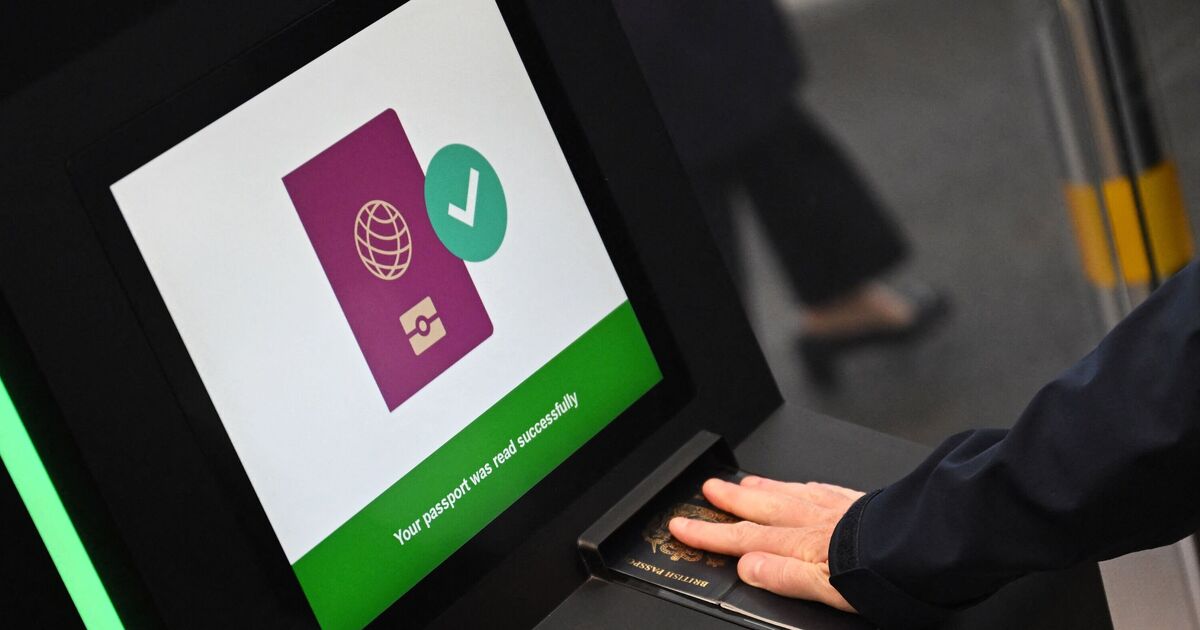
The airport boss explained processing times at the border have ‘doubled’ (Image: Getty)
A major airport boss has urged the European Union to switch off its new border check system, as a “design flaw”, is blamed for seriously long delays.
Under the new EU entry/exit system (EES), travellers from non-EU nations, including Britain, are required to undergo fingerprint scanning and have their photographs captured to gain access to the Schengen Area. The Schengen Area is a massive, border-free travel zone encompassing 29 European countries.
While major carriers and sector organisations generally view the digital scheme as an essential long-term measure, noting that the UK, US, and Australia already utilise similar electronic borders, the system has successfully identified 7,000 individuals who exceeded their permitted stay since being implemented.
However, the head of one of Europe’s largest airports has warned that the border check system should be turned off indefinitely until its problems are fixed. He added that its design is causing the chaotic delays.
Chief executive of Aeroporti di Roma, Marco Troncone, explained that processing at the border has “doubled” since the initial rollout in April
He told The Times: “We managed to optimise the process on our end, bringing this to 90 seconds [down from two minutes], but it is still too high. This is, of course, not compatible with 50,000-60,000 passengers every day.”

Huge queues at the North Macedonia and Greece border (Image: Getty)
Airlines operating from the UK have named airports including Lanzarote, Tenerife South, Malaga, Porto, Lisbon, Amsterdam, Krakow, Paris CDG, Rome, Palma, Malta, Menorca, Milan Linate and Malpensa, Naples and Budapest as being particularly bad for queues this summer.
Troncone continued: “The problem is related to the way this process has been designed. It’s not a matter of implementation.” He said the operational design was developed with “limited input from airport operators, despite the fact that airports are the ones managing passenger flows every day.”
Rome Fiumicino has dished out a whopping €12million (£10million) preparing for the new entry/ exit system (EES.
Across the 29 countries in the Schengen area, responsibility lies with different government departments in different countries, and the technology has been designed and rolled out by different providers in different countries.
Issues have arisen after some EU member states attempted to connect their national software systems to the central EES platform. Meanwhile, some EU countries want to have their own hardware.

EES involves people from non-EU countries having their fingerprints registered and photograph taken (Image: Getty)
On Tuesday, July 7, members of the aviation industry (ACI) will hold crisis talks with the EC to discuss EES, which is causing disruption in hotspots including Italy, Spain, France, the Netherlands and Greece.
Troncone has supported calls from the industry body ACI Europe, which acts for the continent’s airports, to have the European Commission (EC) put the brakes on the project “at least through July and August”.
Beginning in September, ACI is seeking the power to halt the EES indefinitely during “exceptional circumstances” until “structural challenges” are resolved. Key requirements include sufficient border personnel, reliable technology kiosks, and a system allowing travellers to submit biometric data beforehand once a pre-registration mobile app is available globally. At present, only Sweden and Portugal have implemented this digital tool.
Other major travel hubs, including Amsterdam Schiphol, Naples, and Corfu, have likewise called upon the EC to ease regulations with the peak holiday period now underway. Schiphol Airport, which manages a daily volume of approximately 220,000 travellers, noted that the new EES is “impacting operations at the border, particularly during busy moments”.
Olga Kefalogianni, the Greek tourism minister, has said that EES should be “rethought at a European level”. Meanwhile, the mayor of Naples wrote to the Italian government stating EES “could significantly impact tourism flows”.
Ryanair has also named seven popular European airports where, it said, passengers are suffering long delays because of the EU border checks introduced in April. The airline said these sites are “not ready” to manage the high passenger volumes during the peak summer season because of “insufficient staff, kiosks and system readiness”.
This is set to be the busiest summer on record for air travel, with the number of flights expected to be up 2 per cent from last summer. Around 37,000 flights around Europe are scheduled on the busiest days.


NYSC overhaul’ll curb youth unemployment, drive empowerment — APC chieftain

NYSC reforms will boost youth employment nationwide — APC chieftain

CAA U-18/U-20 Region II: Team Nigeria wins 14 medals on Day 1

Taraba CJ welcomes establishment of State police

IPA launches initiative to promote inclusive development, democracy

VIDEO: We’ll monitor, pay close attention to Nigeria’s 2027 election — US lawmaker

Nigeria among most populous W’Cup absentees

 National1 day ago
Against Nigerian Law, CBN Deputy Governor Emem Usoro Allows Her Eleven Years Old Twin Daughters To Be Company Boss
 Society3 days ago
Iyabo Obasanjo clarifies father’s real age
- Investigation3 days ago
Eight de@d and 13 injured after being hit by truck ‘being driven by child’
- World3 days ago
WW3 fears explode as Cuba warns Donald Trump it's 'preparing for war'
- Investigation3 days ago
â15k from someone in the US who promised me âbig moneyâ feels somehowâ â X user sparks debate
- Investigation3 days ago
Man who took sister-in-law to court over his brotherâs £5m fortune lands huge bill after losing battle
- Investigation2 days ago
Inside American businessman Michael Rubinâs annual White Party with A-list celebrities in attendance (photos/video)
- Investigation3 days ago
This is insane and makes no sense â Rapper Sarkodie condemns xenophobic attacks in South Africa after Ghanaian man was shot dead in the country