Society
‘Nigeria importing poverty, exporting jobs’ — Atiku blasts Tinubu’s economic policies

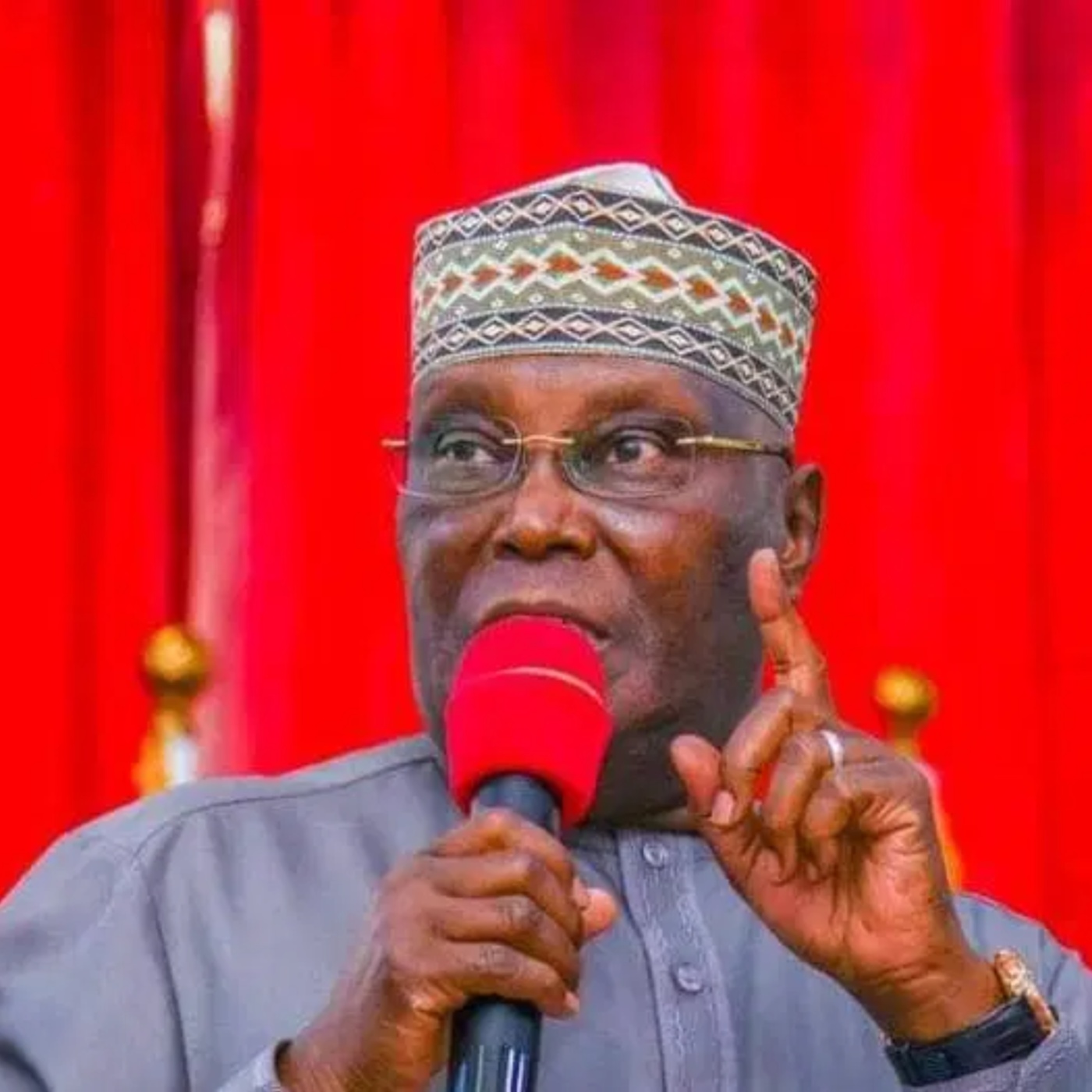
Presidential candidate of the African Democratic Congress, ADC, Atiku Abubakar, has criticised President Bola Tinubu’s economic policies, arguing that the country’s worsening hardship is the result of policies centred on borrowing, importation and taxation instead of production.
Atiku disclosed this in a statement by his spokesperson, Phrank Shaibu on Monday, where he argued that the country’s worsening economic hardship reflects years of policies that encouraged importation at the expense of local production.
Atiku maintained that Nigeria’s economic recovery depends on producing more food locally, expanding manufacturing and increasing exports rather than relying heavily on imported goods.
He said the current economic model has weakened local industries, reduced job opportunities and contributed to rising inflation across the country.
“Nigeria cannot borrow, import and tax its way to prosperity. The country’s economic salvation lies in producing what it eats, manufacturing what it uses and exporting what it makes,” Atiku said.
The presidential candidate argued that successive policies had rewarded consumption instead of production, leaving Nigeria dependent on foreign goods while local industries struggled to survive.
“For too long, we have celebrated importation while neglecting production. We import food that should be grown in our fields, goods that should be manufactured in our factories and even raw materials that ought to be processed by Nigerian hands. No nation has ever become prosperous by exporting jobs and importing poverty,” he stated.
Atiku cited rising food prices and declining industrial output as evidence of what he described as the failure of the current economic approach.
According to him, food inflation currently stands at 17.52 per cent nationally, while states such as Kogi and Niger recorded food inflation rates of 53.02 per cent and 43.83 per cent respectively.
Atiku argued that the rising cost of food and weakening industrial output have made it increasingly difficult for many Nigerian families to afford basic necessities, describing the situation as evidence that the current economic model is failing ordinary citizens.
He also claimed that Nigerian manufacturers spent about N3.53 trillion importing raw materials within six months, warning that the continued decline in local manufacturing was weakening the economy.
“We are exporting jobs, importing inflation, weakening the naira and mortgaging our future,” he added.
The former Vice President said an ADC administration would prioritise agriculture, manufacturing, solid minerals, technology and value addition to reduce Nigeria’s dependence on imports.
He pledged that his government would restore security in farming communities, improve electricity supply, stabilise the naira, reduce import duties on industrial machinery not produced locally, provide affordable credit for farmers and manufacturers, invest in infrastructure and reform the tax system to encourage production.
Atiku also referenced the economic reforms implemented during the administration of former President Olusegun Obasanjo, where he served as Vice President, saying they attracted private investment and boosted economic growth.
“Factories cannot thrive where borrowing is prohibitive, energy is unaffordable, the currency is unstable and consumers are too poor to buy locally made goods. Our mission is simple: Produce in Nigeria. Employ Nigerians. Consume Nigerian products. Export Nigerian excellence,” he said.


UC San Diego illegally uses race in admissions, Trump Justice Department alleges

NWFL: Edo Queens to sign Adegbuyi from FC Robo Queens

Tropical Storm Bertha drifts toward land as Hurricane Fausto forms in the eastern Pacific

John Kirby, Celebrity Acting Coach for Chrissy Metz, Jeff Bridges and More, Dies at 75

Housing scam rocks wealthy California enclave — as officials issue warning

50 Abuja IDP youths complete digital skills programme

Alarms sound as Trump DOJ sends ‘unmistakably chilling message’ in court

 Society3 days ago
Heartbroken Girlfriend Storms Studio To Remove Portrait Tattoo Of Cheating Boyfriend From Her Back
- Breaking3 days ago
Ondo police arrest father for burning his 10-year-old daughter’s private part with hot iron over bedwetting
- Society23 hours ago
2026 Ballon d’Or: Top 4 players to win award after World Cup final revealed
- Investigation3 days ago
âI canât date a man who earns less than me. Iâve supported men financially before, and Iâm done with thatâ â Mercy Eke
- Society19 hours ago
Pepper Seller Caught On Camera Applying Pepper On Newborn Baby As Rituals To Usher Her Into The Business
- World1 day ago
Spain earns $51 million for World Cup win and runner-up Argentina gets $34 million as total payout for all 48 teams hits record-high $871 million
- Society3 days ago
Man Finds Beautiful Lady Stripped Totally ‘Nɛkɛd’ In Deep Forest, Says She Doesn’t Know How She Got There
- Investigation3 days ago
US President Trump questions Thomas Tuchelâs tactics in England World Cup loss to Argentina