World
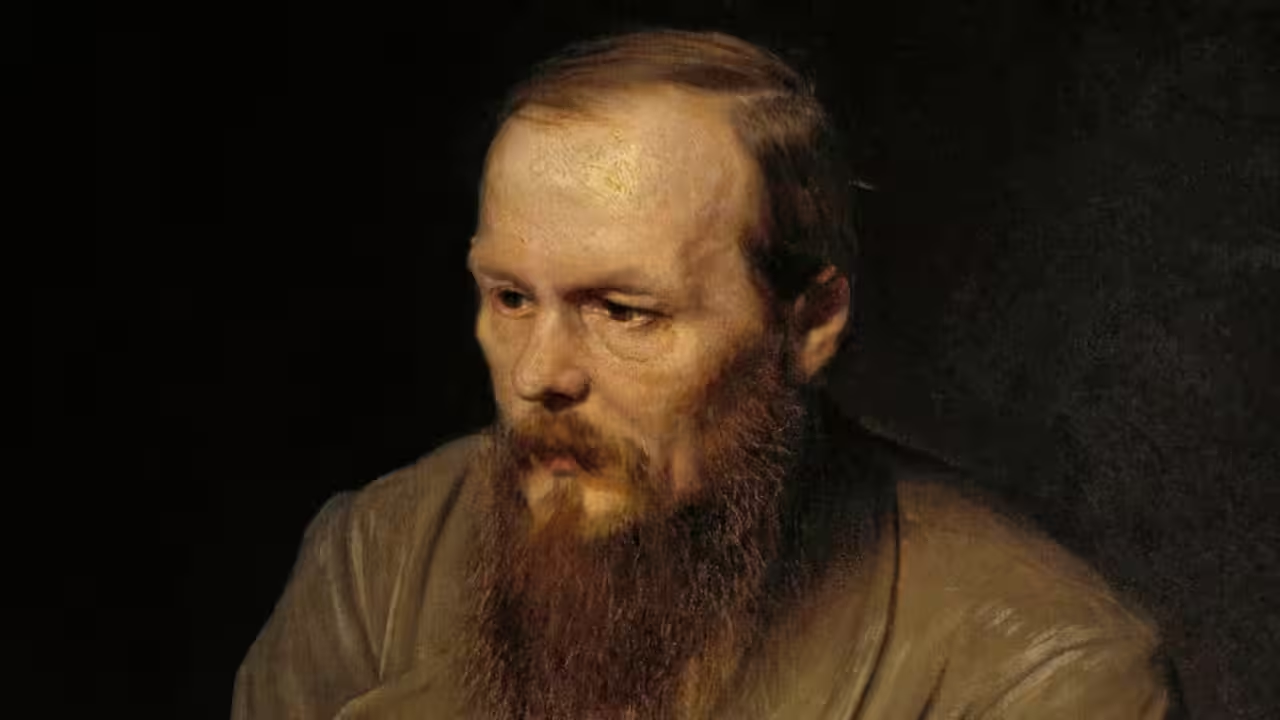
Quote of the day by Fyodor Dostoevsky: 'What is hell? I maintain that it is the suffering of being unable to love'

This Video Is Trending Right Now
A person can be surrounded by others and still feel completely alone. They can have wealth, success, recognition and comfort, yet carry a quiet emptiness that no achievement can fill. For Russian novelist Fyodor Dostoevsky, that emptiness was not simply sadness. It was a form of suffering rooted in the loss of the most human connection of all: The ability to love.“What is hell? I maintain that it is the suffering of being unable to love.”The line captures one of Dostoevsky’s central ideas: The greatest punishment a person can experience is not physical pain or external hardship, but emotional isolation and the inability to reach another human being with compassion and affection.Written more than a century ago, the quote continues to resonate because it touches on a fear that remains familiar today. A person may not be trapped in flames or surrounded by suffering, yet they can experience their own kind of hell when anger, guilt, resentment or self-interest prevents them from forming meaningful bonds.
A novelist shaped by suffering and faith
Dostoevsky explored these themes throughout his writing, drawing from his own experiences with hardship, imprisonment and spiritual questioning.Born in Moscow in 1821, Dostoevsky became one of Russia’s most influential writers. His early literary success came with his 1846 novel Poor Folk, but his life changed when he became involved with a group of intellectuals who discussed social and political ideas considered dangerous by the Russian government.In 1849, Dostoevsky was arrested and sentenced to death. He stood before a firing squad before receiving a last-minute reprieve from Nicholas I of Russia, who commuted the sentence to years of imprisonment and forced labour in Siberia.The experience transformed his understanding of human nature, suffering and redemption. His years in prison exposed him to people from different backgrounds and forced him to confront questions about guilt, morality and the possibility of inner change.After returning from exile, Dostoevsky produced some of his greatest works, including Crime and Punishment, The Idiot and The Brothers Karamazov.The quote about hell and the inability to love comes from The Brothers Karamazov, published in 1880. In the novel, the idea is expressed through the character Grushenka during a conversation about spiritual suffering.The statement is part of a major theme running through Dostoevsky’s work: Human beings are not destroyed only by their mistakes, but by their refusal or inability to connect with others.
Hell as separation, not fire
Traditional ideas of hell often focus on agonising punishment and suffering after death. Dostoevsky approached the idea differently. For him, hell was an internal condition rather than a literal fiery inferno.A person who cannot love becomes trapped within themselves. They may see others only as tools, enemies or obstacles. Over time, that separation creates a deeper form of suffering because humans depend on relationships, empathy and shared experiences.This idea connects with Dostoevsky’s belief that love is not merely an emotion. It is an active choice that requires humility, forgiveness and responsibility.In The Brothers Karamazov, the writer contrasts selfishness with compassion. Characters who live only for their own desires become isolated, while those who accept responsibility for others discover a path towards redemption.The quote also shows a psychological truth recognised by modern researchers. Human connection plays a major role in emotional wellbeing. Long-term loneliness has been linked with increased risks of depression, anxiety and declining physical health.Dostoevsky was writing from a religious and philosophical perspective, but his observation touches a universal human experience: people need meaningful relationships to feel fully alive.
Why the quote still matters in 2026
Dostoevsky’s words have gained new relevance in a world where people are more connected digitally but often struggle with deeper forms of isolation.Social media platforms allow people to communicate instantly across continents, yet many still report feelings of loneliness. Online interactions can create the appearance of connection without always providing the trust, understanding and emotional closeness found in real relationships.The rise of artificial intelligence has also brought new questions about human connection. Millions of people now interact with chatbots for conversation, advice and emotional support. These tools can be useful, but Dostoevsky’s warning raises a deeper question: What happens when technology replaces rather than supports human relationships?His message is not that solitude is always harmful or that every person must constantly seek company. Instead, it suggests that the inability to care for others, accept love or recognise another person’s humanity can become a form of suffering.The quote also applies beyond personal relationships. Leaders, communities, families and societies face similar challenges when empathy disappears. History has repeatedly shown the consequences of treating people as numbers, problems or enemies rather than individuals with dignity.Dostoevsky’s insight remains powerful because it does not describe a distant punishment. It describes something people can experience in ordinary life.A person may escape many hardships, but if they lose the ability to love, forgive and connect, they risk creating their own form of hell. For Dostoevsky, love was not simply a source of happiness. It was what kept human beings connected to one another and to their own humanity.


Trump denies security fears behind change of plane in UK

Justin Bieber to rock World Cup final as half-time show superstars are revealed

Tension in Abia oil producing communities over APC House of Reps ticket

World Cup 2026: Brazil’s Filipe Luis snubs France, names country to win trophy

World Cup 2026: Nigeria goalkeeper, Maduka Okoye names country to win trophy

Student, 22, forced to land plane after pilot jumps to death from aircraft

Transfer: Mourinho picks two midfielders to keep at Real Madrid

 Society3 days ago
H0rny Old Man Caught On Camera In Broad Daylight Trying To Chop Mad Woman At Roadside
- Investigation2 days ago
15-year-old student slashes schoolmate with cutlass for allegedly touching her brâ¬ast repeatedly during school clean-up exercise
- Investigation3 days ago
If this was AFCON the nonsense being said would be crazy â Former Congolese footballer Yannick Bolasie slams FIFA over Balogun red card reversal
- Society3 days ago
Chaos At Cemetery As Area Boys Hijack Dead Body In Coffin, Stops Family From Burial Over Unpaid Debt
- National2 days ago
May Yul-Edochie Urges Court To Shut Down Yinka Omolola Theisen, Others’ Social Media Accounts Over Alleged Cyberbullying
- Investigation2 days ago
âYouâre my best forever. You do everything for me.â â Little girl melts hearts with sweet voice note to her dad
- Society3 days ago
Watch Moment Husband Nearly Beats Pastor As Wife Donates Family Car To Him As Seed Offering
- Investigation2 days ago
The referee is a little bit suspect – President Trump confirms he spoke to FIFA president to review Folarin Balogunâs red card