Society
Reps flag off probe into ‘fake’ PFIPC inclusion in budget, Monday

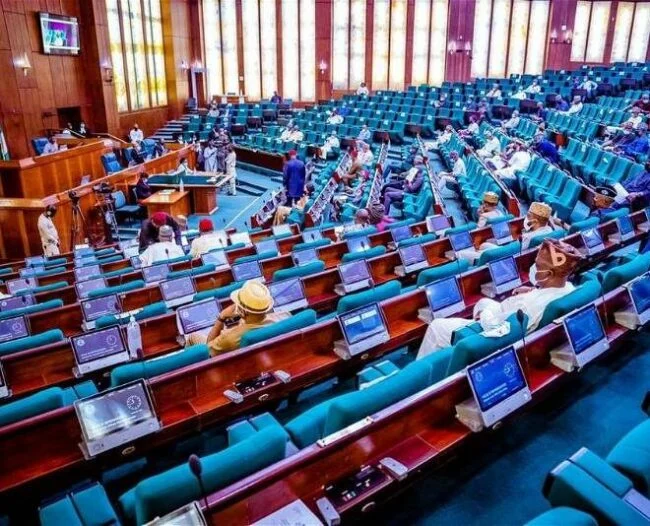
The House of Representatives will on Monday flag off an investigative hearing into the controversy surrounding the inclusion of the annual budget of the Presidential Economic Advisory Council/Presidential Foreign Intervention Promotion Council (PEAC/PFIPC) in the 2026 Appropriation Act.
The investigative hearing will be chaired by Hon. Yusuf Gagdi (APC, Plateau), in line with the resolution passed by the House penultimate week.
In line with the House resolution, the ad hoc committee is to invite the Minister of Budget and Economic Planning and the Director-General of the Budget Office of the Federation to clarify the verification procedures applied before new entities are admitted into the budget; verify all ministries, departments, agencies and other bodies reflected in the 2025 and 2026 Appropriation frameworks against their instruments of establishment; receive briefings from the relevant security and anti-corruption agencies without prejudice to the proceedings pending before the Federal High Court; and report back within four weeks for further legislative action.
The ad hoc committee was also mandated to request the Office of the Accountant-General of the Federation to confirm to the House that no releases have been made, and that no warrants will be honoured, in respect of any provision attributable to the entity pending the conclusion of investigations.
In line with Sections 19, 30 and 50 of the Fiscal Responsibility Act, 2007, the Budget Office of the Federation is to submit to the National Assembly, ahead of the presentation of each Appropriation Bill, a comprehensive list of all ministries, departments, agencies and other bodies proposed for funding, indicating their instruments of establishment, so that no entity not so listed and certified is admitted into the Appropriation Bill. The reports required under the Act are also to be transmitted as and when due and made available to the Committees on Appropriations of both chambers.
The controversial council’s budget proposal appeared on Pages 50 and 51 of the 2026 budget estimates presented by President Bola Tinubu, under code 0111062001, with a total expenditure of N1,302,978,784. This comprised N1,002,978,784 in recurrent expenditure (N802,978,783 for personnel costs and N200,000,001 for overhead costs) and N300,000,000 for capital expenditure in 2026.
The same amount was approved by the National Assembly on Pages 33 to 35 of the Appropriation Act signed by President Tinubu, under code 0111001001 in the State House headquarters budget.
Recall that the House, during plenary on Wednesday, July 8, 2026, resolved to investigate how budgetary allocations allegedly linked to the PEAC/PFIPC found their way into the 2026 Appropriation Act despite the Federal Government’s position that the council was never legally established.
Leading the debate on the motion of urgent public importance titled, “Urgent Need to Safeguard the Integrity of the Federal Budget Process Following the Reported Inclusion of the Unestablished PFIPC in the Federal Budget Framework,” sponsored by Hon. Gagdi, lawmakers observed that the motion did not prejudge or seek to pre-empt ongoing investigations or criminal proceedings pending before the Federal High Court, Abuja, concerning the controversial council, which the Federal Government has maintained was never lawfully established.
ALSO READ: Nigeria pushes ECOWAS compact, condemns South Africa attacks on Africans
He observed that the entity relied on a document purporting to be an enactment codified as “Chapter N2117, Laws of the Federation of Nigeria,” whereas the records of the National Assembly disclose no Bill establishing such a council. He further noted that the Laws of the Federation contain no Chapter N2117, with the nearest designation being Chapter N117, the Nigerian Investment Promotion Commission Act, whose mandate the entity purportedly duplicated, making the falsity of the purported instrument apparent on the face of public statutory records.
According to him, reports indicate that a budgetary provision in excess of N1.3 billion attributable to the entity found its way into the 2026 Appropriation framework, raising the fundamental question, which falls squarely within the constitutional remit of the House, of how a body without any authentic instrument of establishment could enter the federal budget, whether through the executive proposal or during legislative consideration, and at what stage the existing scrutiny safeguards failed to detect it.
“The House is concerned that the ease with which a single unestablished entity progressed through official processes suggests a systemic vulnerability rather than an isolated lapse, and that it cannot be excluded that other fictitious entities are reflected in past or current budget frameworks, a possibility that threatens the credibility of the Appropriation Act and the integrity of the appropriation function of the National Assembly.
“The House is mindful that the Fiscal Responsibility Act, 2007 already obliges the Executive to account to the National Assembly, including through Section 19, prescribing the documents that must accompany the annual budget; Section 30, requiring quarterly budget implementation reports to the Joint Finance Committee of the National Assembly; and Section 50, requiring quarterly and consolidated annual budget execution reports. The House is also cognisant of Sections 80, 81, 88 and 89 of the Constitution, which vest in the National Assembly the control of public funds and the power to investigate their disbursement.”
Also contributing to the motion, the Chairman of the House Committee on National Security and Intelligence, Hon. Ahmed Satomi, described the matter as one of national importance and urged a thorough investigation and accountability for anyone found culpable.


Why I won’t lose 2027 presidential election – Peter Obi

TikTok side hustlers beware: AI is coming for your job

Wilfred Ndidi hilariously explains the ‘juju cream’ story Jamie Vardy believed came from a Nigerian witch doctor

Peter Obi: We’re praying – Kwankwaso hints on contesting 2031 presidency

Ondo NLC, TUC threaten strike over FUTATH workers victimisation

Ghost Recon Wildlands Definitive Edition Brings Upgrades and New Content

NAFDAC arrests two over counterfeit alcohol production in Lagos

 Society2 days ago
Heartbroken Girlfriend Storms Studio To Remove Portrait Tattoo Of Cheating Boyfriend From Her Back
- Breaking2 days ago
Ondo police arrest father for burning his 10-year-old daughter’s private part with hot iron over bedwetting
- Society15 hours ago
2026 Ballon d’Or: Top 4 players to win award after World Cup final revealed
- Investigation2 days ago
âI canât date a man who earns less than me. Iâve supported men financially before, and Iâm done with thatâ â Mercy Eke
- Society12 hours ago
Pepper Seller Caught On Camera Applying Pepper On Newborn Baby As Rituals To Usher Her Into The Business
- World22 hours ago
Spain earns $51 million for World Cup win and runner-up Argentina gets $34 million as total payout for all 48 teams hits record-high $871 million
- Investigation2 days ago
US President Trump questions Thomas Tuchelâs tactics in England World Cup loss to Argentina
- Investigation3 days ago
FIFA to award first-ever World Cup âWinnerâs Ringsâ at Sundayâs Final as Donald Trump confirms attendance