World
Retiring United Negro College Fund leader reflects on legacy, $4 billion raised

This Video Is Trending Right Now
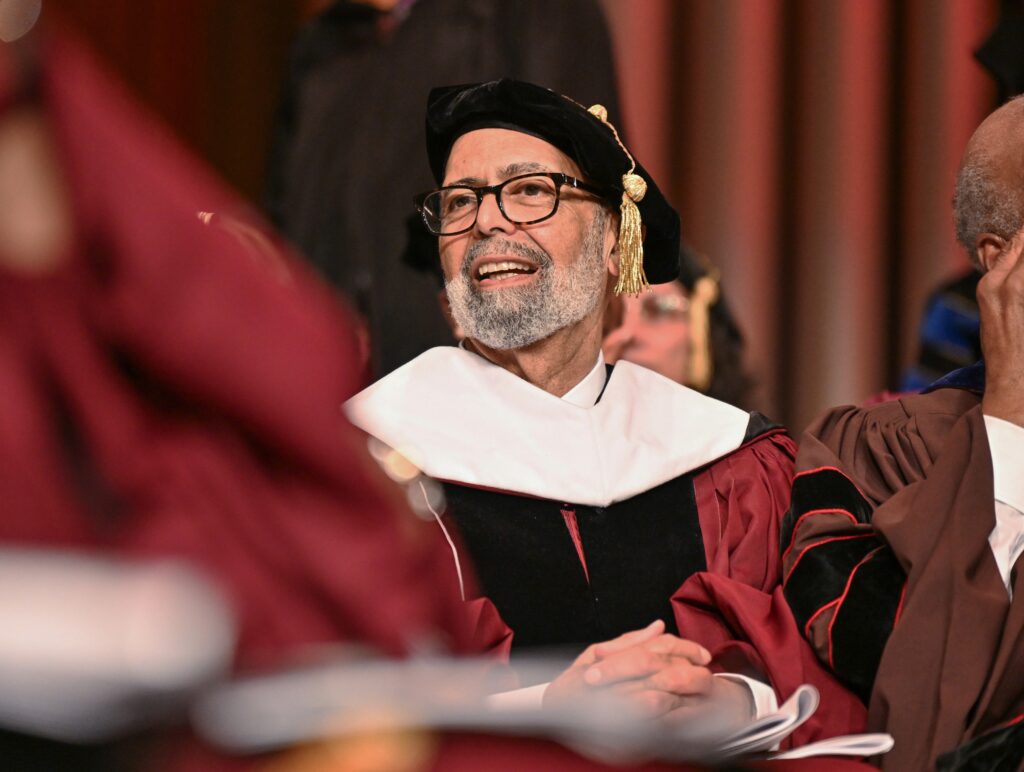
After 22 years at the helm of the United Negro College Fund, Michael L. Lomax will step down as president and chief executive of the leading advocacy organization for historically Black colleges and universities.
Lomax has led UNCF in raising more than $4 billion. The organization has helped more than 300,000 students earn college degrees, as the largest private scholarship provider for minority students.
During his tenure, historically Black institutions have experienced a surge in applications and philanthropic contributions. Lomax and UNCF’s advocacy are widely credited with cultivating deeper respect among policymakers for HBCUs, as well as greater recognition of the financial inequities they face.
Lomax, 78, will step down in June 2027, at which point he hopes to introduce his successor.
“Transitions, succession are points of vulnerability. So we’re making this the long goodbye,” said Lomax, who plans to return to teaching.
In an interview with The Washington Post, Lomax reflected on his time at UNCF, what he has accomplished and the biggest challenges ahead for historically Black institutions and higher education writ large. This is an edited version of the conversation:
What is your proudest accomplishment during your time at UNCF?
The number one accomplishment is that we’ve raised billions of dollars to support students. It’s not just been money in and out, it’s also been building assets and building institutional wealth that can have an impact for generations.
Endowment growth for UNCF as an organization has been a really important goal for me, too. We had about a $60 million endowment when I got here. It’s over $500 million today. We could be very close to $600 million by next year. That’s a really great asset for my successor, the team and the organization to continue to build. Wealth-building for institutions is a big part of the answer to the long-term support of historically Black colleges and universities, and all higher education.
Higher education has become highly polarized and politicized, especially during your tenure. How have you been able to steer the organization through some of the political winds?
We’ve had a tradition at UNCF of strong support across the ideological spectrum. And we’re very, very committed to staying in that sweet spot where we can talk to everybody and everybody talks to us.
We have tremendous support on the right and tremendous support on the left because the work that we do gets seen in local communities every day. A lot of the states that we operate in are red states. Everybody in those red states, whether they’re a member of the Senate or a member of Congress, they actually know people who’ve gone to the school and gotten the education. So telling the story locally has helped us depoliticize.
Historically Black schools and UNCF have witnessed a surge in philanthropic support in recent years. How has that affected the sector?
I came to UNCF with the expectation that I’d go to dinners in Georgetown and meet the movers and the shakers, and they would be impressed and the money would roll in, and it just didn’t. Over the last 20 years, that storytelling, that data collection, that research that we and others in the field have done has really transformed the way the philanthropic sector thinks about HBCUs.
We were in a crisis [in 2020], so a lot of what we were doing five years ago was crisis management. There are three stages that go beyond that: There’s stabilization after the crisis management. There is recovery, and then there’s transformation. HBCUs are still in each of those stages. You’ll have some that are still facing crisis, but the number of them is much smaller. Most are stabilized and recovering. And then some are just going to a whole different look.
Our work is part of the impetus, the momentum-building that takes institutions from where they are to where they aspire to go. The avalanche of support means that we have the fuel to propel aspiration and growth and development and impact.
There have been some sweeping changes in federal student aid policy, particularly the new caps on Parent Plus loans that many HBCUs heavily rely on. Has the new cap created a greater impetus to raise money? What kind of impact will it have?
America needs to have a better, more coherent policy on debt for education. Parent Plus has been one of those instances where there were less restrictive limits on how much you could get, but the cost of borrowing was very great. I mean, it was onerous.
What I argue to our team is that we’ve really gotten good at managing and administering scholarships, and innovating in the scholarship arena. We should try to see if we can innovate in the loan area as well. What we would do would be to try different loan programs that could be scaled at state and federal levels. One of our partners in that has been the Student Freedom Initiative, which was founded by Robert Smith. We’ve been in discussions with them about working more closely.
We’re in conversations, both with our colleges and universities, but also with the feds about how this [new cap] is going to be implemented. At the same time, we’re thinking about what are the innovations that we can try and then scale. Otherwise, what we’re going to find is there will be loan sharks out there and others who will provide some of this borrowing, but at extraordinary rates of interest and origination.
What do you see as the greatest challenges ahead for HBCUs?
One of the big challenges is not unique to HBCUs; it’s really unique to higher education. There are a lot of questions being asked about what role does education play in an AI world. People are saying, well, do you need a college education? Will there be jobs?
There’s been a debate for over a century in the Black community about the purpose of education. It’s that old Booker T. Washington, W.E.B Du Bois debate: Are you educating people for employment or are you preparing them for life, embedding values and purpose in their life? It’s not either one. It’s some combination thereof.
One of the things that HBCUs can do is to be clear about what education can and should do. I call it the three W’s. It is work, wealth-building and wisdom. And all of those in combination for the people who get an education allow those folks to have the skills to earn a living, to work, to build financial assets, wealth. But also the wisdom to be great, good citizens and contributors to community and to live purposeful lives. In this age of AI, all of those three W’s are all valuable in combination.


Fiends beat, rob sleeping straphanger on NYC subway train: cops

Horrifying scenario laid out on CNN as Trump enters ‘most difficult predicament’ of war

Trump Rejected Nearly 6,000 Clemency Applications Amid Hope of Pardon Wave

IBEDC restores power to Oyo communities after prolonged blackout

Trump’s Border Czar shocks onlookers with claim about ICE killings

2027 presidency: Our supporters are not people looking for food, money on election day – Kwankwaso

Jen Psaki throws Trump’s words in his face over damning ‘confession’ about his Qatari jet

 Society3 days ago
Heartbroken Girlfriend Storms Studio To Remove Portrait Tattoo Of Cheating Boyfriend From Her Back
- Breaking3 days ago
Ondo police arrest father for burning his 10-year-old daughter’s private part with hot iron over bedwetting
- Society21 hours ago
2026 Ballon d’Or: Top 4 players to win award after World Cup final revealed
- Investigation3 days ago
âI canât date a man who earns less than me. Iâve supported men financially before, and Iâm done with thatâ â Mercy Eke
- Society17 hours ago
Pepper Seller Caught On Camera Applying Pepper On Newborn Baby As Rituals To Usher Her Into The Business
- World1 day ago
Spain earns $51 million for World Cup win and runner-up Argentina gets $34 million as total payout for all 48 teams hits record-high $871 million
- Society3 days ago
Man Finds Beautiful Lady Stripped Totally ‘Nɛkɛd’ In Deep Forest, Says She Doesn’t Know How She Got There
- Investigation2 days ago
US President Trump questions Thomas Tuchelâs tactics in England World Cup loss to Argentina