Breaking
Tinubu signs executive order to block crypto fraud, terror financing

Advertisement
Advertisement
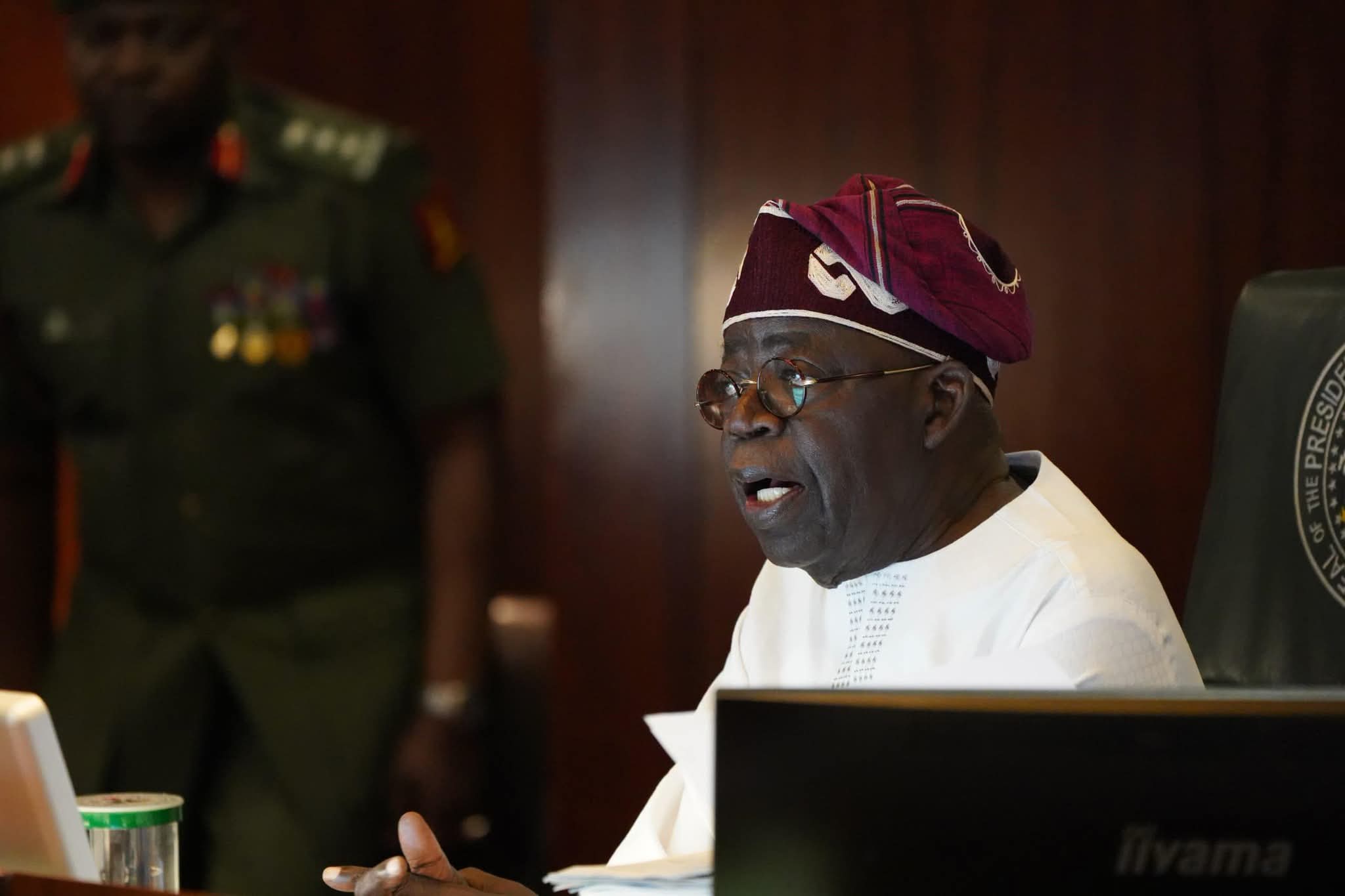
President Bola Tinubu has signed the Presidential Executive Order on Virtual Assets Coordination, 2026, establishing a new framework to harmonise the regulation of Nigeria’s virtual assets ecosystem, strengthen inter-agency collaboration, and protect citizens from fraud while promoting responsible innovation in the digital economy.
The State House announced on Friday that the executive order, signed pursuant to Section 5 of the 1999 Constitution (as amended), takes immediate effect.
According to the Presidency, the order seeks to address regulatory gaps that have emerged as virtual assets increasingly cut across the traditional boundaries of currencies, securities, commodities and payment systems.
It said the fragmented regulatory environment had exposed the country to risks such as money laundering, terrorism financing, cybercrime, data privacy breaches, fraud and revenue losses, while enabling unregistered operators to exploit unsuspecting Nigerians.
To address these challenges, the President approved the establishment of a Virtual Asset Council, which will be chaired by the Central Bank of Nigeria, CBN, with the Nigeria Revenue Service, NRS, and the Securities and Exchange Commission, SEC, serving as vice-chairmen.
Other members of the council include the Nigerian Financial Intelligence Unit, NFIU, and the Office of the National Security Adviser, ONSA.
The Presidency said the council would provide policy direction, improve coordination among the participating agencies and work with the Attorney-General of the Federation to develop a harmonised legal and institutional framework that aligns the sector with Nigeria’s economic, security and social objectives.
The order also creates a Virtual Asset Office, which will serve as the council’s operational arm, with its secretariat domiciled at the CBN.
According to the Presidency, the office will coordinate information sharing, applications and reporting among the participating agencies through an integrated supervisory technology platform that allows collaboration while preserving each institution’s ownership and control of its data.
The government clarified that the executive order does not establish a new regulator or strip existing agencies of their statutory responsibilities.
Rather, it said each agency would retain its legal mandate, while the new framework would enhance coordination and eliminate regulatory overlaps.
Under the framework, registration of operators will depend on the nature of the virtual asset or service involved. The SEC will continue to regulate virtual assets classified as securities, while the CBN will oversee payment, settlement, custody and other services involving non-security virtual assets. The council will determine jurisdiction where regulatory responsibility is unclear.
The Presidency said the arrangement would close loopholes that had previously allowed unregistered operators to evade regulatory oversight.
As part of the implementation strategy, the Central Bank of Nigeria will launch a regulatory sandbox that will enable eligible firms to test virtual asset products, blockchain applications and related services under close regulatory supervision before they are introduced into the wider market.
According to the Presidency, the sandbox is designed to help regulators assess the impact of emerging technologies on monetary policy, financial stability, consumer protection, financial inclusion, market integrity and government revenue.
The CBN is expected to announce further details of the initiative.
Similarly, the Nigeria Revenue Service will issue a tax policy for the virtual assets sector to provide clarity on the application of Nigeria’s tax laws, encourage voluntary compliance and ensure that the fast-growing industry contributes appropriately to government revenue.
The Federal Government also disclosed that it is finalising a comprehensive Virtual Assets White Paper, which will outline Nigeria’s long-term policy direction and implementation priorities for the sector.
President Tinubu directed the newly established council to develop a Harmonised Implementation Framework within 30 days to facilitate the speedy execution of the executive order.
The Presidency said the initiative reflects the administration’s commitment to building a secure, transparent and innovation-friendly digital economy capable of attracting investment while protecting consumers and safeguarding the country’s financial system.


Bode George Blames Lagos Flooding on Lagoon Reclamation

Benue court remands clan head over alleged armed robbery
Oyo teacher slams Nigerians who claim their abduction was staged

"Worst case scenario" for shippers as U.S. and Iran step up attacks

ADC Questions Tinubu Presidency Over Appointment Controversy

Brenda Fricker, Oscar winner who played Pigeon Lady in "Home Alone 2," dies

Donald Trump accuses China of interfering in US elections.

 Society2 days ago
35-Year-Old Man Breaks Down In Tears Like A Baby At Roadside After Wife Reportedly Goes Missing At Kasoa Market
- Investigation2 days ago
Suspected ISWAP logistics supplier arrested with food items bound for terrorists in Borno
- News2 days ago
Retiree’s Pension Jumps From N18,000 To N206,000 After Government Reform
- National2 days ago
JUST IN: Senate to give N10million each to families of security operatives, teachers killed in Oriire rescue
- Investigation2 days ago
R Kelly officially asks President Trump to end his 30-year prison sentence for s 3x crimes
- National1 day ago
2026 Ballon d’Or: Top 4 players to win award ahead of World Cup final
- Investigation2 days ago
âThereâs nothing more absurd than the âEmi Lokanâ sloganâ â Falz knocks slogan of current administration
- Investigation3 days ago
âHow do you tell a 13-year-old girl you like her?â â Lady confronts man over alleged advances towards her younger sister