National
FG Advances State Police Establishment With Fresh Move

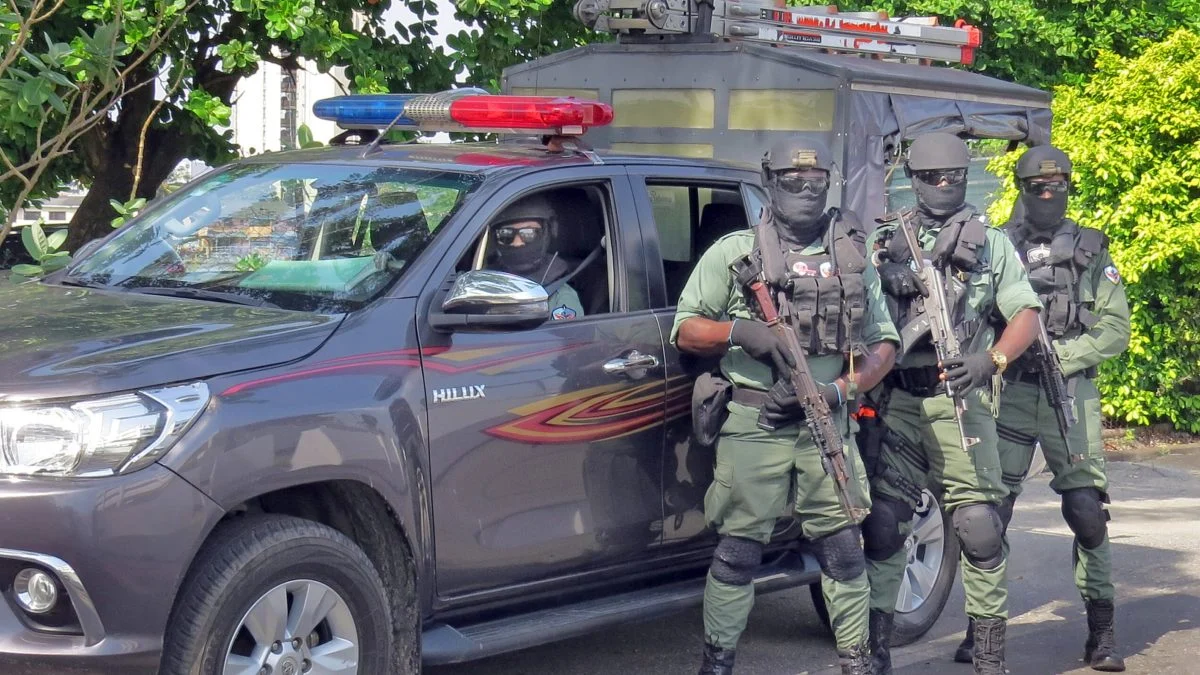
The Federal Government has commenced work on a comprehensive legal framework that will guide the implementation of state police across Nigeria.
The move comes as efforts intensify to establish a dual policing system that will allow both federal and state police structures to operate within clearly defined constitutional boundaries.
Chairman of the Presidential Working Group on the National Policing Bill and Chief of Staff to the President, Femi Gbajabiamila, disclosed the development on Monday while speaking with journalists in Abuja.
According to him, the government has mapped out a seven-week programme aimed at producing a National Policing Bill that will provide the legal and operational foundation for the proposed state police system.
Gbajabiamila explained that although the National Assembly has made significant progress on constitutional amendments relating to state police, no state police service currently exists anywhere in the country.
He stressed that the Nigeria Police Force remains the only constitutionally recognised policing institution until the amendment process is fully completed and all legal requirements are met.
The presidential aide noted that the Senate approved the constitutional proposal on June 24, 2026, while the House of Representatives passed the Executive State Police Bill on July 23, 2026.
He, however, pointed out that the amendment would only take effect after receiving the constitutionally required approval from state Houses of Assembly and the passage of relevant implementation laws.
“There is no operational state police service anywhere in Nigeria today. The Nigerian Police Force remains the constitutionally recognised police institution.
“The constitutional amendment creates the authority and broad architecture for federal and state policing, but it does not by itself provide the complete operating framework,” he said.
Gbajabiamila said the proposed National Policing Bill is expected to address critical issues surrounding administration, recruitment, funding, operational responsibilities, oversight mechanisms and coordination between federal and state police institutions.
He stated that the legislation would also establish safeguards to ensure professionalism, accountability and effective cooperation among security agencies.
According to him, the objective is to create a policing system that responds more effectively to local security challenges while maintaining national standards.
The Chief of Staff said the working group would engage stakeholders from different sectors, including legal experts, security professionals, state governments and relevant institutions, before presenting its final recommendations.
He maintained that the process must be thorough because of the importance of the reform and its long-term implications for national security.
The proposed state police structure has remained one of Nigeria’s most debated security reforms in recent years.
Recall, the Presidency announced on June that the constitutional framework for the establishment of state police was nearing completion following months of consultations involving the Federal Government, security agencies and the National Assembly.
Speaking after a high-level meeting at the Presidential Villa in Abuja, Chief of Staff to the President, Femi Gbajabiamila, revealed that discussions on the reform had been ongoing for several months on the directive of President Bola Tinubu.
He said the government was carefully working through the legal and constitutional issues associated with creating state police services across the federation.
“We started deliberations in the last three or four months on how to go about the establishment of state police as directed by Mr President,” Gbajabiamila said.
He explained at the time that the administration was committed to ensuring that any new policing arrangement would be backed by strong constitutional provisions and effective safeguards.
According to him, the government recognised the complexity of the reform and was determined to avoid rushing a process that could have far-reaching consequences for national security and governance.
Gbajabiamila noted that consultations were being held with governors, lawmakers, legal experts and security stakeholders to ensure broad consensus on the proposed framework.
He also stated that the objective was to create a policing structure capable of addressing local security concerns without undermining national unity or professional standards.


Economic summit: Delta, first-order investment destination — Shettima

English FA to withdraw support for FIFA president Gianni Infantino after scrapped World Cup sell-off

Protests Rock Abia State Over Nnamdi Kanu’s Detention, Imprisonment

Navy destroys Militantsâ hideout in Cross River coastal community

Ekiti court jails fraudster two years for car auction fraud

FG begins training of 4,000 tractor operators for mechanisation drive

Pick Atiku first, I can’t apologise for calling you criminal – Sowore tells Tinubu

 Investigation3 days ago
âMy ex just logged me out of his Netflix and Prime because I said he is weird and I regret meeting him. That doesnât mean he should remove meâ â Nigerian lady reacts as ex revokes her access
- Investigation2 days ago
Tinubuâs government is bent on winning elections by all means – Bishop Onaiyekan
- News3 days ago
NSCDC hunts vandals, recovers ₦1.8m streetlight cables in Jigawa
- Investigation1 day ago
âPsychicâ IT worker sacked for telling female colleague they already met âin his dreamsâ
- Investigation1 day ago
Fubaraâs political mistake was that he tried to build his own structure – Wike
- Investigation1 day ago
âSopranosâ Actor Vincent Pastore found dead at his home aged 80
- Investigation1 day ago
Donât politicise insecurity – Governor Radda
- Investigation1 day ago
âPeople smugglersâ arrested after Moroccan migrants were caught trying to enter Spain on jet ski