Investigation
Iran denies having peace talks with US despite Trump’s claim

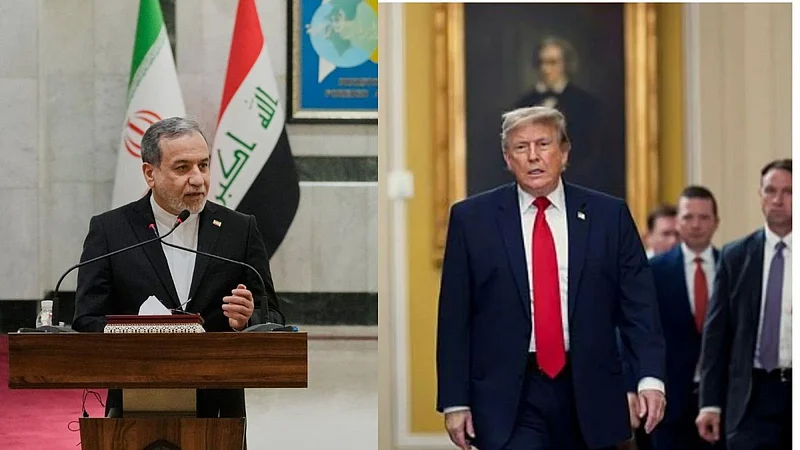

The Islamic Republic of Iran has denied that any direct talks with Washington are planned after US President Donald Trump said negotiations would begin on Monday following his decision to call off planned military strikes.
Iranian Foreign Ministry spokesperson Esmail Baghaei said there were no plans to receive a US delegation or send Iranian officials to Washington. He also rejected suggestions that any change had occurred in the status of maritime traffic through the Strait of Hormuz.
The denial came hours after Trump told reporters aboard Air Force One that Washington had paused military action in favour of diplomacy.
“We’re talking to them in the form of a negotiation. It begins tomorrow afternoon,” Trump said.
Earlier on Sunday, Trump wrote on Truth Social that Iran and US allies in the Gulf had urged him to “hold off” on planned strikes because the broad parameters of an agreement had already been reached.
Although Tehran dismissed Trump’s claim of imminent US-Iran talks, it confirmed that technical negotiations with Oman over the Strait of Hormuz were continuing.
Baghaei said Iranian and Omani deputy foreign ministers held several rounds of discussions in Tehran on Friday and Saturday on mechanisms to ensure the safe passage of commercial shipping through the strategic waterway while respecting the sovereignty of the two littoral states.
He described the discussions as constructive and said technical and political consultations would continue. Iranian Foreign Minister Abbas Araghchi later said negotiations with Oman on a Hormuz agreement were “on track for finalisation”, according to Iran’s Ministry of Foreign Affairs.
Trump said Saudi Crown Prince Mohammed bin Salman, along with leaders from the United Arab Emirates and Qatar, had urged him not to proceed with the planned strikes, arguing that diplomacy had a realistic chance of success.
The US president said the proposed operation would have been the largest American military action since World War II and could have jeopardised efforts to end the months-long conflict.
The conflicting statements from Washington and Tehran underscore the uncertainty surrounding diplomatic efforts, with both sides continuing to send mixed signals even as regional mediation over the Strait of Hormuz gathers pace.


Transfer: Departures of two Real Madrid players confirmed

I used to borrow to maintain my lifestyle â Actor Timini Egbuson

NYSC makes NERD clearance mandatory for corps membersâ mobilisation

Delta can rival Lagos as Nigeria’s growth engine, says Okonjo-Iweala

90 Day Fiancé star Thomas threatens to call off wedding to his woman Paula because she wears perfume and deodorant

Chelsea confirm shock free transfer for 36-year-old Jordan Henderson weeks after freak injury

UK opens applications for 2026 Chevening Scholarships

 Investigation2 days ago
Tinubuâs government is bent on winning elections by all means – Bishop Onaiyekan
- Investigation1 day ago
âPsychicâ IT worker sacked for telling female colleague they already met âin his dreamsâ
- Investigation1 day ago
Fubaraâs political mistake was that he tried to build his own structure – Wike
- Investigation2 days ago
âSopranosâ Actor Vincent Pastore found dead at his home aged 80
- Investigation1 day ago
Donât politicise insecurity – Governor Radda
- Investigation1 day ago
âPeople smugglersâ arrested after Moroccan migrants were caught trying to enter Spain on jet ski
- Investigation1 day ago
2026 Commonwealth Games: Team Nigeriaâs silver medal downgraded to bronze
- Investigation1 day ago
Michelle Alozie subjected to drug test after MVP performance in Super Falconsâ win over Zambia