World
Trump and Graham Dominate Senate Race: 5 Takeaways from South Carolina Debate.

This Video Is Trending Right Now
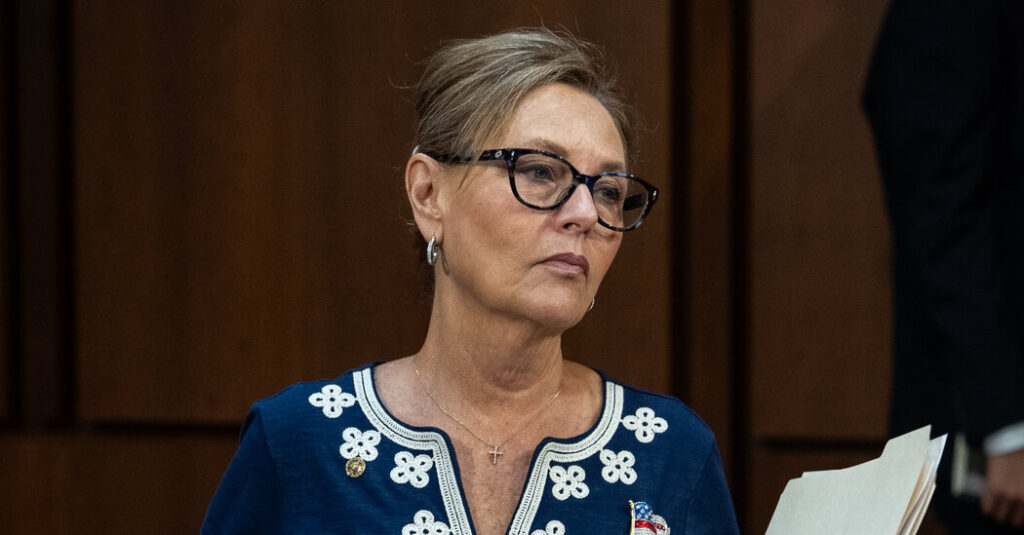
Senator Darline Graham sought to introduce herself to Republican voters in South Carolina on Monday, in the first debate of a condensed special primary election to succeed her brother, Senator Lindsey Graham, who died last month.
In the whirlwind few weeks since Mr. Graham died of an aortic tear, Ms. Graham was picked to serve the remainder of his term — and then made the surprise decision to run for the seat, with President Trump’s support.
In all, nine Republicans qualified for the ballot; five of them, including Ms. Graham, faced off in Monday night’s debate. The others were Representatives Ralph Norman and Russell Fry; Mark Sanford, a former South Carolina governor and congressman; and Mark Lynch, a businessman.
The special primary election is Aug. 11, with a second debate scheduled for Tuesday night. In solidly Republican South Carolina, the winner will be favored in the November general election against the Democratic nominee, Dr. Annie Andrews, a pediatrician.
Here are five debate takeaways.
Darline Graham was the center of attention.
Mr. Trump’s support of Ms. Graham, a political newcomer, over some of South Carolina’s best-known politicians is a test of his power over the state’s Republican Party. He is said to have been impressed by her composure after her brother’s death, and Ms. Graham showed some of that poise on the debate stage on Monday.
Yet she offered little in the way of policy specifics and revealed only a few personal details. An advocate for disability rights, she said one of her daughters had brain surgery. She called herself a “bargain shopper” and said she was “in that 60 percent” of South Carolinians whose rainy-day fund could not cover their emergency expenses for three months.
Her opponents did not take direct aim at her. But in his debate closing, Mr. Fry, a strong Trump ally, called himself “battle-tested” and said the Senate “is no place for on-the-job training.”
“I didn’t inherit a record,” he said, clearly alluding to Ms. Graham. “I earned it.”
President Trump embraced Ms. Graham, and she embraced him right back.
Ms. Graham pushed Mr. Trump’s endorsement repeatedly, and she left little daylight between herself and the president in describing whether she would vote independently to represent the interests of South Carolinians.
“To me, this one’s simple,” she said. “I completely support the president’s agenda.”
Ms. Graham’s brother did not always agree with Mr. Trump. And Ms. Graham had several opportunities during the debate to at least shade her support of his policies. Unlike some of her opponents, she took none of them, casting herself as a solid Trump vote in the Senate.
Backing the president meant breaking, at least once, with her brother.
Ms. Graham distanced herself from her brother on at least one occasion, saying that she would get rid of the Senate filibuster, as Mr. Trump wants, to pass a voting restrictions bill called the SAVE America Act that is a top priority of the president’s.
“This is where I differ from my brother — getting rid of the filibuster to get this done, because eventually, the Democrats are going to get rid of it anyway,” she said.
The ghost of Lindsey Graham hovered over the debate.
Ms. Graham opened the debate by thanking South Carolinians for their prayers over Mr. Graham’s death. “We all know why I’m here,” she said later.
While Mr. Graham was a favorite of Mr. Trump, his relationship with South Carolina Republican voters was sometimes rocky, especially among members of the hard-line MAGA base expected to turn out in the special primary election.
Mr. Lynch, who lost the June primary to Mr. Graham, accused Mr. Fry of supporting “mass amnesty” by backing the senator in that race. In the pre-Trump era, Mr. Graham had supported comprehensive immigration reform.
Mr. Fry’s retort: “I supported Lindsey Graham because he stood with President Trump.”
Mr. Lynch’s references to Mr. Graham appeared to irk Ms. Graham, who brought them up in her debate closing.
“I don’t know if he’s just afraid Lindsey beat him and now his little sister’s going to beat him,” she said, “but I just don’t like hearing that.”
Data centers? It’s complicated.
Only Ms. Graham offered a mostly uncritical appraisal of data centers. “We have to remain competitive against China — that’s just a fact,” she said.
Her four opponents, meanwhile, acknowledged the unpopularity of data centers because of the noise they generate and the electricity and water they consume. Opposition to data centers has grown rapidly across the country, including among MAGA voters.
Ms. Graham’s opponents suggested that policymakers should heed those concerns and allow for some level of local control over data centers, even as the Trump administration has preferred a more national approach.
“Data centers aren’t meant for every community,” Mr. Fry said.


Don’t Let Oyetola Burn Osun — Adeleke Cries Out to Tinubu After Endorsing APC for 2027

This Is What a Desperate Dictatorship Looks Like

Tinubu to review state police bill on September 3

Psquare Saga: Singer, Mr P releases Part 5 of his video series as rift with brother Jude Okoye deepens

Igbo community group in Abuja cautions Southeast leaders against blanket endorsement of Tinubu

A Currency Trader at Heart, Bessent Bets on Japan’s Yen

LASG pushes mental health awareness, support

 Investigation3 days ago
Tinubuâs government is bent on winning elections by all means – Bishop Onaiyekan
- Investigation2 days ago
âPsychicâ IT worker sacked for telling female colleague they already met âin his dreamsâ
- Investigation2 days ago
âPeople smugglersâ arrested after Moroccan migrants were caught trying to enter Spain on jet ski
- Investigation2 days ago
Fubaraâs political mistake was that he tried to build his own structure – Wike
- Investigation2 days ago
âSopranosâ Actor Vincent Pastore found dead at his home aged 80
- Investigation2 days ago
Donât politicise insecurity – Governor Radda
- Society3 days ago
BREAKING: Benue Catholic Diocese announces abduction of seminarian
- Investigation2 days ago
2026 Commonwealth Games: Team Nigeriaâs silver medal downgraded to bronze