News
Africa’s growth depends on stronger leadership – TheBoardroom CEO


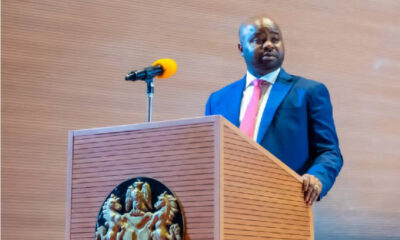
Founder and CEO of TheBoardroom Africa, Marcia Ashong-Samis, a prominent executive search and leadership advisory firm, discusses leadership gaps, workforce preparedness, and Africa’s journey to harnessing its demographic dividend in this interview with LAOLU AFOLABI
Africa’s growing workforce is frequently described as a demographic dividend, but what key structural factors could prevent it from being realised?
The idea of a demographic dividend assumes that population growth automatically converts into productivity. In reality, that conversion is highly conditional. The primary constraint is not the size of the workforce, but the economy’s ability to create roles that absorb talent at the right level of complexity and value creation. Without that, population growth risks increasing pressure on already constrained systems rather than accelerating growth.
The less visible constraint is leadership. Workforce potential is unlocked through organisations that can scale, allocate resources effectively, and execute consistently. Where leadership quality is uneven, talent is underutilised, and businesses struggle to grow beyond a certain point. The risk is not a lack of people; it is a lack of sufficiently strong leadership systems to translate that human capital into sustained economic output.
You operate at the crossroads of leadership and capital—where do you see the greatest disconnect today? Is it a shortage of talent, inefficient capital allocation, or a lack of viable opportunities?
It is a calibration problem between leadership and opportunity. Capital is increasingly mobile and talent is globally distributed, but the precision with which leadership is matched to opportunity remains inconsistent. Too often, organisations default to familiar profiles or narrow definitions of leadership, which limits their ability to fully deploy capital or capture growth.
Across the markets we operate in, one pattern is clear. When leadership is correctly defined and rigorously assessed, both talent and capital perform better. The opportunity is not simply to find leaders but to redefine what leadership success looks like in each context and to search accordingly. That shift alone unlocks disproportionate value.
How is TheBoardroom Africa departing from traditional executive search approaches, and what insights have you gained about what truly drives the effectiveness of leadership teams across Africa?
We approach leadership as a strategic lever rather than a hiring outcome. Our work begins with defining the leadership requirement in the context of the organisation’s ambition, operating environment, and growth trajectory. From there, we map talent globally and assess against that specific mandate, not against generic role specifications. Our activated network is our edge and our catalyst for deep market intelligence. We continuously build and actively engage it, which allows us to access leaders beyond traditional search visibility.
What consistently differentiates high-performing organisations is how their leadership teams function as a unit. The strongest teams are deliberate in decision-making, disciplined in execution, and clear on accountability. Individual capability is necessary, but not sufficient. Performance is driven by the collective effectiveness of leadership and how well it translates strategy into coordinated action.
In practical, measurable terms, what does “workforce readiness” really entail, and what indicators should governments and businesses monitor beyond just employment rates?
Employment figures alone do not capture whether talent is being effectively utilised. Workforce readiness should be assessed through productivity, mobility, and adaptability. Meaningful indicators such as the proportion of the workforce in high-value roles, the speed at which individuals progress into more complex positions, and the system’s ability to build new capabilities in response to changing market demands.
For organisations, the most critical measure is leadership depth. How many roles can be filled with the right search collaboration, how quickly leadership teams can evolve as strategy shifts, and how effectively capability is being built across levels. Globally competitive organisations track not just who they hire but how quickly they can develop and deploy talent to meet future needs.
How prepared are African professionals to navigate major transitions such as AI, automation, and demographic shifts? Where is capability strongest, and where do significant gaps remain?
African talent is increasingly equipped to lead through major shifts such as AI, automation, and demographic change, but readiness is stronger at the individual leadership level than at the organisational transformation level.
On readiness, there is a growing cohort of African leaders who are globally competitive and already operating effectively across international markets. This has been further strengthened in recent years by the return migration of highly skilled professionals, particularly since 2020, driven by expanded opportunities on the continent, improving business environments, and a desire among globally experienced talent to contribute to building locally.
These leaders, alongside locally rooted talent, complement each other through a shared set of strengths, including international exposure, adaptability, commercial acumen, and resilience developed through navigating complex and fast-evolving environments. Many are already leading and shaping organisations both within Africa and globally, demonstrating clear preparedness to operate in a changing world.
However, the gap is less about talent and more about execution at scale. While awareness of AI, automation, and broader transformation is high, fewer organisations are translating this into deep operational change. Effective adoption requires more than technology deployment; it demands rethinking operating models, redesigning roles, and fundamentally shifting how value is created. It is in this area of enterprise-wide transformation speed and depth that the biggest gap remains.
Through your work with leaders across Africa, what recurring capability gaps do you observe at the executive level that hinder companies from scaling or competing on a global stage?
The most persistent gap is execution discipline. Strategy is rarely the issue; many organisations have clear ambitions and well-articulated plans. The challenge is converting those plans into consistent, measurable outcomes, in part due to the realities of operating across diverse African markets, where success depends on translating strategy into locally relevant solutions and execution. This often reflects gaps in accountability, alignment, and the ability to prioritise effectively.
There is also a need for stronger outward-facing leadership. This requires leaders to move beyond an internal, execution-only focus and actively orient themselves toward the needs of investors, partners, customers, and the broader ecosystem. Competing globally requires the ability to engage capital, structure partnerships, and position organisations effectively in international markets. Leaders who can navigate both internal execution and external complexity are still under-represented, yet they are essential for scale.
With growing emphasis on leadership diversity, is this actually leading to substantive changes in how organisations are managed and how decisions are taken?
Where diversity is treated as a performance driver, the impact is tangible. It strengthens decision-making by introducing broader perspectives, more rigorous challenge, and a wider range of experiences. This leads to more resilient and better-informed outcomes.
However, composition alone does not drive change. The shift happens when diversity is embedded into how leadership teams operate, how decisions are made, and how different perspectives are actively integrated. The organisations that are seeing results are those that connect diversity directly to performance, not those that treat it as a standalone objective.
What defines a “fit-for-purpose” African leadership team in 2026? Which skills, experiences, or mindsets remain underrepresented yet are essential for driving growth?
A fit-for-purpose leadership team is built for context and calibrated for execution, this means deliberately designed to turn strategy into action at pace through clear accountability, disciplined follow-through, and strong operational ownership across functions. It combines deep local insight with global exposure and is structured to enable high-quality decisions to be made quickly. There is clarity in roles, alignment in priorities, and a shared standard of performance.
What remains undeployed are leaders with multi-market scaling experience, those who have led transformation at pace, and individuals who can operate seamlessly between strategy and execution. There is also a growing need for systems thinkers who understand how to align different parts of the organisation to deliver sustained results.
In what ways do deficiencies in executive leadership and execution capacity impact a company’s ability to raise, allocate, and scale capital efficiently?
Capital is ultimately a function of confidence in leadership. Investors are backing the team’s ability to make decisions, allocate resources, and deliver outcomes. Where that confidence is strong, capital flows more easily and on better terms.
Execution then determines whether that capital translates into value. Weak leadership erodes returns through misalignment and inefficiency. Strong leadership compounds value by deploying capital with discipline and converting it into growth, profitability, and long-term performance.
At what points is Africa’s leadership pipeline failing, from early career stages through to the executive level, and who bears responsibility for addressing these breakdowns?
The most significant breakdown occurs in the transition to senior leadership. This is where individuals need exposure to complex decision-making, broader commercial responsibility, and strategic thinking. Too few organisations build this transition deliberately, resulting in a limited pool of ready leaders at the top.
Responsibility sits primarily with organisations. Leadership is developed through experience, not theory. Companies that invest early in identifying potential, creating stretch opportunities, and building capability over time are the ones that produce leaders who can operate at scale.
Is the private sector investing enough in developing leadership talent, or does it continue to rely on a limited, repeatedly recycled group of executives?
There is still a reliance on a relatively small, visible pool of executives, particularly for critical roles. This reflects both risk aversion and underinvestment in broadening leadership pipelines.
However, we are seeing a shift among leading organisations. Those that are outperforming are investing deliberately in leadership development, expanding how they define talent, and unlocking external pipelines that reflect the scale of their ambition. That is where long-term competitive advantage is being created.
What changes should African companies make to succession planning if they are truly committed to long-term resilience?
Succession planning needs to move from a static exercise to a continuous, forward-looking process directly linked to strategy and focused not just on replacing current roles but on building leadership capability for future needs.
Critically, it must also account for power, not just position. Leadership transition involves the transfer of influence, relationships, and control over strategy, capital, and organisational narrative. When this “invisible currency” is ignored, even well-designed succession plans can fail in practice.
This requires a more rigorous and transparent view of leadership depth, with early identification of gaps, systematic development, and close alignment with executive search partners. It also demands attention to the human dynamics at the top, where ego, legacy, and identity can slow or distort transitions if not actively managed.
Organisations need to identify gaps early, invest in development systematically, and partner with executive search firms that are well aligned with the needs and aspirations of the organisation. The most resilient companies treat succession as a core performance lever, not an administrative requirement. They also treat succession as a dual process: building future leaders while deliberately transferring both formal authority and informal power. Done well, it becomes a core performance lever for long-term resilience, not an administrative exercise.
If you had to choose three key interventions across policy, capital, and leadership to most accelerate Africa’s readiness by 2050, what would they be?
First, elevate leadership quality as a central economic priority. The ability to identify, develop, and deploy high-calibre leaders at scale will determine how effectively Africa competes globally.
Second, align capital more closely with execution capability. Capital should be directed toward organisations that have the leadership to deploy it effectively, and where gaps exist, they should be addressed proactively.
Third, strengthen the link between education systems and industry demand. The focus must shift from producing graduates to producing talent that can move quickly into roles that drive productivity, innovation, and growth.
How has your career path shaped and prepared you for your role leading TheBoardroom Africa?
I am a lawyer by training and a former energy executive. I bring nearly two decades of experience across legal, leadership consulting, and governance. As an Eisenhower Global Fellow, a Tutu Leadership Fellow, and one of New African Magazine’s 100 Most Influential Africans, I am a passionate advocate for diverse, high-quality leadership as a driver of good governance and sustainable business growth.






JET-A1: Middlemen defy regulator’s pricing band, raise price to N2,230/litre

In Congress speech, King Charles urges US-UK reset

St. Gregory’s College unveils inaugural art exhibition in Lagos

Expert advocates cold chain to cut post-harvest losses

Court Bars Telcos From Blocking Airtime Credit Services

Starmer averts ethics probe over Mandelson appointment but faces more pressure

Four heavyweights in Bauchi APC battle as Pate’s silence reshapes race

 World3 days ago
Trump abruptly cancels peace talks with Iran in Pakistan: "We have all the cards"
- Breaking1 day ago
Man falls asleep after r@ping 89-year-old woman in South Africa
- World2 days ago
Alleged gunman wrote that he expected more security at White House Correspondents' Dinner
- World2 days ago
Trump humiliated as major NATO leader tears apart US plan in Iran war
- World2 days ago
Adult content creator accused of using 5-year-old girl to attract men for cash
- Business2 days ago
Dangote refinery 1.4mbpd expansion to create 95,000 jobs
- Business3 days ago
No new tax on vehicles – NRS
- National2 days ago
Insecurity: Nigerians in Diaspora threaten lawsuit against US lawmaker, Kimberly Daniels