News
Amukpe–Escravos Pipeline: Rising asset value signals new stakes for Nigeria’s oil, gas sector

By Udeme Akpan
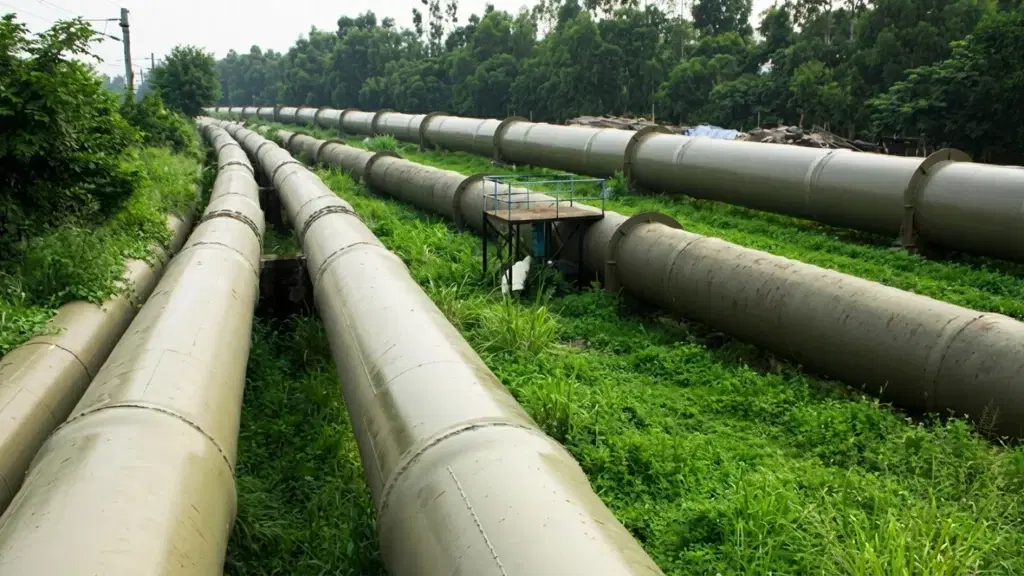
The Amukpe–Escravos Pipeline (AEP), a critical crude evacuation asset in Nigeria’s western Niger Delta, has come under renewed scrutiny—not only due to an ongoing transaction dispute but also because of a significant reassessment of its underlying value.
Previously valued between $200 million and $243 million, the asset is now estimated at close to $700 million or more, fundamentally reshaping discussions around its worth and broader implications for Nigeria’s oil and gas sector.
According to an industry source, “This sharp upward revision reflects a convergence of macroeconomic shifts, operational realities, and strategic considerations that have elevated the pipeline’s importance.
“Inflationary pressures, rising replacement costs for similar infrastructure, tariff adjustments, and the growing premium on secure, reliable evacuation routes have all contributed to the new valuation.
“At about 67 kilometres long, with a capacity of roughly 160,000 barrels per day, the AEP provides a critical alternative to the Trans-Forcados Pipeline—an older, disruption-prone route frequently affected by operational challenges and sabotage.
“In a sector where production stability is closely tied to export reliability, resilient infrastructure has become significantly more valuable.
“The implications of this valuation surge are far-reaching. It challenges earlier assumptions that may have guided past transaction efforts, rendering previous offers—once deemed commercially viable—materially undervalued by current standards.
“This raises important questions about whether strategic national assets should be transferred based on outdated pricing frameworks.
“For Nigeria’s oil and gas industry, this represents a defining moment. The recalibration of AEP’s value underscores the need for a more dynamic and responsive approach to asset valuation, particularly in a volatile environment shaped by evolving risks.”
He also said: “It also highlights the importance of not only efficiently managing infrastructure assets but ensuring they are properly priced to reflect their strategic contribution to national output.
“More broadly, the surge reinforces the view that pipelines are far from passive transport systems—they are high-value infrastructure with direct implications for revenue optimisation. Reliable evacuation routes reduce downtime, minimise losses from production shut-ins, and enhance export efficiency.
“In this context, the AEP stands not just as a midstream asset but as a stabilising force within Nigeria’s oil production architecture.
“For investors and lenders, the revised valuation presents both opportunity and caution. On one hand, it strengthens the case for infrastructure investments in Nigeria’s energy sector, especially where assets demonstrate operational stability and strategic relevance.
“On the other, it raises expectations around governance, transparency, and value protection. Investors are likely to demand stronger assurances that transactions are conducted at fair market value and through credible, transparent processes.
“There is also a policy dimension. The AEP case highlights the need to carefully balance debt recovery with long-term value preservation. Where asset values have significantly improved, the case for rushed or discounted disposals weakens.”
“Instead, a more structured and competitive approach—one that maximises returns while safeguarding public interest—becomes imperative. Beyond the immediate transaction, the broader signal is clear: Nigeria’s energy infrastructure is increasing in both importance and value. As assets like the AEP are re-evaluated, governance standards must evolve accordingly, with stronger valuation frameworks, clearer regulatory alignment, and greater institutional discipline.
He added: “Ultimately, the surge in the value of the Amukpe–Escravos Pipeline reflects deeper shifts within Nigeria’s oil and gas ecosystem. It underscores the growing premium placed on resilience, efficiency, and strategic positioning. How this value is recognised, protected, and leveraged will not only determine the outcome of the AEP transaction but also shape investor confidence and capital flows into the sector.”
The post Amukpe–Escravos Pipeline: Rising asset value signals new stakes for Nigeria’s oil, gas sector appeared first on Vanguard News.








Trump says US, Iran ‘very close’ to making a deal

LP Appoints Reps Deputy Spokesperson Agbese As Convention Publicity Chair

Benue: CP Heads Manhunt For Abductors Of 14 JAMB Candidates

Wilder not in Joshua’s plans despite July fight offer

United Nigeria Airline suffers 3rd bird strike in 48hrs

Court adjourns trial of driver in Anthony Joshuaâs car crash to June 2

Nomba Financial Services manager, associate arraigned over alleged $50,487k fraud

 Breaking2 weeks ago
Outrage as video of secondary school students in Benue state str!ping their classmate surfaces online
 News2 weeks ago
I Joined A Cult, Worked So Hard For Demons – Tonto Dikeh Confesses While Ministering (Video)
- News3 weeks ago
Heartbreaking Story Of 300-Level Ekiti University Student Who Was K!lled After Truck Crashed Into His Building (Video)
- National2 weeks ago
Environmental Sanitation: Lagos meets with LG, LCDA bosses
- News3 weeks ago
WAEC Releases 2026 WASSCE Timetable (Full List)
- Breaking3 weeks ago
Singer Flavour shows off Italian woman and vows to shower her with so much love that she’ll have no choice but fall in love (video)
- Breaking2 weeks ago
Mother Abandons 4 Children with Neighbor and Disappears for Months — Shocking Case Raises Questions
- World1 week ago
Trump LIVE: Iran war bombshell as Trump could be 'removed from Presidency'