World
An underground world: The Australian town where life exists beneath the ground, with churches and hotels under the desert

This Video Is Trending Right Now
Coober Pedy is one of Australia’s strangest and most famous outback towns, a place where much of daily life happens below the surface because the desert heat above ground can be punishing. Located in South Australia, about 950 km north-west of Adelaide, it grew out of opal mining after a discovery in 1915 sparked a rush to the area. Today, it is recognised as the world’s largest producer of precious opal and is known for its dugout homes, underground churches, underground hotels and other subterranean spaces that helped residents make life in the desert more bearable.
The origins of underground life beneath the desert in Australia
Coober Pedy’s history is inseparable from opal. According to the local town plan, the modern settlement began after 14-year-old William Hutchison discovered opal in 1915, drawing miners into the remote desert. It is a mining town in central South Australia, and official South Australian tourism materials continue to describe it as the opal capital of the outback. By the 1980s, town records indicate it was the world’s largest producer of opals, and while mining has declined since then, the industry still defines the town’s identity.The move below ground was not a novelty. It was a practical answer to the desert climate. Community planning documents explain that the first dugouts began as mines, then evolved into purpose-built underground homes, with the sandstone insulation helping keep temperatures more constant. South Australian tourism describes Coober Pedy as a quirky underground town in the heart of the desert, while climate records from the Bureau of Meteorology show that the area experiences hot, dry conditions typical of inland South Australia. The underground design made everyday life more liveable and turned survival into a unique architectural style.
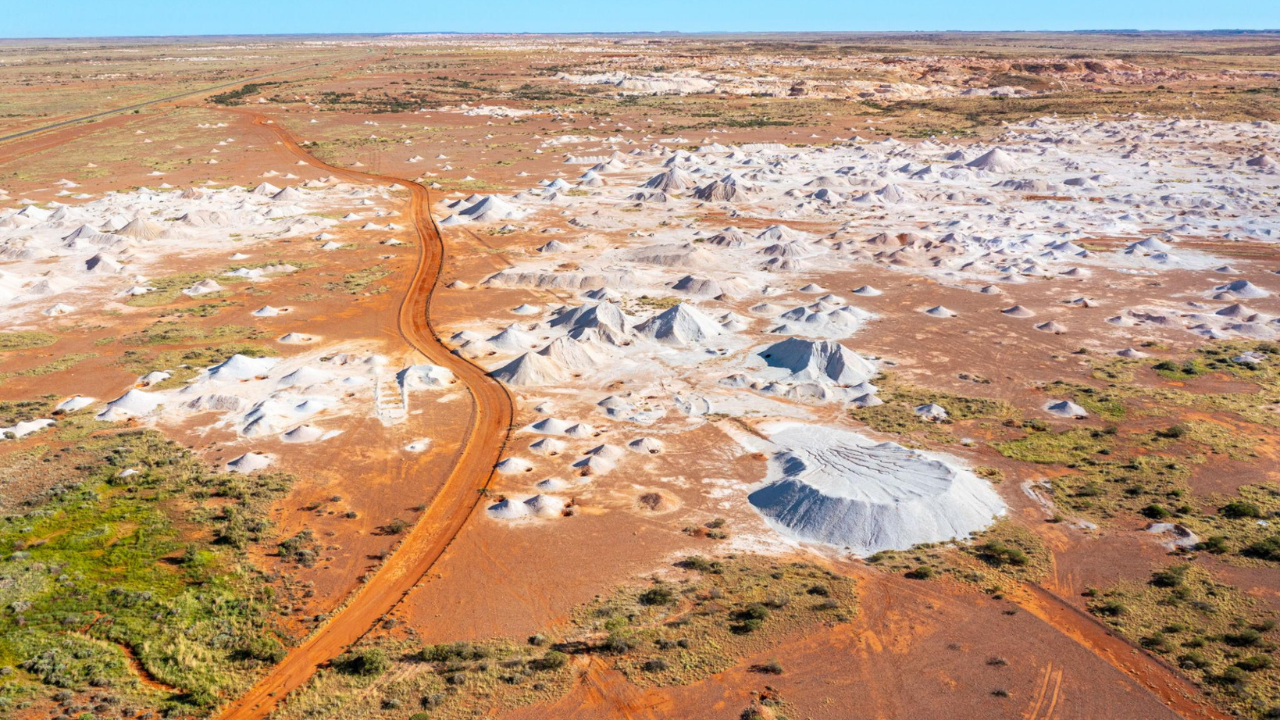
Aerial view of Coober Pedy Opal Mines , Australia
What life looks like below ground
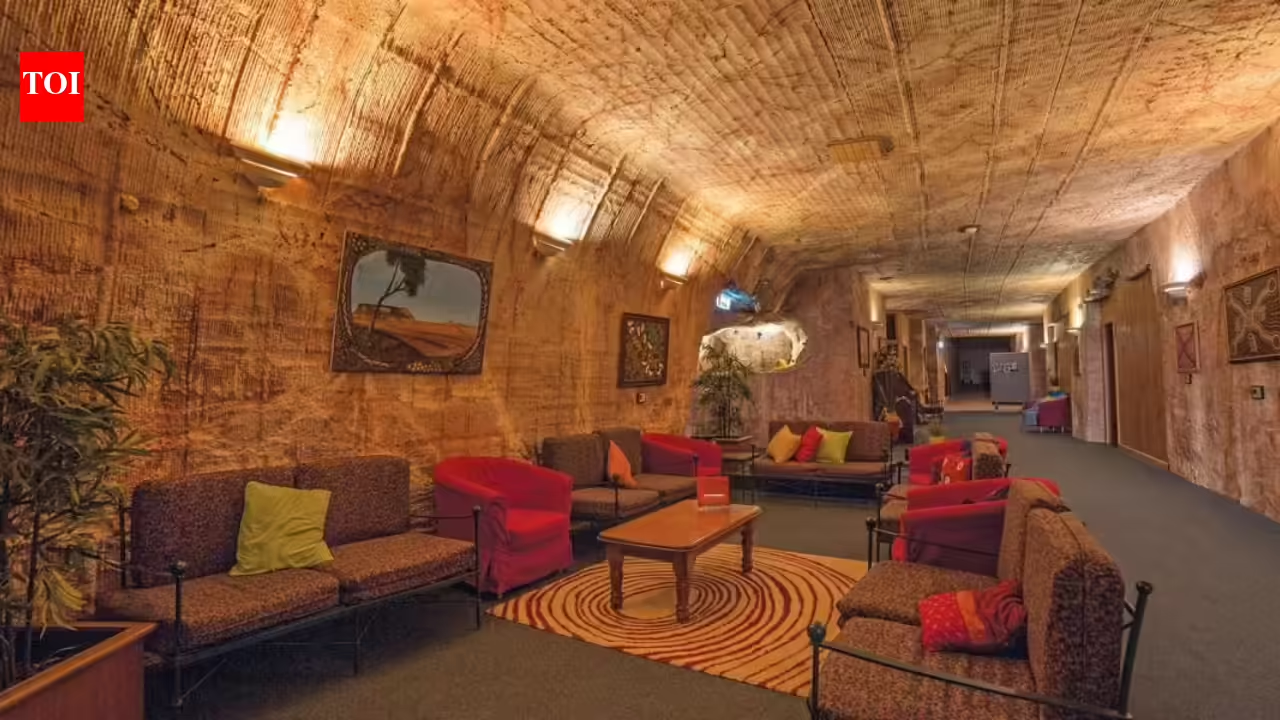
In Coober Pedy, underground living is not limited to homes. Tourism and local planning sources describe underground restaurants, shops, cafes, campgrounds, motels and even churches. South Australia’s tourism materials say visitors can tour underground homes, churches, mines and shops, while a local planning document notes that many residents live in dugouts that are fully furnished and decorated. Some of these homes are entered through cut-outs in the hillside, giving the town a surface that looks sparse and industrial while much of the real living space sits hidden underground.
The town’s churches and hotels
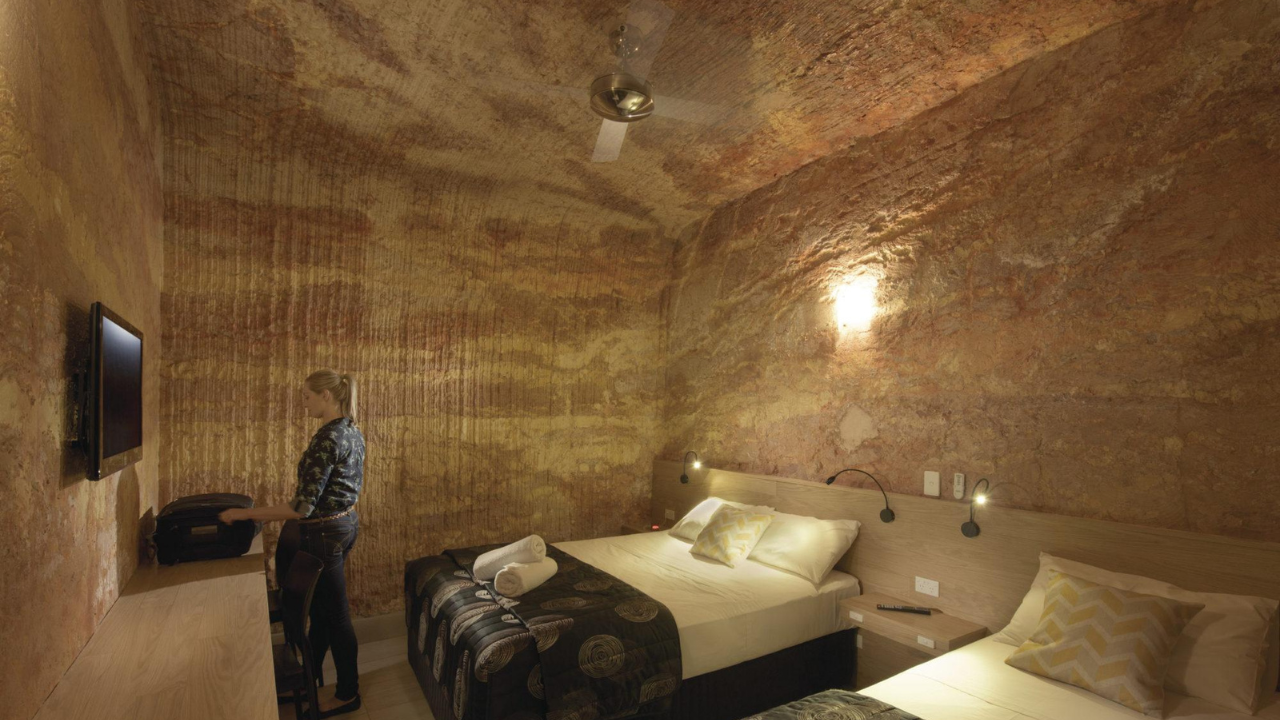
One of Coober Pedy’s most distinctive features is the way even spiritual and commercial life has adapted to the underground setting. A heritage assessment notes that the first official underground church in South Australia was built in 1967, underlining how long this architectural pattern has existed in the town. Underground accommodation such as the Opal Inn, and travel guides to the region highlight underground churches and motels as part of the standard visitor experience. In Coober Pedy, the idea of a hotel or church being below ground is not symbolic. It is simply normal.
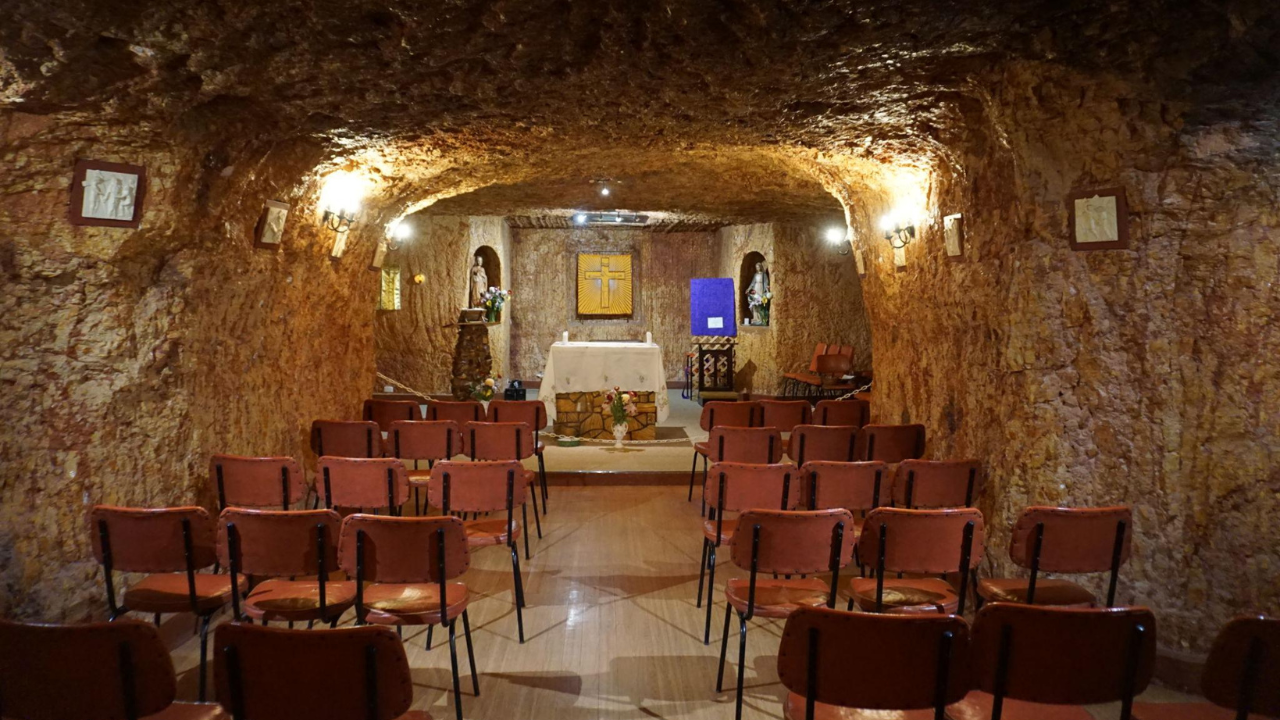
An underground church in Coober Pedy.
What visitors can still see today
Visitors who go to Coober Pedy find a town built around contrast. Above ground, the landscape is open, dusty and marked by spoil heaps, mine shafts and low buildings spread across the desert. Below ground, there are cool interiors, carved rock walls, unusual chapels and underground stays that let travellers experience the town’s original survival strategy firsthand. Official tourism sources recommend underground accommodation, mine tours and stops at local sights such as the town’s churches and mining attractions, which is why Coober Pedy is often described as more of an experience than a destination.
A desert town that became a global curiosity
Coober Pedy continues to fascinate because it is both extreme and practical. Here, geology, climate and human ingenuity have shaped the entire layout of the town. What began as a remote mining camp evolved into a settlement designed for comfort in harsh desert conditions. Over time, this adaptation has turned Coober Pedy into one of the most distinctive outback communities, where living underground feels like the most sensible way to endure the environment.


Suspect attacks man who confronted him for defecating in front of his residence

DNKI Condemns Xenophobic Attacks in South Africa, Demands Urgent Action to Protect African Nationals

Kano assembly confirms new deputy gov

11 players set to miss Arsenal vs Atletico Madrid Champions League clash

Coup Plot: Military Court Martial To Resume May 8

Bayern would reject €200m offer for Olise — Official

British woman living in Las Vegas shares 5 US tipping habits she can't get over

 World23 hours ago
Trump abruptly cancels peace talks with Iran in Pakistan: "We have all the cards"

 World3 days ago
Ronaldo has three final career dreams he must fulfil before retirement, Messi already has the first
- Breaking3 days ago
Rapper, French Montana spends $200K on Chrome Hearts Jeans then realises he can’t wear it because of his religious beliefs
- World13 hours ago
Alleged gunman wrote that he expected more security at White House Correspondents' Dinner
- Politics3 days ago
Yahaya Bello backs Abejide’s third-term bid
- Breaking3 days ago
Kenyan woman captured in viral video damaging her hostâs household property in US
- National3 days ago
FCT residents hail President Tinubu over construction of satellite towns roads
 Politics3 days ago
YPP pegs presidential form at ₦50m