World
Ben Sasse on Senate's "smack-down nonsense" and his wish for America

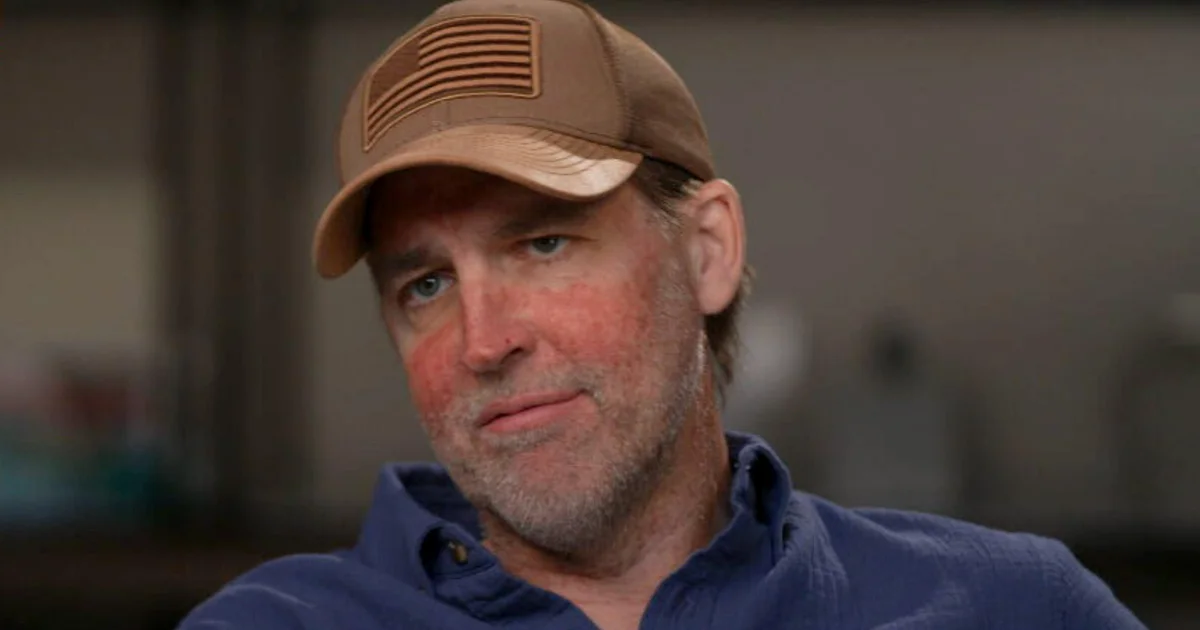
Late last year, former Sen. Ben Sasse was diagnosed with pancreatic cancer and given three to four months to live. Now, he’s on “extended time” — and he wants to spend some of his remaining time talking about “bigger stuff.”
In an interview with “60 Minutes” correspondent Scott Pelley and a town hall hosted by CBS News, the Nebraska Republican said Congress is consumed by “reductionistic tribalism” and isn’t spending enough time on large-scale problems — especially the massive disruptions that he believes will be wrought by artificial intelligence.
Sasse also explained why he believes he owes his extra time on earth to “providence, prayer and a miracle drug.” And he argued more Americans should have access to the types of experimental treatments that he credits with extending his life.
A Nebraska native with a Ph.D. in history from Yale University, Sasse ran for the Senate in 2014. He won reelection after clashing with President Trump, but then, two years later, Sasse resigned from Congress to become president of the University of Florida.
Asked why he left elected office, Sasse called the Senate “very, very unproductive.” He said he was in Washington, D.C., for much of the week, missing time with his wife and three kids in Nebraska, while lawmakers weren’t accomplishing much.
“We didn’t do real things. And it felt like the opportunity cost was really high,” he said.
Right now, Sasse told Pelley that “Congress doesn’t talk about any of those kind of most fundamental issues,” chief among them the way that AI could change the economy and how people work.
“Neither of these parties really have very big or good ideas about 2030 or 2050, at a national security level, at a future of work level, at an institution-building level,” he said. “The Congress is not wrestling with big or important questions right now.”
Much of the blame, Sasse believes, is linked to the fact that politicians have an incentive to appeal to a narrow niche, a problem accentuated by social media.
“It doesn’t encourage a lot of humility. It doesn’t encourage someone saying, ‘You know what, I used to believe this, but I listened to somebody else, and I realized I was wrong, and I’ve learned this new thing,’ he said. “There’s no audience for that.”
Sasse believes the House should be much, much larger — 2,000 lawmakers instead of 435, which would mean individual members would represent fewer people. And he thinks the Senate should be more productive and more focused on addressing major questions, rather than day-to-day theatrics.
“The Senate needs to be less like Instagram. The Senate needs to be more deliberative. And that means less smack-down nonsense,” he said.
He suggested the U.S. is nearing an inflection point: “In 2040, or 2050, or 2060 does the republic survive? I suspect yes, and I would bet yes. But it’s not a 90/10 bet.”
“A republic actually requires people who do deliberative, long-form discourse, learning, humility and community building,” he said. “We’re not doing that right now.”
Sasse told Pelley he’s “optimistic and pessimistic about the complexities of human nature.”
“But I am optimistic about what a free people and a republic can build if they start with the ‘little platoons’ of their family, their extended kin network, their neighborhood, their workplace, and their place of worship,” he said.
Asked what big issues Congress is missing, Sasse immediately offered up the AI revolution, which he called “both glorious and horrific at the same time.”
“What the digital revolution does is it accelerates almost everything about the human experience,” Sasse predicted. “Anything that can be reduced to a series of steps, which is most economic activity, is going to be routinized and become really, really cheap, really fast, and really ubiquitous.”
On one level, Sasse believes, AI could launch an era of “ubiquitous abundance,” with no shortages of cheap, high-quality goods. “I don’t know if it’s three years from now or 13 years from now, but we’re all going to have a robot that builds robots for us.”
“It doesn’t encourage a lot of humility. It doesn’t encourage someone saying, ‘You know what, I used to believe this, but I listened to somebody else, and I realized I was wrong, and I’ve learned this new thing,’ he said. “There’s no audience for that.”
But it will create upheaval and uncertainty as many jobs are replaced by technology.
“It’s pretty scary to not know what you’re going to do to add value for your neighbor 10 or 25 years from now,” Sasse said. “We’ve never lived in a world where 22-year-olds couldn’t assume that the work they did they would be able to do until death or retirement. And we’re never going to have that world again.”
Sasse is grappling with stage-four pancreatic cancer that has metastasized, he said, leaving him with lung cancer, vascular cancer, liver cancer and lymphoma.
He has been taking an experimental oral medication for pancreatic cancer called daraxonrasib, which works by inhibiting a protein that can cause cells to grow excessively, leading to tumors.
The maker of daraxonrasib, Revolution Medicines, reported strong results from the drug’s phase three trial earlier this month. Patients who took daraxonrasib survived by a median of 13.2 months, compared to 6.7 months with chemotherapy.
During CBS News’ town hall, Sasse heard from another person with cancer who has credited his early-stage medical treatment for giving him more time with his family.


Iranians can call us but they must agree to no nukes, else no point in meeting: Trump

Firm files N771m suit against Navy, AGF

Lagos 2027: Gbajabiamila declares support for Hamzat’s governorship ambition

Shooting proves need for White House ballroom: Trump

Primaries: How power struggles threaten Ondo APC’s unity

APGA Reps aspirant, Anambra LG chair trade blame over gunshot incident

Tony Dokoupil on political violence in America after Saturday's correspondents' dinner attack

 World11 hours ago
Trump abruptly cancels peace talks with Iran in Pakistan: "We have all the cards"
- Breaking2 days ago
Rapper, French Montana spends $200K on Chrome Hearts Jeans then realises he can’t wear it because of his religious beliefs

 World2 days ago
Ronaldo has three final career dreams he must fulfil before retirement, Messi already has the first
- World3 days ago
Trump 'to review UK's claim to the Falklands' in bombshell Iran punishment
- Breaking2 days ago
Kenyan woman captured in viral video damaging her hostâs household property in US
- News3 days ago
Iran confirms foreign minister travelling to Pakistan
- National3 days ago
Jigawa approves N353m for flood preparedness ahead of 2026 rainy season
- National2 days ago
FCT residents hail President Tinubu over construction of satellite towns roads