News
Benin elects finance minister as new president

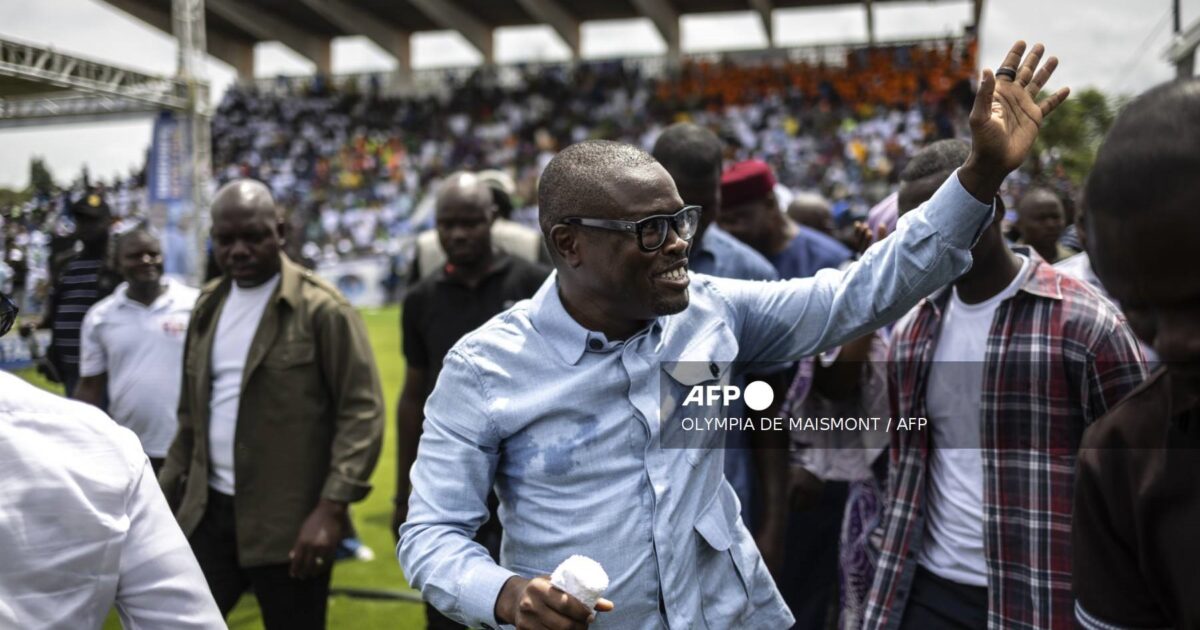
Benin’s finance minister has won a landslide victory in a presidential election, according to provisional results, keeping the coastal west African country on course after a decade of robust economic growth.
Wadagni embodies continuity with the era of outgoing president Patrice Talon, which has seen the country enjoy rapid economic growth, an expansion in tourism and the completion of numerous infrastructure projects.
He nonetheless faces major challenges, including a huge wealth gap and insecurity in the north due to attacks blamed on jihadist groups.
The 49-year-old technocrat was the overwhelming favourite to succeed Talon, who handpicked him, and was backed by the two parties in the governing coalition.
He faced a single, minor opponent, Paul Hounkpe, who ran a low-key campaign and conceded defeat while ballots were still being counted.
“To… Romuald Wadagni, I offer my republican congratulations. Democracy requires mutual respect and the ability to rise above partisan divides,” Hounkpe said in his concession statement.
Benin’s independent electoral commission, CENA, released provisional results overnight from Monday to Tuesday showing Wadagani had secured more than 94 percent of the vote, based on 90 percent of the votes counted.
Turnout was nearly 60 percent.
The constitutional court is expected to announce the final results from Sunday’s election later in the week.
– No surprise –
An electoral monitoring platform reported complaints of ballot boxes appearing full before the start of voting.
But the Economic Community of West African States, which deployed observers in more than 1,000 polling stations, said the election had been peaceful and the aberrations noted were insufficient to undermine its credibility.
“Our observers noted instances of ballot box stuffing, attempted vote-buying and intimidation of electoral officials in certain polling stations,” ECOWAS said on Tuesday.
But, it continued, the “isolated practices… are not such as to undermine the regularity of the ballot, which was conducted calmly”.
The main opposition Democrats party failed to secure the required parliamentary endorsements to field a candidate.
Hounkpe needed the endorsement of several majority lawmakers to get on the ballot paper.
“The results are no surprise,” said legal practitioner Hilaire Okounde. “Wadagni had no opposition. He could have got 99 percent.”
“The public has opted for continuity in modernisation, sound management and a commitment to development,” said Augustin Salanon, a port official who supported Talon’s anointed successor.
Democratic activist Astrid Kounouho said, “I’m not pleased with this result but the fact is that Romuald Wadagni is now the president-elect.”
“As a member of the opposition, I contest the conditions under which this election took place, the lack of political openness and the absence of genuine pluralism.
“But the country is greater than our differences and we expect him to govern for everyone,” she said.
Alimata, a lock seller in the Gbegemey neighbourhood of Cotonou, took a pragmatic view.
“If this election or Wadagni’s arrival can change our lives, we shall be happy but for now, we have to find a way to feed the family,” he told AFP.
– Challenges ahead –
Talon, who has run Benin since 2016, is standing down after two five-year terms.
This was Wadagni’s first run at elected office.
Under his 10-year stint as finance minister, Benin’s public finances have been cleaned up and the deficit cut by a third to reach three percent of GDP.
With growth averaging more than six percent over the decade, Wadagni and Benin have won the backing of international investors.
As president, “he will follow in the continuity of what has been done”, political analyst Franck Kinninvo said.
Major challenges remain.
The poverty rate is estimated at more than 30 percent and many people have not felt the benefits of economic growth.
Benin’s development will also depend on security, which requires dealing with violence in the north attributed mainly to Al-Qaeda’s Sahel branch, the Group for the Support of Islam and Muslims (JNIM).
The next elections are not until 2033 because a constitutional reform has extended the presidential term to seven years.
AFP





Stepbrother charged for k!lling and s3xually ass@ulting cheerleader sister on family cruise

FG defends Jilli airstrike, orders probe

ADC convention ratifies NEC resolutions, dissolves NWC, expels members in sweeping reforms

Indian-origin doctor in US seen wielding cane stick during a parking spot fight in viral video

Amaechi, Tambuwal, Galadima blasts FG over pressure on opposition, economy

Man commits su!cide after losing all his teeth in failed dental treatment in Turkey

Mahama, Adesina demand Africa’s shift from aid to investment-driven growth

 Breaking2 weeks ago
Outrage as video of secondary school students in Benue state str!ping their classmate surfaces online
 News2 weeks ago
I Joined A Cult, Worked So Hard For Demons – Tonto Dikeh Confesses While Ministering (Video)
- News2 weeks ago
Heartbreaking Story Of 300-Level Ekiti University Student Who Was K!lled After Truck Crashed Into His Building (Video)
- National2 weeks ago
Environmental Sanitation: Lagos meets with LG, LCDA bosses
- Breaking1 week ago
Mother Abandons 4 Children with Neighbor and Disappears for Months — Shocking Case Raises Questions
- News2 weeks ago
WAEC Releases 2026 WASSCE Timetable (Full List)
- Breaking2 weeks ago
Singer Flavour shows off Italian woman and vows to shower her with so much love that she’ll have no choice but fall in love (video)
- World6 days ago
Trump LIVE: Iran war bombshell as Trump could be 'removed from Presidency'