National
Ex-minister blasts Atiku for saying Jonathan was inexperienced to be Nigeria’s president

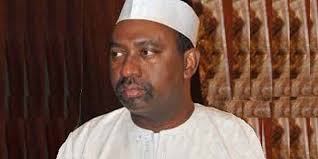
Bashir Yuguda, former minister of national planning and minister of state for finance, has faulted remarks by former Vice President Atiku Abubakar, saying former President Goodluck Jonathan was not inexperienced in office.
Yuguda spoke in a statement on Friday in response to comments by Atiku during an interview on Arise TV.
Atiku had said Jonathan was “a decent young man” but lacked the experience required to manage Nigeria’s challenges.
“For instance, like this case of Umaru Yar’Adua, who started very well and was succeeded by Goodluck Jonathan. I know Jonathan very well — a decent young man — but he was inexperienced, and that, I believe, also contributed to his failure to manage the affairs of the country, particularly when he was faced with challenges,” Atiku said.
Reacting, Yuguda described the remarks as inaccurate and inconsistent with the facts, noting that Jonathan had served as deputy governor, governor, vice-president and acting president before assuming office.
“During that period, Nigeria’s economic profile expanded significantly. The country attained the status of Africa’s largest economy, attracted strong investor confidence, and maintained relative stability in key indicators. Poverty levels declined to some of the lowest recorded since the return to democratic rule in 1999. These are not retrospective claims; they are outcomes documented by credible institutions,” he said.
Yuguda said the Jonathan administration recorded progress in agriculture, transport and education.
“In agriculture, the administration moved the conversation from subsistence to sustainability. Reforms in the sector improved food availability and earned Nigeria global recognition for progress towards hunger reduction targets.
“The Jonathan administration revived train routes across Nigeria to provide an inexpensive alternative to road and air travel. On behalf of the President, I personally commissioned the rehabilitation and restoration of the Zaria–Gusau–Kaura Namoda rail line, which had deteriorated over time following 26 years of neglect.
“His vision for transformational development also found expression in the attention he gave to the education sector. He established no fewer than 12 new federal universities, with nine of them in the North, and about 165 Almajiri schools to enhance access to education across the country. Those of us in government at the time understood that these gains were the result of focused policy execution, not happenstance,” he said.
Yuguda said Jonathan’s leadership style was defined by calmness and restraint, stressing that the ex-president remained loyal to his predecessor, Umaru Musa Yar’Adua, who died in office.
“He possessed a calmness that steadied governance, even in moments of pressure. I recall numerous occasions when he would discourage any attempt by his appointees to respond sharply to critics, including former leaders. His position was clear: leadership must not descend into unnecessary confrontation,” he said.
Yuguda said Jonathan’s most enduring legacy lies in his respect for democratic values, particularly his decision to concede defeat in 2015.
“Despite the security challenges at the time of the 2015 elections, Jonathan did not use them as an excuse to prolong his stay in office. He not only ensured that elections were conducted even in areas with the most difficult security challenges, he also pioneered the deployment of technology to enhance the transparency and credibility of the electoral process,” he said.
Yuguda said Jonathan’s decision to concede power strengthened Nigeria’s democracy and prioritised national stability over personal ambition.
“No leader is beyond criticism, and President Jonathan himself would be the first to acknowledge that he is human and capable of error. But to reduce his presidency to a question of inexperience is to overlook both the depth of his preparation and the substance of his record.
“Ultimately, Nigerians will judge based on evidence, not assertions. They can differentiate between leadership that left tangible footprints and narratives that seek, after the fact, to redefine it. President Jonathan’s contributions are visible, documented, and enduring.
“They do not require embellishment, and they certainly cannot be diminished by revisionist claims, especially by one whose claim to experience in the last two decades has remained an unrealised ambition to be elected President of our great country,” he said.
Yuguda said Nigerians should reflect on how others might have handled the transition during Yar’Adua’s illness.
“Would they have acted with the same wisdom, decorum, and restraint that Jonathan demonstrated in the interest of preserving the nation’s fragile democracy, or would personal ambition have driven them to destabilise it?” he asked.


Photos: Okoya’s daughter set to marry ex-diplomat’s son

Rapper, French Montana spends $200K on Chrome Hearts Jeans then realises he can’t wear it because of his religious beliefs

FBI chief Kash Patel under scrutiny over 2005 public urination arrest: Report

LIB Exclusive: Actress, Rosy Meurer files for dissolution of her marriage with businessman, Olakunle Churchill

South Africa’s acting police minister condemns xenophobic attacks on Ghanaian nationals, warns perpetrators will be arrested

Russian scientist in bombshell ageing drug claim after Putin discussed 'living to 150'

YPP pegs presidential form at ₦50m

 Breaking4 weeks ago
Outrage as video of secondary school students in Benue state str!ping their classmate surfaces online
 News3 weeks ago
I Joined A Cult, Worked So Hard For Demons – Tonto Dikeh Confesses While Ministering (Video)
- News4 weeks ago
Heartbreaking Story Of 300-Level Ekiti University Student Who Was K!lled After Truck Crashed Into His Building (Video)
- World2 days ago
Millionaire's son beheaded and disemboweled on trip with girlfriend to holiday hotspot
- Breaking4 weeks ago
Singer Flavour shows off Italian woman and vows to shower her with so much love that she’ll have no choice but fall in love (video)
- News4 weeks ago
WAEC Releases 2026 WASSCE Timetable (Full List)
- National3 weeks ago
Environmental Sanitation: Lagos meets with LG, LCDA bosses
- Breaking3 weeks ago
Mother Abandons 4 Children with Neighbor and Disappears for Months — Shocking Case Raises Questions