News
Lai Mohammed blames fake news for EndSARS protest escalation

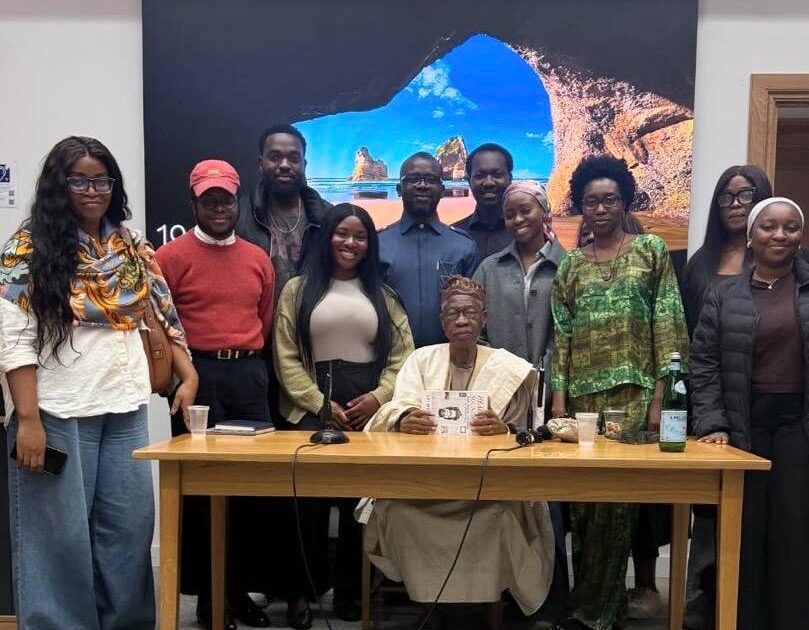
Former Minister of Information and Culture, Lai Mohammed, has attributed the escalation of the #EndSARS protests in 2020 to the widespread circulation of fake news and disinformation, describing misinformation as the government’s most significant challenge during the period.
The #EndSARS protests began on October 8, 2020, as peaceful demonstrations calling for the disbandment of the Special Anti-Robbery Squad, a unit of the Nigerian Police Force.
The movement rapidly gained momentum on social media through the #EndSARS hashtag, leading to mass protests in several cities across the country.
The Lekki Toll Plaza in Lagos State emerged as a central gathering point and symbolic hub of the demonstrations, which intensified and spread nationwide despite efforts by the government to address the concerns raised.
The protests were triggered by a viral video showing SARS officers assaulting and allegedly shooting a young Nigerian on 3 October 2020 in Ughelli, Delta State.
Speaking at a forum at the London School of Economics and Political Science on Friday, Mohammed said the protests initially reflected genuine public frustration over police brutality but later took a different direction as unverified information circulated widely.
In a statement issued on Sunday by the Head of Strategic Communications at his media office, Nnamdi Atupulazi, the former minister said the situation worsened as misleading content spread across both traditional and digital platforms.
“The problem we had was not the usual communication gap between the government and the citizens. It was fake news and disinformation, coupled with unbridled violence.
“The biggest challenge came when the government deployed troops to the Lekki Toll Gate in Lagos to disperse the protesters. That’s when fake news and disinformation escalated,” he said.
Mohammed also aimed for international media coverage, singling out CNN for criticism. He alleged that some of its reports relied on unverified or manipulated content, which he said contributed to heightened tensions and shaped global perceptions of the incident.
What we saw during EndSARS was the dangerous power of disinformation in real time,” the ex-minister added.
Reflecting on the COVID-19 pandemic, the former minister noted that Nigeria had to develop its communication strategy without any clear precedent, as the last comparable global health crisis had occurred more than a century ago.
“When COVID-19 broke out, there was no template to fall back on. The last major pandemic, the Spanish Flu, had occurred over 100 years earlier. So we had to devise our own communication strategy on the go,” he said.
He explained that authorities adopted a multi-channel communication approach, including daily briefings and outreach in local languages, to keep citizens informed and counter misinformation.
Mohammed explained, “We produced a wide range of advocacy and communication materials, translated them into major indigenous languages and pidgin, and then disseminated them across traditional and digital platforms.
“We launched live radio programmes nationwide to sustain public dialogue. We conducted weekly opinion polls that showed approval ratings of between 97 per cent and 98 per cent, a clear indication of the impact of our strategies.”
On security communication, Mohammed recalled a media tour of territories formerly held by insurgents in the North-East, which he said helped counter prevailing narratives about the conflict.
“That trip was a turning point. For the first time, journalists were able to see firsthand that those territories had been reclaimed, and that normalcy was gradually returning,” he said.
The ex-minister also highlighted town hall meetings held across the country as part of efforts to improve engagement between the government and citizens.
“Each meeting was an unscripted session that enabled government ministers to speak on a chosen theme and then take questions from the people,” he added.
Mohammed further defended the suspension of Twitter in Nigeria, describing it as a considered decision taken after attempts to address concerns over misinformation and divisive content failed.
“Despite repeated efforts by the government to secure cooperation in curbing misinformation, incitement and divisive content, these concerns were largely unaddressed,” he said.
The LSE engagement concluded the former minister’s three-day UK speaking tour, where he addressed audiences on leadership, governance, and public communication, drawing from his book ‘Headlines & Soundbites: Media Moments That Defined an Administration’, which reflects on his tenure as Nigeria’s government spokesman from 2015 to 2023.
Beyond the LSE, he also visited Abbey College Cambridge and St John’s College, Cambridge.




2027: Atiku raises alarm over plot to disenfranchise Northern voters

We’re backing only Tinubu’s re-election, not APC aspirants — APGA chieftain

Things to know about suspect in US press gala shooting

Nigeria Para-Powerlifting Federation Set to Host Kingsley Awodi Open Championship in Abuja

Fintiri has final say on party tickets- APC senatorial aspirant

Zaragoza goalkeeper Andrada faces ban after punching opponent in face

Secret Service members' life saved after phone stopped bullet during Washington shooting

 World8 hours ago
Trump abruptly cancels peace talks with Iran in Pakistan: "We have all the cards"
- Breaking2 days ago
Rapper, French Montana spends $200K on Chrome Hearts Jeans then realises he can’t wear it because of his religious beliefs

 World2 days ago
Ronaldo has three final career dreams he must fulfil before retirement, Messi already has the first
- World3 days ago
U.S. soldier arrested after allegedly using Maduro capture knowledge to make big bets
- Breaking2 days ago
Kenyan woman captured in viral video damaging her hostâs household property in US
- National3 days ago
Jigawa approves N353m for flood preparedness ahead of 2026 rainy season
- World3 days ago
Trump 'to review UK's claim to the Falklands' in bombshell Iran punishment
- News2 days ago
Iran confirms foreign minister travelling to Pakistan