News
We thought it was Malaysia—Survivors expose ruthless trafficking ring

By Esther Onyegbula
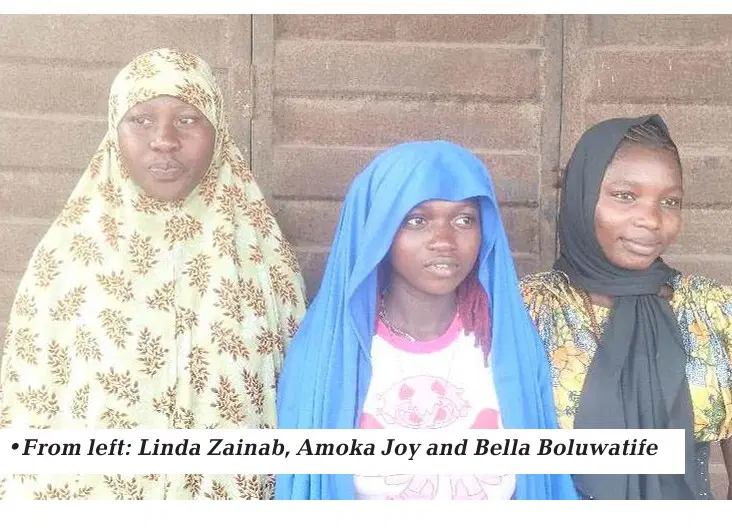
On February 17, 2026, Bella Boluwatife packed her bags with hope. Like many young Nigerian women searching for a better life, she believed she was on her way to Malaysia, where a job in a bar or as a housekeeper awaited her. Her parents had asked the right questions. The answers seemed reassuring. There were even pictures of a modern bar. Everything looked real. But it was all a lie.
What began as a promise of opportunity quickly unravelled into a nightmare of deception, coercion, and survival in a foreign land, one that exposes the dark, organised network of human trafficking preying on Nigeria’s most vulnerable.
Bella was not alone. She travelled with two others: Linda Zainab, a young fashion designer trying to build a future for herself, and Amoke Joy.
Speaking to Sunday Vanguard, Bella said: “An agent known simply as Peter Osas told us we were going to Malaysia to work. He handled the arrangements and spoke confidently, convincingly, assuring us of legitimate jobs abroad.
“Before our departure, we had a video call with a woman identified as ‘Angel,’ whom I later discovered sponsored our trip. Before the call, we were coached to answer ‘yes’ to every question she asked.
“It was our first mistake, one we didn’t know we were making. From Ogun State, we were driven to the Seme border, then moved into Cotonou, Benin Republic,” Bella explained.
Their clothes were changed. New identities were issued. Passports, processed in less than an hour, were handed to them. They were instructed to lie about their origin if questioned.
Explaining further, Bella said: “Then came the long road to Mali, six days, multiple checkpoints, armed officers, and questions we couldn’t answer. The driver spoke only French. At one point, we were nearly detained until a call was made and money exchanged hands. We were not travellers, we were cargo.”
“When we finally arrived, nothing matched the dream we had been sold. There were no proper houses, only huts made of tarpaulin in the middle of a bush.
“That moment everything became clear: condoms, dozens of them; girls, some as young as 13, dressed in ways that left nothing to the imagination. The truth hit hard and fast. This was not Malaysia. This was not bar work. This was a brothel, and there was no way out. We had no choice,” she narrated in a heavy voice. Eventually, survival instincts took over. I cried every day, but I had no choice,” Bella said.
Protests
Their protests were immediate, their resistance fierce, but it didn’t matter.
“We were told each of us owed 1.5 million CFA francs, a debt we had to repay to gain freedom. Every meal we ate, every movement, every breath came with a cost.
“When I fell seriously ill, I was taken to a hospital. The diagnosis included severe pain and dangerously high blood pressure. The bill was 70,000 CFA francs, added to my debt. I didn’t even know if I would survive. Within days, I was forced back to work,” she said.
Echoing the same reality, Zainab said: “We begged her. We told her we could not do this work. Her response was cold: there was no other job. Our phones were seized. We were separated, each assigned to a different ‘boss.’ Communication with the outside world was cut off.
“I remember vividly, I was shaking. I kept asking myself, ‘Where have we come to?’ At first, we refused. We cried. We prayed. We begged. But the system is designed to break resistance, using time as a weapon.
“They gave us clothes and told us to stand outside. We kept crying, but we didn’t know anybody, and we had to survive.”
Unfortunately, the system thrived on their helplessness.
“Customers came, different men every day. Sometimes five, sometimes more. The money went straight to our handlers. Freedom felt like an illusion until Joy found a way to reach her mother and told her what was happening. Luckily, our parents took action,” Zainab said.
Back home
Back home in Nigeria, something was happening. Their parents had raised the alarm. Calls were made. Authorities were contacted. They reached out to NAPTIP Lagos Zonal Command, which subsequently contacted the Global Anti-Human Trafficking Organization (GAHTO) for urgent intervention.
GAHTO swung into action, and the Nigerian embassy in Mali was reportedly alerted. Pressure began to mount.
Joy said: “Inside the camp, our bosses grew uneasy. They started asking us to lie. They wanted us to tell our parents we were okay, but we refused. When the pressure from the embassy intensified, our boss reluctantly allowed our return, but not without trying to recover what they could. We were given minimal money and placed on a bus back to Nigeria. No apologies. No accountability.”
Bella, Zainab, and Joy’s story is not an isolated case. It is a window into a growing trafficking network exploiting economic hardship, trust, and desperation. Young women are lured with promises of jobs abroad, only to be trapped in cycles of debt bondage and sexual exploitation.
The methods are calculated: fake job offers, coached interviews, forged travel documents, isolation, confiscation of communication, and psychological and financial control.
Often, by the time victims realise the truth, they are already too far from home.
Speaking on the rescue and the broader scope of human trafficking across West Africa, Founder of the Global Anti-Human Trafficking Organization (GAHTO), Prosper K. A. Michael, who facilitated the rescue, said:
“Human trafficking is a major form of global crime against humanity, involving a well-organised network of recruiters, transporters, and exploiters who use force, fraud, and deception to lure victims.
“The end result is always exploitation, either sexual or forced labour. Victims lose their freedom, their documents are confiscated, their movements are restricted, and they are reduced to modern-day slavery.
“Over the years, we have carried out rescue operations of victims trafficked from Nigeria to countries such as Egypt, Libya, and Iraq,” he stated.
Meanwhile, the victims, now back in Nigeria, say they are focused on rebuilding their lives.
“Before I left, I was learning hairdressing, makeup, pedicure, and wig-making. I hope to return to that path,” Bella noted.
Zainab and Joy want the same, to rebuild their lives. Their voices, once silenced, are now a warning.
“We thought we were travelling for work,” Bella said softly. “We didn’t know we were walking into a trap.”
Their story raises urgent questions:
How many more are still out there?
How many are still trapped, unheard, unseen? And perhaps most importantly, who is protecting them?
The post We thought it was Malaysia—Survivors expose ruthless trafficking ring appeared first on Vanguard News.



Teachers Commence Indefinite Strike In FCT

Bandits attack palace, kidnap monarch, wife in Kwara
No Ban On Airtime Loans, Data Advance, Says FCCPC Amid Public Confusion

Kamala says Trump was ‘pulled into’ Iran war by Bibi, calls it a distraction
Kamala says Trump was ‘pulled into’ Iran war by Bibi, calls it a distraction

Insecurity: Nigeria to train 200 military personnel in Turkey

Africa’s incredible new £199m bridge – 2 miles long and East Africa’s longest

 Breaking3 weeks ago
Outrage as video of secondary school students in Benue state str!ping their classmate surfaces online
 News3 weeks ago
I Joined A Cult, Worked So Hard For Demons – Tonto Dikeh Confesses While Ministering (Video)
- News3 weeks ago
Heartbreaking Story Of 300-Level Ekiti University Student Who Was K!lled After Truck Crashed Into His Building (Video)
- National3 weeks ago
Environmental Sanitation: Lagos meets with LG, LCDA bosses
- News3 weeks ago
WAEC Releases 2026 WASSCE Timetable (Full List)
- Breaking3 weeks ago
Singer Flavour shows off Italian woman and vows to shower her with so much love that she’ll have no choice but fall in love (video)
- Breaking2 weeks ago
Mother Abandons 4 Children with Neighbor and Disappears for Months — Shocking Case Raises Questions
- World2 weeks ago
Trump LIVE: Iran war bombshell as Trump could be 'removed from Presidency'