News
2027 Presidency: How southern fragmentation may favour the North

By Luminous Jannamike, ABUJA
As political consultations ahead of the 2027 presidential election quietly gather momentum, a growing concern is spreading within sections of the opposition: that multiple Southern contenders could divide anti-APC votes badly enough to create a pathway for the return of Northern presidential dominance.
Read Also: APC Tickets: Govs, aspirants at war over alleged imposition
Inside anti-APC ranks, the fear is straightforward. President Bola Ahmed Tinubu remains the dominant political force in the South-West. Peter Obi still commands strong support across the South-East and among many younger urban voters, while Seyi Makinde has openly declared presidential ambition.
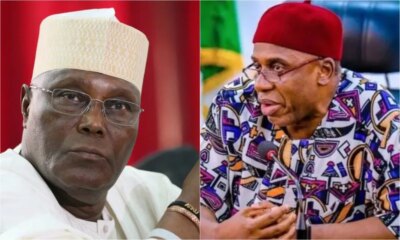
At the same time, coalition talks involving figures linked to the African Democratic Congress, including former Vice President Atiku Abubakar, continue shaping opposition strategy ahead of 2027.
The anxiety within coalition circles is that if Southern votes scatter across several strong contenders, the North’s numerical strength could once again become decisive in determining the presidency.
That position was openly advanced by ADC chieftain Demiji Fabiyi.
“No southerner can defeat Tinubu. None of them can defeat him. It’s only a Northerner, and that Northerner, as we speak today, is Atiku Abubakar,” Fabiyi said, while citing former President Muhammadu Buhari’s 2015 victory over then-President Goodluck Jonathan as proof that Northern consolidation can defeat a Southern incumbent.
The remarks reflect a growing belief among some coalition strategists that the North’s voting strength remains one of the most important factors in Nigerian presidential politics.
But beneath the confidence of that argument lies growing uncertainty.
Some political actors argue that the assumption that the North can easily unite behind one candidate may itself be overstated. Buhari’s 2015 victory was not driven by Northern votes alone. It also depended heavily on elite South-West alignment and a broad anti-incumbent coalition that cut across regional lines.
Many coalition actors also recognise that Tinubu is not merely benefiting from opposition divisions, but remains one of the country’s most experienced political organisers.
There are also increasing questions about whether former Vice President Atiku Abubakar can still command automatic Northern consolidation after several presidential contests. Northern APC governors and party structures may also remain reluctant to abandon a sitting president who still controls federal power and party machinery.
Even the assumption of permanent Southern fragmentation may be premature. Obi’s support in 2023 extended beyond ethnic voting patterns into urban and youth demographics, while worsening economic hardship could push more voters towards economic concerns rather than traditional regional loyalties. At the same time, some believe Makinde’s influence may still be stronger within South-West political circles than nationally.
Some strategists privately argue that elite politicians may themselves be overstating the Southern fragmentation narrative to pressure supporters of leading Southern aspirants into abandoning their ambitions early. Political economist Prof. Pat Utomi warned against reducing the election entirely to regional numbers and coalition logic.
“Atiku’s stance on zoning exposes selective memory and political opportunism,” Utomi argued, insisting that the former vice president “had consistently benefited from zoning arrangements throughout Nigeria’s Fourth Republic” and that consistency and fairness must guide Nigeria’s democratic process.
Utomi’s intervention exposed the deeper argument already dividing coalition figures. One camp sees 2027 primarily through hard voting realities. The other believes sacrificing zoning for political convenience could weaken trust within the broader alliance itself.
Beyond elite calculations, turnout may also disrupt many of the assumptions currently shaping political conversations. Younger voters remain politically unpredictable, economic frustration is deepening and public distrust of political elites cuts across both regional and party lines.
For now, despite growing arguments about a possible Northern advantage, the political landscape ahead of 2027 remains fluid and unsettled.
In Nigerian politics, the belief that a candidate is gaining strength can shape alliances long before election day. But by 2027, the real contest may not simply be between North and South, but over which political camp can convince Nigerians that it still has the broadest path to victory.
The post 2027 Presidency: How southern fragmentation may favour the North appeared first on Vanguard News.





Ebonyi ADC crisis deepens as Atiku, Amaechi emerge parallel winners

EFCC arraigns man for posing as Tinubu’s aide to defraud firms of N25million

Morgpie temporarily banned from Twitch after controversial “Dark Soles” livestream

Amaechi rejects ADC presidential primary results

Eid-el-Kabir: NSCDC deploys 1,650 personnel across Osun

Police in Lagos expose fake kidnap plot by scrap dealer

Eid-el-Kabir: Fubara felicitates Muslims, urges reflection on compassion, sacrifice
- National23 hours ago
Fallen Nation: While Terrorists Kill Nigerian Soldiers, General Bolaji Salami Builds Hotel and Laugh
- News2 days ago
Full list of countries that replaced withdrawn teams in FIFA World Cup
- Breaking2 days ago
Repentant Boko Haram members are given N3m payoff after rehabilitation and placed on monthly salary of N50,000- man whose father was k!lled by the insurgents alleges (video)
- World10 hours ago
Iran 'downs US drone' and 'shoots at American F-35 jet' as WW3 fears explode
- Breaking11 hours ago
2027: Jonathan eligible to contest elections — Court rules, awards N21m fine against lawyer
- World2 days ago
NATO jets scrambled as Putin launches horror 'nuclear missile without warhead' on Ukraine
- World2 days ago
Iran's supreme leader is holed up in undisclosed location, U.S. intel says
- National1 day ago
Breaking: Eid-ul-Adha: FG declares two-day public holiday

