National
BREAKING: Nigeria’s foreign reserves hit $51.04bn, highest level in 17yrs

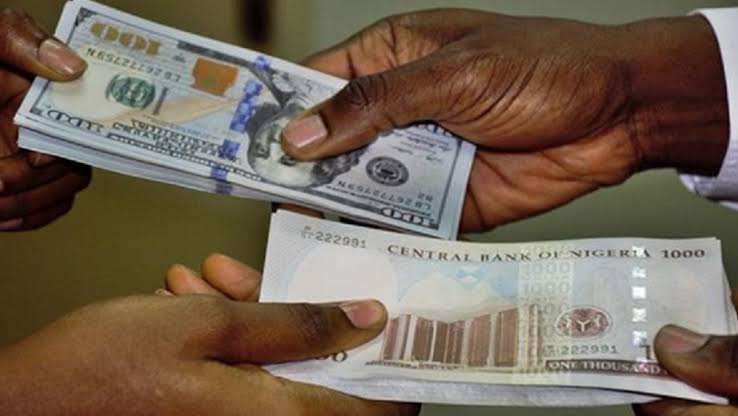
Nigeria’s external reserves have climbed to $51.04 billion, reaching their highest level in about 17 years as improved foreign exchange inflows and favourable market conditions continue to strengthen the country’s external position.
According to data from the Central Bank of Nigeria (CBN), the nation’s gross external reserves stood at $51,035,544,733.65 as of June 18, 2026, marking the highest reserve level since January 20, 2009, when reserves stood at approximately $51.07 billion.
The latest milestone highlights a steady recovery in Nigeria’s foreign reserves, with the country recording significant gains throughout June following a strong performance in May.
Data from the apex bank showed that reserves rose consistently during the month, increasing from $49.80 billion at the beginning of June to $50.12 billion by June 5. The figure further climbed to $50.81 billion by June 15 before reaching the current $51.04 billion level three days later.
The sustained growth reflects stronger foreign exchange inflows into the economy as well as improved liquidity conditions in the external sector.
Analysts noted that the increase extends the positive momentum recorded in previous months, with reserves rising by about 2.5 per cent between June 1 and June 18.
The improvement follows an estimated $1.22 billion increase recorded in May 2026, amid ongoing reforms in the foreign exchange market and enhanced external inflows.
Speaking on the development, Muda Yusuf, the chief executive officer of the Centre for the Promotion of Private Enterprise (CPPE) described the growth in reserves as a positive sign for the economy.
According to him, the increase demonstrates that ongoing economic reforms are beginning to yield results.
He, however, stressed the need to diversify the sources of reserve accumulation to ensure long-term sustainability and resilience.
Yusuf advised that reserve growth should not rely heavily on portfolio investments alone but should also be supported by stronger non-oil exports, oil earnings, foreign direct investment and other stable sources of foreign exchange.
Earlier in May, CBN Governor Olayemi Cardoso stated that the country’s strong reserve position continued to reinforce investor confidence and support exchange rate stability.
The apex bank had projected that Nigeria’s external reserves would rise to approximately $51.04 billion in 2026, driven by stronger oil revenues, foreign exchange reforms and increased capital inflows.
With the latest figures, that projection has already been achieved, underscoring the impact of measures aimed at strengthening the country’s external buffers.


Ebola spreading âfastâ in DR Congo – WHO warns

Police announce movement restriction ahead of Nasarawa bye-election

Tinubu Hails Wike as Abuja Transformation Projects Gather Momentum

Italy slams Trump over claim prime minister ‘begged’ for G7 photo

Indian man from Norway asks Indians to 'go drive in snow for milk first' before complaining about country: 'I want it now and I’ll have it now'

Lets forgive the woman that brutalized the 10-year-old boy- APC chieftain, Joe Igbokwe, pleads

Transfer: Akinsamiro set to join Pisa on permanent deal

 News1 day ago
Bandits Strike Under Rain Cover, Kill 2 and Make Shocking Abductions in Sokoto
- Investigation2 days ago
Dad, are you also leaving us? Congolese man married to South African woman addresses xenophobic individuals after his son’s heartbreaking question
- Investigation2 days ago
Actor IK Ogbonna leads mourners as Alex Ekubo’s body arrives his hometown Arochukwu ahead of his funeral (videos)
- World10 hours ago
Horror as woman gang raped by 5 men – piece of wood inserted into victim's body
- World3 days ago
Trump slams Israel, praises Iran at G7 summit
 News1 day ago
Viral Slap Video Sparks Debate Over Staging, Consent and Online Clout
- News2 days ago
Abdulsalami Says Nigeria Could Have Been Better Off If Buhari and Idiagbon Stayed Longer
 Investigation1 day ago
Teacher accused of having s£x with her adopted sons was turned in by disgusted ex who found twisted texts