World
EU nations sit down with the Taliban to send back Afghan migrants

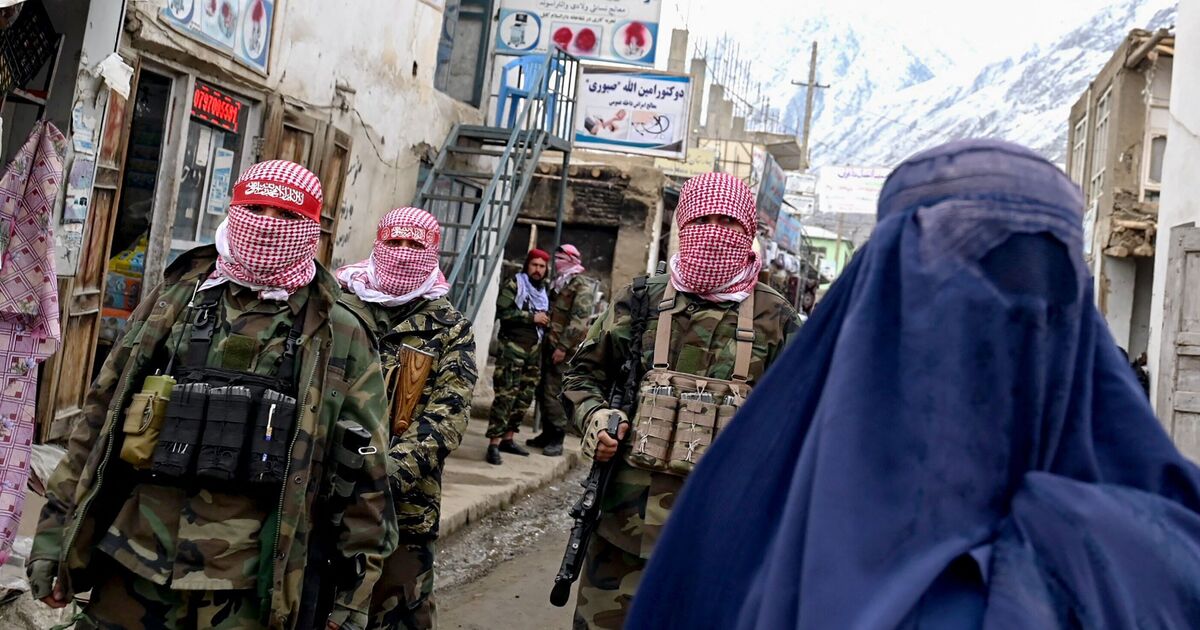
The EU held talks as it looks to address migration concerns within its borders (Image: Getty)
European Union staff and members of the Afghan Taliban have met in Brussels to discuss diplomatic services and “dignified returns” of Afghans, according to a Taliban official. Afghans make up one of the largest groups of migrants seeking asylum in the European Union and efforts to return failed asylum seekers have been hindered by war and the likelihood of executions and human rights abuses.
However, a growing number of governments in the 27-nation bloc want to speed up and increase deportations for those whose claims are rejected or who commit crimes in their host countries. Abdul Qahar Balkhi, a New Zealand-born spokesman for the Taliban Ministry of Foreign Affairs who led the five-strong delegation, said: “This was a historic visit as the first time ever that a delegation from Islamic Emirate visited the EU and held talks with member states in Brussels.”

There are concerns about how some returnees would be treated by the radical group (Image: Getty)
Mr Balkhi also said they spoke about “restarting broad-range consular services for Afghans in the EU zone, including need for trust-building measures, consular presence and dignified return process”.
Afghan Taliban authorities have imposed draconian restrictions on women and girls since the Taliban seized power in the country in 2021 in the wake of the chaotic withdrawal of US-led forces.
The islamic fundamentalists have imposed bans on education beyond primary school and on employment in all but very few professions, as well as strict regulations on what women are allowed to wear in public.
Rights groups said Tuesday’s meeting undercuts the EU’s human rights obligations and could endanger people in Europe and Afghanistan.
“Any engagement with the Taliban needs to prioritise protecting human rights and accountability – not deporting people to danger there,” said Fereshta Abbasi, a researcher at Human Rights Watch.
“EU countries are undermining their credibility by condemning Taliban abuses and pursuing accountability on one hand, while co-operating with the Taliban to forcibly return Afghans on the other.”
With not a single EU nation recognising the Taliban, the meeting in Brussels symbolises a small crack in the group’s diplomatic isolation since seizing power five years ago.
Since neither Belgium nor the EU officially recognises the Taliban government, the meeting will not take place on official buildings or sites belonging to either. The European Commission has declined repeated requests to provide additional information.
A spokesperson for the European Commission said on Monday that the meeting is in response to pressure from a clear majority of the 27 EU nations – 20 of whom signed a letter in October calling for stronger migration policies including a ramping up of deportations.
Spokesperson Markus Lammert said: “Member states are looking into ways to return persons who have committed serious crimes and who are possibly a security threat.”
Afghanistan has been dealing with the return of about three million Afghans from Pakistan and Iran in the past year alone, all of whom have been pretty much been forcibly repatriated from those two countries, exacerbating a humanitarian disaster in Afghanistan, already reeling from food and economic crises including biting sanctions on the Islamic Emirate.
“It is unconscionable that the EU would now try and deport people to Afghanistan, which has only become more dangerous in the meantime,” said Eve Geddie, director of Amnesty International’s European Institutions Office.
Facing political pressure to toughen migration policies across the 27-nation bloc, the EU has recently passed deep reforms to its collective rules aiming to ramp up deportations – including allowing the setting up of so-called “return hubs”, increased domestic surveillance capabilities, tighter border controls, and engagement with the Taliban government which it does not recognise because of human rights abuse allegations.
With Afghanistan facing food shortages and economic collapse, the Taliban government is in need of humanitarian aid and hopes to lessen its international economic and political isolation.


World Cup 2026: Ronaldo, Neymar have nothing to prove – Cancelo

Lakurawa Group Sparks Fear in Niger Community After Alleged Marriage and Bride Price Orders

Murphy Oil’s Offshore Discovery Bolsters Côte d’Ivoire’s Upstream Regulatory Framework and Investor Confidence

Witness reveals multi-million naira transactions in ₦8.7bn Malami money laundering trial

Church Building Partially Gutted in Ilorin Fire Triggered by Burning Candle

Ekiti 2026 election wake up call to politicians, parties – Lagos APC chieftain

Man sentenced to life imprisonment for m8rder of two Nigerian men in Canada

 Investigation3 days ago
Update: Abia police arrest man caught on camera ass@ulting woman
- Investigation23 hours ago
He said he wanted to sleep with me, but I told him I am a married woman – Lady in viral video being ass@ulted by a man in Abia speaks
- World2 days ago
Russia burning as Ukraine launches massive attack on key waterway 160 miles from frontline
- Investigation23 hours ago
Actress, Angela Okorie responds after facing backlash for burning outfit she wore to late colleague, Alexx Ekuboâs funeral
- World10 hours ago
Russia launches nuclear drill in UK's backyard as Kremlin 'advocates use of atomic bomb'
- Politics3 days ago
Ekiti 2026: Observers commend BVAS performance, raise concern over vote buying
- Breaking3 days ago
Ebola: Nigerian govt approves N21.2m outbreak response fund for each state
- National3 days ago
ROSOWA takes road safety sensitisation campaign to Ogun motor park