Business
Freight forwarders urge review of import restriction

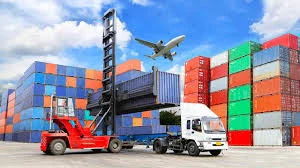
Car dealers and freight forwarding stakeholders at the Seme border have blamed the Federal Government’s continued ban on vehicle importation through the border for what they described as the deaths of more than 150 freight forwarding agents and the collapse of businesses in the sector.
The stakeholders, under the leadership of Celestine Esezobor, said the policy, which took effect on December 31, 2016, had inflicted severe economic hardship on operators and border communities.
In a statement obtained by The PidomNigeria on Wednesday, the group described the ban as a case of “throwing the baby and bath water away,” arguing that it had failed to achieve its intended objectives while causing widespread losses.
The stakeholders said, “On the 31st of December 2016, the Federal Government announced the ban on imported vehicles through land borders to date. To this end, the shocking death of many freight forwarding agents, about one hundred and fifty plus (150+), the unquantifiable losses in rents, theft, depreciation, and complete closure or destruction of offices, government revenue losses, all these present a compelling urgent need for deep sober reflection and retrospection.”
They added that the government should urgently review the policy to prevent further economic damage and revive legitimate trade activities at the border.
According to the stakeholders, reopening vehicle importation through the Seme border under a bonded terminal arrangement would enhance revenue generation and improve customs monitoring.
The group stated that the “Only God Is Wise” bonded terminal at the border had the capacity to accommodate approximately 130 vehicles at a time and would enable customs authorities to monitor imports and collect duties more efficiently.
They said, “The Nigeria Customs Service will be able to generate revenue that will surpass the present and even 2015/16 levels before the closure of the vehicle seat. As at 2015/16, the vehicle seat generated 51.12 per cent of the total revenue at Seme border.”
The stakeholders argued that the availability of a bonded terminal would reduce smuggling and ensure better compliance with customs regulations. They maintained that one of the major justifications for the ban, which is vehicle smuggling, had significantly reduced over the years.
“Smuggling has drastically abated at the Seme border, which was one of the reasons advanced by the government for closing the vehicle seat on 31st December 2016,” the stakeholders stated.
The group also dismissed claims that reopening the border for vehicle imports would encourage illegal trade, insisting that a regulated import system would instead curb smuggling.
They alleged that vehicles continued to enter the country illegally despite the ban, resulting in revenue losses for the government.
The stakeholders stated, “Have vehicles stopped entering the country through the land border since the inception of the ban? The candid answer is a capital NO. Our investigation has revealed that Tokunbo and brand-new vehicles are actually being smuggled into the country through illegal routes daily, with the government obviously losing a considerable amount of revenue.”
They further claimed that customs officers had been exposed to greater risks due to confrontations with smugglers operating on illegal routes. The stakeholders attributed the continued patronage of land-border routes by vehicle importers to congestion and inefficiencies at the nation’s seaports.
“The importers of vehicles are willing to pay duties but are avoiding the seaports because of the terrible congestion and inefficiencies of port service providers,” the stakeholders said.
They also argued that lifting the ban would restore thousands of jobs lost across the freight forwarding value chain, including those of vehicle sourcing agents, secretaries, drivers, and customs processing personnel.
The stakeholders said reopening the vehicle import corridor would revive economic activities at the border and provide employment opportunities for workers displaced by the policy.
They expressed optimism that the Seme border could regain its economic relevance if the government adopts their recommendations and reopens the corridor for vehicle imports under a monitored bonded terminal arrangement.


Magazine anniversary to spotlight auto industry solutions

Nigeria captain Eseigbe returns for Kwibuka tournament

Mother urges parents to make their kids stay home to protest continued captivity of abducted Oyo students and teachers (video)

Indian national charged in crash that killed teen, victim’s mother calls for deportation

Anambra signs four regulations to boost power

Fasuba hails Ajayi’s mentality

‘How I Met Your Mother’ Actor Nick Pasqual gets 32 years to life for st@bbing ex-girlfriend

 World1 day ago
Pilot of fighter jet downed over Iran previously shot down in Kuwaiti incident
- Breaking3 days ago
Content creator Mark Angel weds again months after ex-wife did exposé on him and he admitted if he were his daughter he wouldn’t marry a man like himself (video)
- Breaking2 days ago
Young couple seen goofing around in prom video hours before the man k!lled the woman
- Breaking3 days ago
Father allegedly left baby daughter in bathtub filled with water while he scrolled on his phone in another room
- World3 days ago
Iran issues horror threat to attack Israel as Trump's ceasefire collapsing
- Politics2 days ago
Tackle insecurity decisively, NDC senatorial aspirant urges Tinubu
- News2 days ago
One Dead, Several Injured After Tragic Keke Crash in Jos
- Business3 days ago
Tinubu reforms stabilised economy, welfare lags – CPPE