News
Govt can track critics in minutes but fails to track terrorists – Dalung

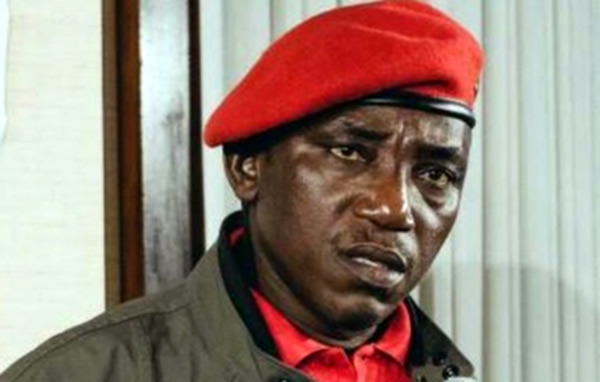
Former Sports Minister, Solomon Dalung, has accused the Bola Tinubu-led administration of lacking the political will to confront Nigeria’s worsening insecurity, saying the government is more focused on 2027 politics than protecting lives lost to terrorism and kidnappings.
Speaking on Friday’s Arise TV’s Morning Show, Dalung delivered a sharp critique of the government’s security response and overall leadership record, Vanguard reported on Saturday.
“Government seems not to have the political will to deal with it. They have all the gadgets to track anybody who criticises the government — they can pick him up in the next five minutes.
“But they don’t have equipment to track terrorists who display huge phones in the forest, behead teachers, abduct schoolchildren, torture them in the forest, produce videos and send,” he said.
He dismissed the Information Minister’s recent call for unity against terrorism, calling it a sign of deeper failure.
“I think it’s a statement confirming that the federal government has completely and woefully failed. They don’t seem to have any idea of a solution to the ravaging insecurity that is across the country,” he said.
Dalung said the security architecture was fragmented, with agencies working in silos rather than as a coordinated force.
He also warned that terrorists were now operating what he described as a “parallel forest economy,” sustaining themselves independently of the state.
Questioning foreign military involvement, he said:
“We were told that the Americans are here with us. If the Americans are here with us, what have they been doing? We have not felt their impact,” Dalung said, urging the government to stop reassurances and instead empower communities to defend themselves.
On politics ahead of 2027, Dalung said Nigeria had returned to regional power blocs and warned of electoral uncertainty.
“Nigeria has returned to the politics of the First Republic, where regions now have their political parties. Almost all the zones have presidential candidates. So ultimately, in 2027, we may be facing serious confusion as we advance towards election,” he said.
He also described President Tinubu’s three-year performance as disappointing, accusing the administration of rhetoric without impact.
“Three years into his tenure, it is just blame game and rhetorics of reforms — reforms that no single iota of the benefit has trickled down. Rather, Nigerians are getting impoverished daily.
“The economy is in doldrums. Insecurity remains rhetorical,” he said.
Responding on the programme, political scientist Obafemi George defended the administration, arguing it deserves time and pointing to economic indicators as evidence of progress.
He cited a sovereign credit rating upgrade by Standard & Poor’s from B- to B as proof of stabilisation and linked rising insecurity to regional instability following the withdrawal of French forces from the Sahel.
“This current administration has confronted insecurity that is higher than the previous administration, spent more, and recorded more successes in combating insecurity,” he said, referencing rescue operations in Goza and Katsina.
On governance timelines, George argued that national development cannot be achieved quickly.
“You know, when you employ someone, you give the person KPIs… and if you look at each of those, in my opinion, I could confidently say that the president ticked the boxes,” he said.
He added that structural reforms take time, citing global comparisons.
“I ask people to give me one example of a country in a modern era that has transitioned from being a poor country to a prosperous country in 36 months,” he said, referencing China’s long-term reforms, Rwanda’s development trajectory under Paul Kagame, and Dubai’s multi-decade transformation.
“One of the things that we are going through that is causing our current pain is because some sacrifices that were meant to have been done years ago weren’t done,” he added.
He also referenced former Finance Minister Ngozi Okonjo-Iweala’s warning that Nigeria was “broke” and said earlier removal of fuel subsidy would have prevented today’s economic strain, arguing that current reforms are aimed at long-term stability.





Five feared dead, 12 injured in Ebonyi road crash

N36M fraud: Court reserves ruling on Blessing CEOâs bail application
New York caste discrimination bills fail to advance: 'As a Bahujan Hindu myself….'

World Cup sparks boom in U.S. youth soccer

WNTD 2026: Ekiti To Update Tobacco Laws Covering Emerging Nicotine Products, Commends CAPPA

Insecurity: Gov Makinde bans Okada movement from 10:30pm to 5:30am

How social media exploits girlhood anxieties

 Breaking2 days ago
Young woman uses eggs and schnapps to place curse on man who lied to community members that he slept with her (video)
- World2 days ago
Donald Trump sparks health panic as he 'falls asleep' in his chair live on TV
- News2 days ago
Sanwo-Olu promises excellent National Intermediate Games
- World3 days ago
Putin nightmare as Hungary lifts Ukraine's EU veto allowing Kyiv to join bloc
- World2 days ago
Pensioners brutally stabbed in their own home by stranger before man fights back
- Breaking2 days ago
I ran with Peter Obi out of sympathy after three top politicians rejected him- former Labour Party, VP candidate, Datti Baba-Ahmed
- Breaking3 days ago
"Those planning to rig the 2027 election should know Nigerians are ready to defend their votes" â Man sends warning, tells Rivers youths not to be used
- Breaking3 days ago
I endorse Obi but I still support Tinubuâs policies â Omo-Agege