Investigation
Iran warâUS intel assesses Iran can shut down the Strait of Hormuz at will from now on

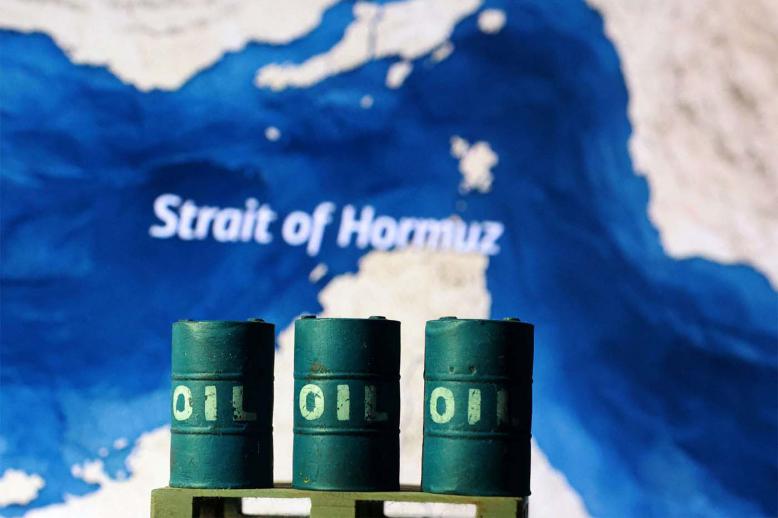

US intelligence agencies have recently assessed that Iran can effectively shut down access to the Strait of Hormuz at will from now on.
This findings suggest that Tehran has acquired a powerful new ability to disrupt the global economy as a result of the war, according to three sources familiar with the findings.
Regardless of the framework agreement due to be formally signed on Friday to open the key waterway as a prelude to nuclear talks, Iran proved it can shut off access to the strait during the current conflict, and US intelligence assessments suggest that could happen again.
“We have now handed Iran de facto control over the strait – a weapon more powerful than any nuke,” one of the sources familiar with the US intelligence assessments stated, emphasizing how the war has fundamentally altered Tehran’s thinking about leveraging similar tactics in the future.
Iran has similarly learned it can leverage targeted strikes against the energy infrastructure of Gulf countries as an asymmetric capability after doing so to great effect during the war, another tool it can use to its advantage going forward, a second source familiar with the assessments said.
The US has had to negotiate with Iran intensively to fully re-open the strait, underscoring the Iranians’ continued leverage.

A senior US official explained that Iran cannot access “any benefits” of the framework agreement unless the strait remains open and it abides by the other points it agreed to. The senior official did not detail what those benefits are, but explained that the US will wind down its blockade in proportion with Iran restoring traffic in the strait. If Iran performs, relief follows and American leverage holds, the official added.
Another source familiar with the framework agreement also acknowledged that Iran tried to subvert the free flow of energy in the strait but upset China and Gulf countries in the process, noting any future attempt to close the waterway would carry self-inflicted consequences.
Uncertainty over what’s in the agreement and other risks are also likely to keep traffic through the critical chokepoint to a trickle for weeks or months, according to shipping industry officials and experts who track ship movements.
One of the main reasons Iran believes it can continue to weaponize the strait is it still retains a significant portion of its weapons stockpile, including missiles, drones, missile launchers, and hundreds of small fast boats that continue to harass shippers attempting to transit the waterway and can be used to lay mines. Iran has also been rebuilding its military industrial base faster than the US anticipated and has already begun new drone production.
There have been discussions that allies may police the strait in some way once it is open, but at the moment it is unclear how that would work and the latest intel assessments take that possibility into consideration, the sources said.
And even as the two sides appear to have signed an agreement that would reopen the strait and end the current conflict, multiple sources said Iran has been plotting an economic “nuclear option” if negotiations with the US fall apart: getting the Houthis, the Iranians’ chief proxy force in Yemen, to close the Bab-el-Mandeb strait, which connects the Red Sea to the Indian Ocean — another global trade chokepoint that has served as a shipping lifeline amid Iran’s months-long closure of the Strait of Hormuz.
Taken together, the recent US intelligence assessments underscore the lasting impact of President Donald Trump’s decision to initiate the conflict without fully accounting for Iran’s willingness to close the Strait of Hormuz and raise fresh questions about Tehran’s ability to weaponize the global economy going forward — a problem that extends beyond the scope of any framework agreement between the two countries that may reopen the key waterway.
In the time since Iran moved to close the strait, US intelligence agencies have been continuously reassessing how and under what circumstances they might try to use that same lever in the future, according to three sources familiar with the assessments.
While there is not currently a consensus within the intelligence community, multiple sources familiar with the US assessments said Iran has been emboldened by the fact it was able to both close the strait and target the energy infrastructure of Gulf countries without expending significant capabilities.
And now that Iran has proven it has credible intent and capability to close the strait — some US officials say they are more likely to take that step in the future, two of the sources familiar with US intelligence said.


Africa risks lower fish consumption despite growth – Report

AltBank pushes financing to tackle education challenges

Telcos under pressure to resolve fibre broadband bottlenecks

Taraji P Henson’s photo with legendary comedian and actor Garrett Morris goes viral as people ask her to take it down

Horror moment mum grabs chainsaw after neighbour dispute over bins turns violent

Body found after Brit, 23, went missing swimming in European holiday hotspot

Customs, NDLEA intercept N13bn cannabis, expired drugs

 Investigation1 day ago
"If bandits kidnap my wife, I won’t pay ransom. I’ll remarry because they would have slept with her" – Nigerian man
- World3 days ago
Horror as girl, 5, kidnapped and raped while being driven home on motorbike by grandad
- Politics2 days ago
Governor Okpebholo congratulates Edo Queens, reaffirms commitment to sports development in Edo State
- Breaking2 days ago
I had s3x with my wife only 6 times, her pregnancy canât be mine – Man tells Kaduna court
- Business2 days ago
FCT residents decry rising cost of tomatoes
- Breaking3 days ago
Anambra Govt confirms arrest of pastor accused of âwife-snatching and swappingâ, recover 11 babies
- News2 days ago
Kogi bans night travel, restricts okada operations over security concerns
- Investigation1 day ago
16-year-old family member of Boko Haram terrorist escapes and surrenders to troops in Borno