World
Labour MP Jess Asato sues Elon Musk's xAI over deepfake bikini images in landmark UK AI lawsuit

This Video Is Trending Right Now
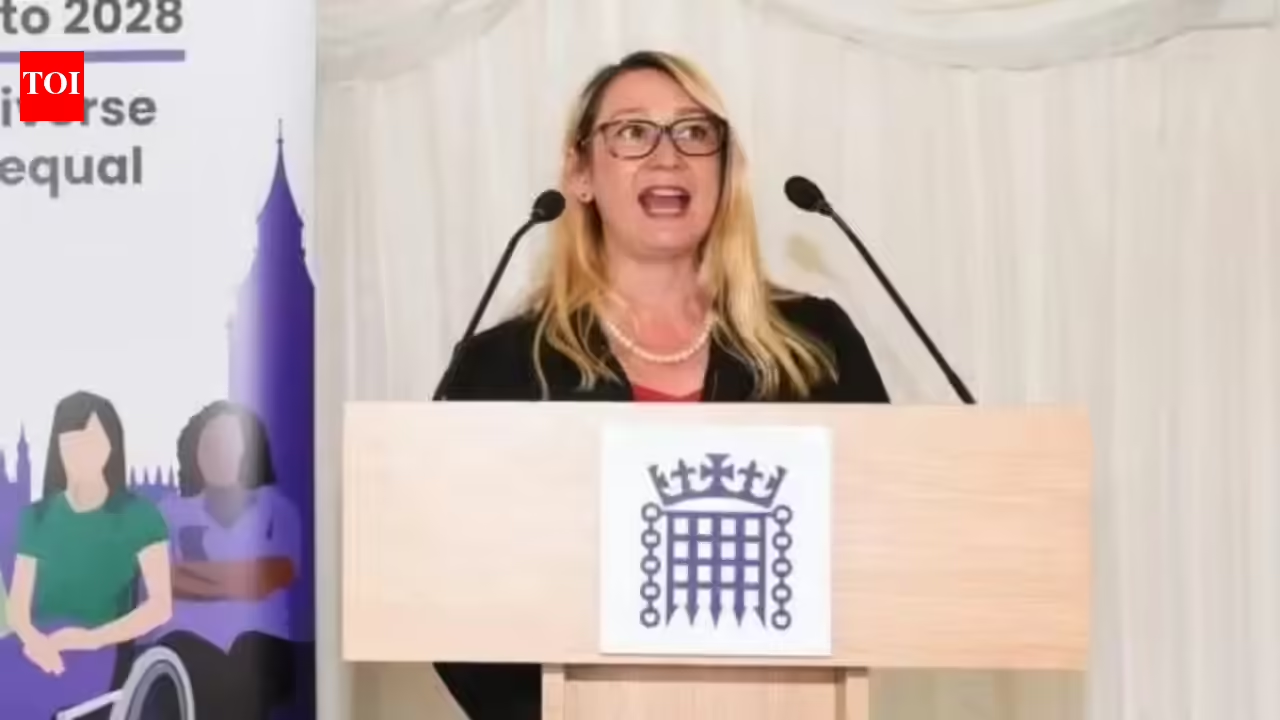
A British Labour MP has launched a groundbreaking legal challenge against Elon Musk’s artificial intelligence company xAI, arguing that AI developers should be held accountable when their systems create harmful content.Jess Asato announced that she has filed a claim in the High Court against xAI after its Grok chatbot was allegedly used to generate fake sexualised images of her, including manipulated images depicting her in a bikini. Lawyers, regulators, and technology firms are closely watching the case because it could become one of the first major UK tests of whether AI companies can be held legally responsible for the design and capabilities of their systems rather than simply the actions of users.The lawsuit arrives as governments worldwide face growing pressure to tackle the rapid rise of AI-generated deepfakes, particularly non-consensual sexualised images targeting women and public figures.
How the Grok deepfake controversy began?
The dispute traces back to January when Asato publicly criticised the use of AI tools to create non-consensual sexualised imagery.According to the MP, users subsequently employed Grok, xAI’s chatbot and image-generation system, to create and circulate manipulated images of her. She felt violated after discovering that AI-generated content depicting her in revealing clothing and other fabricated scenarios was being shared online.Speaking about the case, Asato argued that the problem goes beyond individual users abusing technology. She claims the ability to create such content was built into the system itself and reflects decisions made during the AI platform’s design.The Labour MP says her legal action is aimed not only at securing damages but also at establishing accountability for companies developing increasingly powerful AI tools.
UK High court AI regulation
Legal experts view the case as potentially significant because it focuses on the design of an AI system rather than solely on the individuals who used it.The claim, filed in the High Court, reportedly includes allegations under the Data Protection Act and misuse of private information. Asato’s legal team argues that harmful content existed because of choices made by the system’s creators and that safety measures should have been built into the technology from the outset.Her lawyers have described the case as one of the first major attempts in Britain to test whether AI developers can be held liable for harms arising from their system’s design. If successful, the outcome could influence future lawsuits involving generative AI and help define the responsibilities of technology companies operating in the UK.The lawsuit also arrives amid increasing scrutiny of AI-generated content by regulators in Britain, Europe and elsewhere. Grok has faced investigations and criticism in several jurisdictions over concerns relating to non-consensual sexualised imagery and online safety.
UK’s deepfake laws
The case comes at a time when Britain is strengthening its approach to deepfake abuse.Lawmakers have increasingly focused on the dangers posed by AI-generated intimate images, particularly content created without the consent of the person depicted. Campaigners have argued that deepfakes can cause serious emotional, reputational and psychological harm, while technological advances have made such images easier to create and distribute.Asato has positioned her lawsuit as part of a wider effort to ensure technology companies take greater responsibility for preventing such content from being produced in the first place. She argues that simply removing harmful material after it appears online is not enough if systems were designed without adequate safeguards.Earlier this year, xAI said it had restricted some image-editing capabilities and introduced measures aimed at preventing users from generating sexualised images of real people in jurisdictions where such content is illegal. However, critics maintain that stronger protections are still needed.
Elon Musk’s xAI faces pressure
The lawsuit adds to a growing list of legal and regulatory challenges facing xAI and its Grok platform.The company has already faced scrutiny over the generation of non-consensual sexualised imagery and has been named in other legal actions involving similar allegations. Regulators in several countries are examining how generative AI systems handle harmful content and whether existing laws are sufficient to address emerging risks.For now, Asato’s case is likely to become a closely watched legal battle that extends beyond one politician and one AI platform.At its heart lies a question that courts, lawmakers and technology companies around the world are increasingly being forced to confront: when artificial intelligence causes harm, who should ultimately be held responsible, the user, the platform, or the people who designed the system?


Lagos High Court Jails Man 15 Years for N26m Toyota Hilux Fraud

Adeboye: Obi warns Nigerians against attacks on cleric, ethnic division

CardinalStone completes N21bn Fidson Rights Issue

Ogun Police Arrest Man Over Fake Kidnapping That Sparked Panic

Nigeria, 59 others face fresh 12.5% US tariff over forced labour concerns

Bandits Reportedly Flaunt Ransom Money on TikTok Live, Issue Shocking Threats
Nigeria, 59 others face fresh 12.5% US tariff over forced labour concerns

 World2 days ago
Pilot of fighter jet downed over Iran previously shot down in Kuwaiti incident
- Breaking3 days ago
Content creator Mark Angel weds again months after ex-wife did exposé on him and he admitted if he were his daughter he wouldn’t marry a man like himself (video)
- Breaking2 days ago
Young couple seen goofing around in prom video hours before the man k!lled the woman
- Breaking3 days ago
Father allegedly left baby daughter in bathtub filled with water while he scrolled on his phone in another room
- World3 days ago
Iran issues horror threat to attack Israel as Trump's ceasefire collapsing
- Politics3 days ago
Tackle insecurity decisively, NDC senatorial aspirant urges Tinubu
- News2 days ago
One Dead, Several Injured After Tragic Keke Crash in Jos
- Breaking1 day ago
18-year-old teenager jailed for r@ping his 42-year-old aunty