National
Naira still trading 25% below value despite FX reforms – IMF

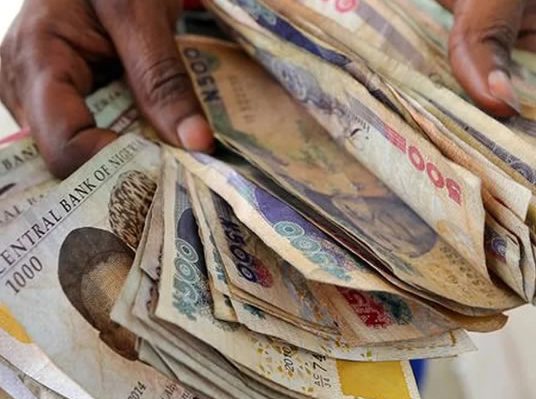
The International Monetary Fund (IMF) announced that the Nigerian Naira remains significantly undervalued despite recent gains from foreign exchange (FX) reforms.
The Washington-based lender made this known in its latest Article IV consultation report on Nigeria, noting that its Real Effective Exchange Rate (REER) assessment showed the local currency was still trading below levels supported by the country’s economic fundamentals.
The REER is a measure of a currency’s value against those of major trading partners after adjusting for inflation.
According to the IMF, Nigeria’s REER appreciated by 32 percent in 2025, even as the nominal effective exchange rate (NEER) weakened by 5.2 percent during the same period.
“Despite the REER appreciation that has already taken place in 2025, the EBA-lite REER model indicates a REER gap of -25.6 percent,” the fund said.
The report noted that the official exchange rate strengthened from N1,535/$ at the end of 2024 to N1,435/$ by the close of 2025, representing an appreciation of about 6.5 percent.
However, on an annual average basis, the naira weakened from N1,479/$ in 2024 to N1,520/$ in 2025, amounting to a depreciation of 2.8 percent.
Based on the IMF’s assessment, the naira should have traded around N1,142.04/$ using the end-of-2025 exchange rate benchmark, or N1,130.88/$ when calculated using the average exchange rate for the year.
The assessment contrasts with the official foreign exchange rate of N1,356.27/$ recorded on Monday.
The IMF’s latest position comes nearly three years after President Bola Tinubu’s administration embarked on sweeping foreign exchange reforms in June 2023.
The reforms included the removal of the multiple exchange-rate regime and the adoption of a more market-driven currency system.
While the policy changes initially triggered a sharp depreciation of the naira, authorities argued they were necessary to attract foreign investment, improve transparency and boost liquidity in the foreign exchange market.
The IMF said continued exchange rate flexibility would be crucial to correcting the naira’s undervaluation and improving Nigeria’s external balance over time.
The fund also advised the Central Bank of Nigeria (CBN) to moderate the pace of foreign reserve accumulation while sustaining a more flexible exchange rate regime.
“Given the assessed REER undervaluation, slowing the pace of reserve accumulation and continuing to allow 2-way movement of the naira exchange rate combined with strengthening FX market functioning and advancing and supporting fiscal and structural reforms, particularly those that can improve non-oil/gas imports, would help close the gap,” the fund said.
According to the IMF, ongoing reforms aimed at improving foreign exchange market efficiency, strengthening fiscal management and boosting non-oil sectors of the economy would help narrow the exchange rate misalignment and reinforce Nigeria’s external position.


Why I stopped going to church – Nicki Minaj

"We sometimes say things due to lack of experience" Woman narrates how life after marriage caused her and her husband to compromise on an agreement reached before marriage

Inside Son Doong: The Vietnam cave bigger than a Boeing 747 that took 17 years to find again

Tinubu approves 1,000 forest guards to strengthen security in Katsina

Woman sentenced to death for aiding terrorists in Katsina

I will dialogue with Gumi, Igboho, others if elected president – Peter Obi

Iran’s national team winger’s US visa expires after first World Cup game

 Investigation1 day ago
"If bandits kidnap my wife, I won’t pay ransom. I’ll remarry because they would have slept with her" – Nigerian man
- World2 days ago
Horror as girl, 5, kidnapped and raped while being driven home on motorbike by grandad
- Politics1 day ago
Governor Okpebholo congratulates Edo Queens, reaffirms commitment to sports development in Edo State
- Breaking2 days ago
I had s3x with my wife only 6 times, her pregnancy canât be mine – Man tells Kaduna court
- Breaking3 days ago
"I long for, at least, peace to mourn, but Euracare Hospital has robbed me even of that" â Author Chimamanda Adichie writes after court stalled inquest into son’s death
- Business2 days ago
FCT residents decry rising cost of tomatoes
- Breaking2 days ago
Anambra Govt confirms arrest of pastor accused of âwife-snatching and swappingâ, recover 11 babies
- News2 days ago
Kogi bans night travel, restricts okada operations over security concerns