News
Stakeholders back Nigeria’s bid to become global arbitration hub

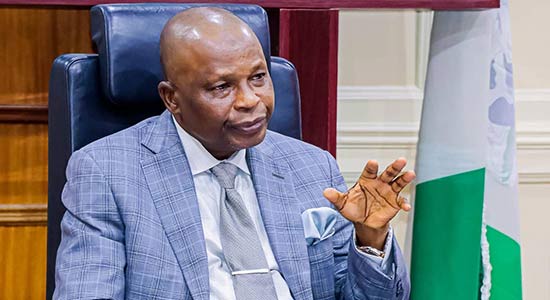
Stakeholders in Africa’s dispute resolution sector have called for a stronger African presence in the global arbitration landscape, while endorsing efforts to position Nigeria as a preferred destination for resolving international commercial disputes.
The call was made on Thursday at the 10th International Chamber of Commerce, Africa Conference on International Arbitration held in Lagos, where the Attorney-General of the Federation and Minister of Justice, Lateef Fagbemi (SAN), reaffirmed the Federal Government’s commitment to transforming Nigeria into a leading arbitration hub.
Represented by former President of the Nigerian Bar Association, Mr Yakubu Maikyau (SAN), the AGF said the Federal Government was focused on creating the legal and institutional environment needed to attract international commercial disputes to Nigeria.
Fagbemi commended the organisers and extended his goodwill to the leadership of the International Chamber of Commerce, the ICC International Court of Arbitration, ICC Nigeria, and participants at the conference.
He assured delegates that recommendations arising from the conference would receive serious attention from his office.
“The Attorney-General is committed to using the instrumentality of his office to ensure that whatever resolutions and recommendations emerge from this conference are given effect,” Maikyau said on AGF’s behalf.
According to him, a key objective of the Federal Government is to establish Nigeria as a preferred seat for arbitration and other forms of alternative dispute resolution.
“The objective is to attract disputes not only from within Africa but from across the globe to Nigeria as a preferred seat of arbitration,” he stated.
To achieve this goal, Fagbemi disclosed that the Federal Government had constituted a committee to review Nigeria’s national arbitration policy.
The committee, chaired by Maikyau, is also examining the implementation of the Arbitration and Mediation Act to identify areas requiring reform and strengthen Nigeria’s competitiveness as an arbitration-friendly jurisdiction.
Earlier, Chair of ICC Africa, Prof Dorothy Ufot (SAN), reflected on the growth of the conference over the last decade, describing it as one of the continent’s most influential platforms for advancing international arbitration and dispute resolution.
She said the conference had played a significant role in amplifying Africa’s voice within the global dispute resolution community and fostering collaboration among practitioners, businesses and policymakers.
“As we celebrate this milestone, we must not only reflect on how far we have come but also focus on shaping the future of international arbitration in Africa,” she said.
Ufot noted that international dispute resolution continues to evolve in response to changes in global commerce and investment, stressing the need for African institutions to remain competitive and relevant.
She also paid tribute to the leadership of the ICC International Court of Arbitration for helping to build one of the world’s most respected dispute resolution platforms.
Calling for stronger partnerships across the continent, she urged governments, arbitral institutions, businesses and legal practitioners to work together to enhance Africa’s influence in shaping the future of international dispute resolution.
In his remarks, NBA President Afam Osigwe (SAN) said Africa had made remarkable progress in legal education, arbitration and alternative dispute resolution, but must take greater ownership of disputes arising from transactions conducted within the continent.
He observed that despite the growing volume of commercial activities across Africa, many disputes involving African parties continue to be resolved outside the continent.
“The world needs to know that there are fantastic men and women, highly cerebral men and women, who can resolve commercial disputes arising out of Africa here on the continent,” Osigwe said.
He maintained that Africa possesses the expertise, institutions and human resources required to handle complex commercial disputes and urged stakeholders to promote the continent as a credible destination for dispute resolution.
“Africa cannot shape the global conversation on international commercial dispute resolution if it continues to export disputes while importing solutions,” he added.
Osigwe further encouraged participants to highlight Africa’s achievements in arbitration, legal reforms and judicial support for alternative dispute resolution rather than focusing solely on the continent’s challenges.
Expressing optimism about the outcome of the conference, he said the gathering would help deepen confidence in Africa’s arbitration institutions and showcase the continent’s capacity to resolve complex international disputes efficiently and professionally.





Israel strikes southern Lebanon after evacuation warnings to several villages
Israel strikes southern Lebanon after evacuation warnings to several villages

Residents Burn Sule’s Posters, APC Flags Over 2027 Senate Ambition

US Senate approves $70bn for Trump’s immigration enforcement agenda

Supreme Court Upholds Death Sentence for Delta Kidnapper After Final Appeal Fails

Teacher Abducted on Obbo-Ile–Eruku Road as Kwara Insecurity Deepens

Oyo abduction: NANS urges caution against strike, calls for unity to fight terrorists

 World3 days ago
Pilot of fighter jet downed over Iran previously shot down in Kuwaiti incident
- Breaking3 days ago
Your only wife will deal with you mercilessly in old age – Nigerian woman says as she encourages married men to marry more wives and father children with other women
- Breaking2 days ago
18-year-old teenager jailed for r@ping his 42-year-old aunty
- World2 days ago
Russian airstrikes hit Ukraine's capital Kyiv
- Breaking1 day ago
Young woman uses eggs and schnapps to place curse on man who lied to community members that he slept with her (video)
- World17 hours ago
Donald Trump sparks health panic as he 'falls asleep' in his chair live on TV
- Breaking3 days ago
Two suspected ISWAP members arrested, admit participating in the abduction of school children and terrorist attack in Borno
- National2 days ago
EXCLUSIVE: How Nigerian Soldiers Abandoned Yashikira In Kwara During Terrorists Attack, Relocated To Checkpoint To Extort N100 From Motorists