World
The smallest ever nation to qualify for the World Cup – 156,000 people and 'tears of joy'

The FIFA World Cup will be unlike any before it this year after expanding to an unprecedented 48 teams. Held every four years, football’s biggest tournament will feature a record number of nations competing for the famous trophy that England lifted in 1966. By comparison, 32 teams took part in the previous World Cup in Qatar four years ago. The expansion has opened the door for several surprise qualifiers, perhaps none more remarkable than the tiny Caribbean island of Curacao.
The Dutch territory has become the smallest nation ever to reach the World Cup finals, surpassing Iceland, which qualified in 2018. Curacao has a population of just 156,000 – comparable to Cambridge or Huddersfield – and covers only 171 square miles, making it smaller than the Isle of Man. Located just 37 miles off the coast of Venezuela, Curacao only became a constituent country within the Kingdom of the Netherlands in 2010, making its historic qualification all the more extraordinary.
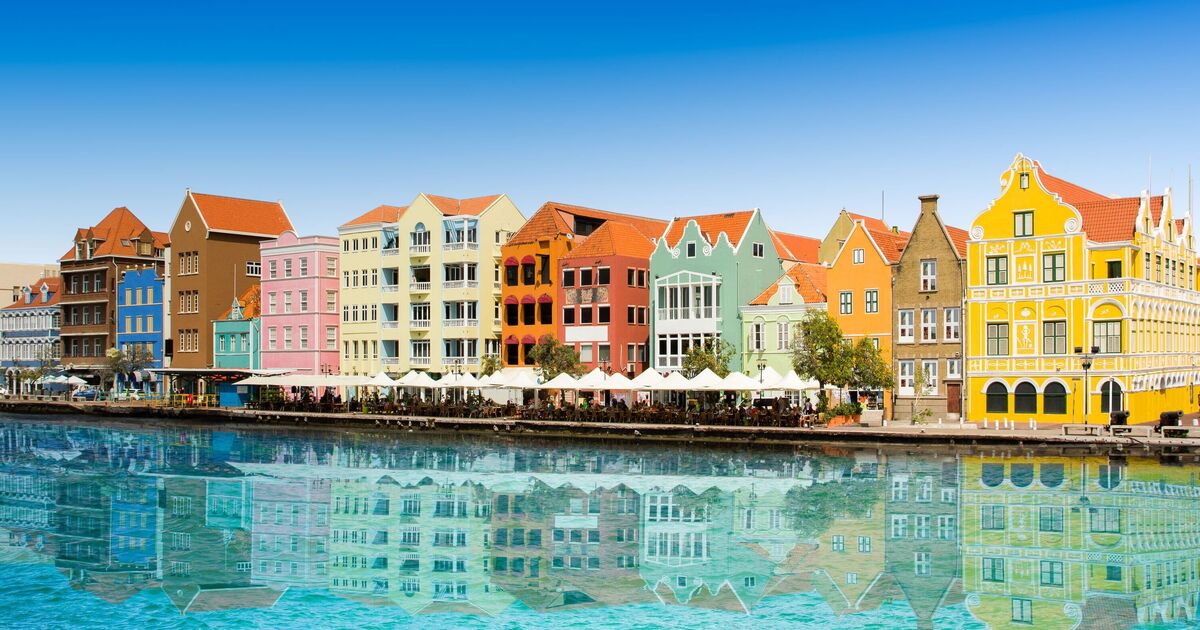
The beautiful Willemstad embankment in Curacao (Image: Getty)
How did the team get there?

Curacao has qualified for the FIFA World Cup 26™ (Image: FIFA Collect)
Football has been part of Curacao’s culture for more than a century, having been introduced by the Dutch in the early 1900s. The island was long regarded as the footballing centre of the former Netherlands Antilles before becoming an independent FIFA member in 2011.
Since then, Curacao has built a competitive national side by combining homegrown talent with players developed in the Netherlands, many of whom have Caribbean roots.
Led by the experienced Dick Advocaat, who at 78 will become the oldest manager in World Cup history, Curacao came through the CONCACAF qualifying campaign ahead of Dwight Yorke’s Trinidad & Tobago and Steve McClaren’s Jamaica, among others.
Nicknamed the Blue Wave, the team is ranked 82nd in the FIFA world rankings and, alongside Cape Verde, Uzbekistan and Jordan, will make its World Cup debut at this summer’s tournament.
Speaking to BBC Radio 5 Live, midfielder Juninho Bacuna, formerly of Huddersfield Town, Rangers and Birmingham City, described the achievement as “incredible and amazing”.
He said: “Even a few years ago, you would not even think about it. To be personally part of it and to make that dream come true would be incredible.”
On the night in November when the team qualified, Curacao Football Federation president Gilbert Martina said he was brought to “tears, tears, tears, tears of joy”.
He told NBC News: “You will never, never experience something like that again. I cry like a child.”
It is estimated that between 3,000 and 5,000 people from the island will travel to the United States to cheer on their team this summer.
They will be thrown straight in at the deep end, facing the daunting prospect of Germany in their opening game in Houston.
Regardless of the result, residents have promised to properly celebrate the occasion, with one telling The Athletic: “We are a tiny island, everyone here is like family, accomplishing something as big as qualifying for the World Cup, it means the world. Besides seeing the birth of my children, this is the best thing that has ever happened to me.”
About Curacao

Curacao is best known for pristine cliff-lined beaches and world-class scuba diving (Image: Getty)

Willemstad, the capital, offers a blend of Dutch and Caribbean influences (Image: Getty)
Curacao has been a constituent country within the Kingdom of the Netherlands since October 2010. Dutch, Papiamentu and English are all official languages.
Once a major hub in the transatlantic slave trade, Curacao’s economy suffered following the abolition of slavery in 1863. However, the island experienced a revival in the early 20th century with the construction of oil refineries to process crude from neighbouring Venezuela’s newly discovered oil fields.
Today, its economy relies heavily on tourism, financial services and oil refining. It is also the birthplace of the distinctive blue Curacao liqueur, which is made from the dried peel of the island’s native bitter oranges.
Its colourful capital, Willemstad, is famous for its pastel-coloured waterfront and one of the finest natural harbours in the Caribbean.
With year-round sunshine, pristine beaches, excellent scuba diving and a unique blend of Dutch and Caribbean influences, Curacao has become one of the region’s fastest-growing tourist destinations while keeping a unique character of a true hidden gem.


US fighter jet shoots £350,000 missile at 'UFO' that turned out to Boy Scouts balloon

Pete Hegseth sparks fury in tiny French village over D-Day appearance 'not welcome!'

Nigeria is not 100% ready for Ebola but can contain it â NCDC

Transfer: Brighton sign Nigerian youngster on five-year contract

Seven AFRIMA Diamonds Begin Journey To African Music Glory

DSS, forest guards intercept large consignment of medical supplies allegedly destined for wounded ISWAP in Borno

ADC constitutes Ekiti governorship campaign committee [PHOTO]

 Breaking3 days ago
Young woman uses eggs and schnapps to place curse on man who lied to community members that he slept with her (video)
- World2 days ago
Donald Trump sparks health panic as he 'falls asleep' in his chair live on TV
- News3 days ago
Sanwo-Olu promises excellent National Intermediate Games
- World3 days ago
Pensioners brutally stabbed in their own home by stranger before man fights back
- Breaking3 days ago
"Those planning to rig the 2027 election should know Nigerians are ready to defend their votes" â Man sends warning, tells Rivers youths not to be used
- Breaking3 days ago
I ran with Peter Obi out of sympathy after three top politicians rejected him- former Labour Party, VP candidate, Datti Baba-Ahmed
- Breaking1 day ago
Woman shares flimsy reason that made her breakup with her boyfriend who was âperfectâ
- Breaking3 days ago
I endorse Obi but I still support Tinubuâs policies â Omo-Agege