News
61% of Nigerians demand interest rate cut ahead MPC

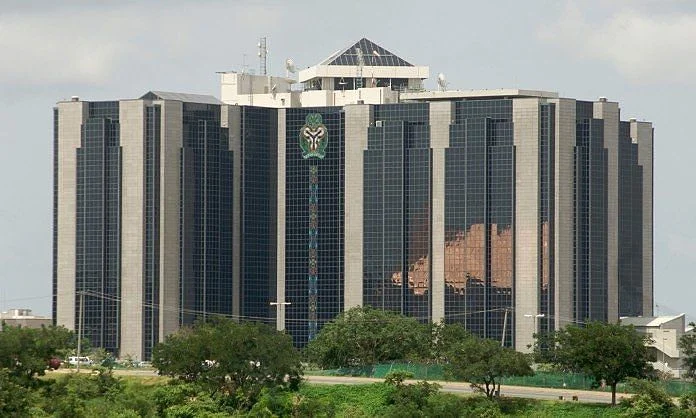
About 61.1 per cent of Nigerians want the Central Bank of Nigeria to reduce interest rates ahead of the Monetary Policy Committee meeting beginning on Monday. However, 27.8 per cent favour retaining the current benchmark rate, while 11.1 per cent support a further increase.
The figures were contained in the CBN’s June 2026 Inflation Expectations Survey Report, released ahead of the committee’s July 20 and 21 meeting, where members are expected to decide whether to retain, reduce or increase the Monetary Policy Rate, currently at 26.5 per cent.
The committee retained the benchmark rate at its May 2026 meeting after reducing it by 50 basis points from 27 per cent in February. The February decision followed a similar 50-basis-point reduction in September 2025, bringing the MPR down from 27.5 per cent.
The easing cycle came after the Olayemi Cardoso-led MPC raised the benchmark rate by a cumulative 875 basis points in 2024 to curb inflation, stabilise the foreign exchange market and anchor inflation expectations.
According to the report, the majority of those calling for lower rates were businesses grappling with elevated borrowing costs. The report read, “The majority of respondents want CBN to reduce interest rate, a perception driven by business respondents.”
The survey also indicated that, despite the moderation in Nigeria’s official inflation rate, households and businesses continued to perceive inflation as high. The report showed that the Inflation Perception Index stood at 45 points in June, indicating that respondents still viewed inflation as elevated. However, they expected the index to moderate to 32.2 points in July.
“The Inflation Perception Index stood at 45.0 points in June 2026, suggesting that respondents perceive inflation as high. However, inflation expectation is expected to moderate at 32.2 index points in July 2026,” it stated.
Overall, 71.3 per cent of respondents described inflation as high in June, up from 70.5 per cent in May. Those who considered inflation moderate declined to 21.8 per cent from 22.6 per cent, while 6.9 per cent perceived inflation as low.
The report showed that inflationary pressure remained more intense among households than businesses. Among households, the proportion of respondents who perceived inflation as high increased to 76 per cent in June from 72.8 per cent in May.
By contrast, the proportion of businesses that perceived inflation as high declined to 67.3 per cent from 68.4 per cent during the same period. An analysis by business size showed that micro businesses recorded the highest perception of high inflation at 72.2 per cent. They were followed by large businesses at 69.4 per cent, medium-sized firms at 64.5 per cent, and small businesses at 64.3 per cent.
Small businesses, however, had the highest proportion of respondents who considered inflation moderate at 26.8 per cent, followed by medium-sized businesses at 26.5 per cent, large businesses at 24.3 per cent, and micro businesses at 19.2 per cent.
The survey further showed that lower-income households experienced stronger inflationary pressure than higher-income earners. Households earning below N70,000 monthly recorded the highest perception of high inflation at 80.2 per cent.
This was followed by 75.3 per cent of respondents earning between N70,000 and N150,000, 75 per cent among those earning between N250,001 and N350,000, 74 per cent among households earning between N150,001 and N250,000, and 68 per cent among respondents earning between N350,001 and N450,000.
Among households earning above N450,000 monthly, 58.8 per cent perceived inflation as high, representing the lowest proportion across all income categories.
“Across income categories, households earning below N70,000 reported the highest inflation perception, whereas respondents earning above N450,000 reported the lowest perception of high inflation in the review month,” the report stated.
The report also showed that inflation was felt more strongly in rural communities. According to the detailed analysis, 76.4 per cent of rural households perceived inflation as high, compared with 63.2 per cent of urban households.
Respondents identified energy costs, insecurity, interest rates, and exchange rate movements as the four biggest drivers of inflation.
“Business and household respondents identified energy, insecurity, interest rate, and exchange rate as the major drivers of their perceptions of inflation. However, raw materials/household purchases and activities of middlemen were perceived as the least significant contributors to overall inflation perception in the review period,” the report said.
Among businesses, energy emerged as the leading inflation driver with a score of 76.3 per cent, followed by insecurity at 72.8 per cent, interest rates at 70.5 per cent, and exchange rate movements at 68.6 per cent.
For households, interest rates ranked highest at 72 per cent, followed by transportation costs at 66.4 per cent, energy at 63.3 per cent, exchange rate movements at 59.4 per cent, and insecurity at 58.7 per cent.
Although most respondents still expected inflation to rise in the near term, expectations improved over a longer horizon. Overall, 56.5 per cent expected inflation to increase over the next month, while 34.3 per cent expected it to remain unchanged and 9.2 per cent anticipated a decline.
Over the next three months, 57.4 per cent expected inflation to rise, 29 per cent expected no change, and 13.5 per cent projected a decline. Over the next six months, 55.2 per cent still expected inflation to increase, but the proportion expecting inflation to moderate rose to 20.1 per cent.
Businesses were more optimistic than households about inflation easing. Among businesses, the proportion expecting inflation to decline increased from 12.2 per cent over the next month to 24.7 per cent over the next six months.
Among households, the proportion expecting inflation to moderate rose from 5.9 per cent over the next month to 14.5 per cent over the next six months. The survey also showed that inflation continued to increase spending by businesses and households.
Overall, 67.1 per cent of respondents reported increased expenditure in June because of inflation. Households recorded a slightly higher figure of 67.5 per cent, compared with 66.8 per cent for businesses.
Looking ahead, 66.5 per cent expected expenditure to increase over the next month, although the proportion declined gradually to 63.7 per cent over the next six months.






It’s Laughably Easy to Poison Open-Weight AI Models, Researcher Finds

UNBELIEVABLE!!! Freed Oyo School Teacher Claims No Gun Battle Nor Military Personnel Killed; Terrorists Released And Escorted Us [VIDEO]

‘Chainsaw-wielding’: Insiders reveal secret DOGE team lurks behind Trump duds

Bauchi’s N29bn erosion control project to restore 9,842 hectres degraded lands – Expert

Users of Meta's Facebook, Instagram report suffering some outages
Users of Meta's Facebook, Instagram report suffering some outages

Magic: The Gathering – Full 2027 Set Release Dates Schedule

 Society1 day ago
Heartbroken Girlfriend Storms Studio To Remove Portrait Tattoo Of Cheating Boyfriend From Her Back
- Investigation2 days ago
Woman forced to dance as punishment after allegedly being caught sneaking into a compound in Awka
- Breaking1 day ago
Ondo police arrest father for burning his 10-year-old daughter’s private part with hot iron over bedwetting
- Investigation3 days ago
Sophia Momodu sends notice of intended legal proceedings to Caroline Hutchings; demands retraction, public apology and â¦10 Billion in damages
- Investigation3 days ago
âWhy are we the only people who feel we have to wear another texture of hair to feel beautiful?â â Content creator, Maraji encourages Black women to embrace their natural hair
- Breaking3 days ago
âAs a woman, don’t marry your enemyâ â Sarah Martins shares encounter after offering a woman a ride in Lagos
- Investigation3 days ago
âWhy are Lagos residents acting surprised? Victoria Island has been flooding for decadesâ â Actor Ikechukwu Onunaku reacts to Lagos flooding
- Investigation3 days ago
Lionel Messi dethrones Lamine Yamal as 2026 World Cupâs top dribbler