News
‘Eagles must get 2030 right after 2026 heartbreak’

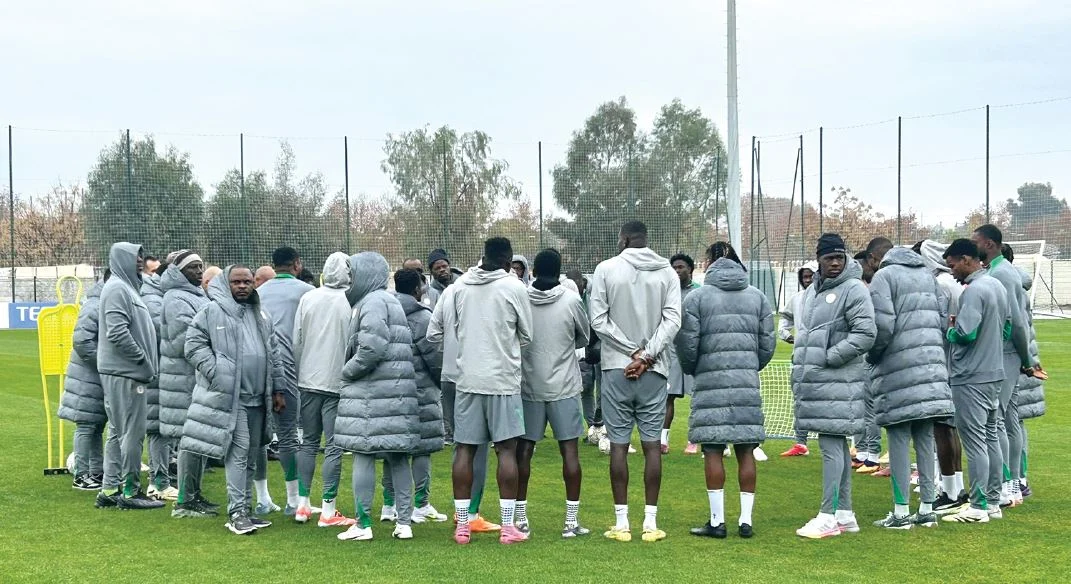
It is no longer news that Nigeria did not take part in the just-concluded 2026 FIFA World Cup. As champions Spain lead the way to the next edition, which they will co-host with Portugal and Morocco in 2030, the big question is whether the Super Eagles can end their unwanted streak of World Cup absenteeism. ABIODUN ADEWALE writes
“Congratulations to Spain on winning the 2026 FIFA World Cup. See you in 2030.”
That was the message posted on the official X account of the Super Eagles after Sunday’s World Cup final between Spain and Argentina.
It could be dismissed as a routine social media post by an enthusiastic handler, but it also reflected the hopes of millions of Nigerian football fans and the weight of expectation the team will carry over the next four years.
Nigeria’s failure to qualify for the 2026 tournament was particularly painful given the expansion of the World Cup to 48 teams, with Africa allocated 10 places. Many Nigerians could only imagine how the three-time African champions might have fared on football’s biggest stage.
The disappointment is heightened by the quality of talent currently at the disposal of Franco-Malian coach Eric Chelle, who introduced a more fluid style of play during the 2025 Africa Cup of Nations in Morocco.
Rather than cry over spilt milk, attention must now turn to the future. How can Nigeria secure one of Africa’s automatic qualification spots for the 2030 tournament?
The first step is learning from the mistakes of the last qualifying campaign.
One of Nigeria’s biggest setbacks during the 2026 World Cup qualifiers was the instability created by the Nigeria Football Federation’s managerial decisions. Before Chelle’s appointment, the Super Eagles had been led by a seemingly distracted Jose Peseiro and later Finidi George, whose appointment was hyped up before allowing him to fold like a short-term solution following Peseiro’s departure.
Another major issue was the team’s overdependence on its biggest stars. Throughout the qualifiers, the Super Eagles struggled whenever key players were unavailable, exposing a lack of squad depth and reliable alternatives.
Recognising the need for continuity, the National Sports Commission says it has a verbal agreement with Chelle to oversee a long-term project centred on winning the next AFCON title and qualifying for the 2030 World Cup.
“We have also discussed how we can build for the future. We have the next AFCON and the World Cup, so we must start preparing now by putting our house in order to make sure all the mistakes that we have suffered will not happen again,” NSC chairman Shehu Dikko said during a meeting with the NFF.
Even if Chelle remains in charge until 2030, the current core of the squad will be approaching the twilight of their careers. By then, Victor Osimhen and Ademola Lookman will both be around 32, Wilfred Ndidi 33, Alex Iwobi and Stanley Nwabali 34, while Moses Simon will be about 35.
That reality makes succession planning essential. Chelle must continue integrating younger players and expanding the talent pool with emerging prospects from both the domestic league and clubs abroad.
Former captain William Troost-Ekong, who retired from international football after the failed qualification campaign, believes the painful experience will ultimately benefit the next generation.
“I think the boys stepped up. And it happens. I think they will learn so much from this moment, and I’m sure when the next moment comes, they will be better prepared and hopefully that will be a chance to make a difference,” Troost-Ekong said after the defeat to DR Congo in November 2025.
Beyond football matters, administrative stability will also be crucial.
During the transition from Troost-Ekong’s captaincy to Ndidi’s, the Super Eagles endured disputes over unpaid bonuses in the middle of the World Cup qualifying campaign and during the 2025 AFCON. Such distractions cannot be allowed to resurface if Nigeria is serious about returning to the global stage.
Ultimately, though, qualification will be decided on the pitch.
The 2026 qualifying campaign ranks among the most disappointing in Nigerian football history, not only because the Super Eagles failed to qualify but because they rarely looked like genuine contenders throughout the series.
To book a place at the centenary World Cup in Spain, Portugal and Morocco, there can be no room for complacency. Every qualifying match must be approached with urgency, intensity and consistency.
“World Cup qualification must be our top priority. Nigeria cannot afford to miss another edition because the country belongs on that stage,” former international Garba Lawal told PidomNigeria Sports Extra.
Goalkeeper Maduka Okoye also believes the Super Eagles have the quality to make amends.
“National team football is a different kind of football, and if I really had the answer, we might be in the World Cup. But I don’t really know, because of the quality we have. We have great players, top-level players, top characters in the team. Hopefully, we get it done next time,” Okoye told SportyTV.
“See you in 2030” cannot simply remain a hopeful sign-off. It must become a mission statement built on planning, continuity, discipline and execution. Otherwise, when Spain, Portugal and Morocco co-host the centenary World Cup, Nigeria could once again be watching from home instead of competing on football’s biggest stage.






Transfer: Barcelona secure Bisiwu’s signing

JUST IN: CBN retains interest rate at 26.5%

Abdul El-Sayed Is an Epidemiologist Running for Senate. His State Is a Public Health Disaster

Man arrested in Delta while attempting to sell his friend’s motorcycle

ECOWAS States Sign Historic Intergovernmental Agreement, Paving Way for African Atlantic Gas Pipeline

Todd Blanche begs judge not to hit him with $1K-a-day fine over Epstein debacle

CBN opened domiciliary accounts for Gbajabiamila-linked PFIPC on accountant-general’s order before N400 million bribe probe: Cardoso

 Society1 day ago
2026 Ballon d’Or: Top 4 players to win award after World Cup final revealed
- Society1 day ago
Pepper Seller Caught On Camera Applying Pepper On Newborn Baby As Rituals To Usher Her Into The Business
- Investigation3 days ago
âI canât date a man who earns less than me. Iâve supported men financially before, and Iâm done with thatâ â Mercy Eke
- World2 days ago
Spain earns $51 million for World Cup win and runner-up Argentina gets $34 million as total payout for all 48 teams hits record-high $871 million
- Investigation3 days ago
US President Trump questions Thomas Tuchelâs tactics in England World Cup loss to Argentina
- Society3 days ago
Prosecution Presents Evidence Against Adu-Boahene in GH¢49.1 Million Trial-Deputy AG Says
- Investigation3 days ago
Iâll retire and get a tattoo of our manager if Spain win World Cup 2026 – Spanish defender, Cucurella
- Politics3 days ago
Davido wants music collaboration with Rihanna