World
Education Dept. eliminates tool used to prove racial discrimination

This Video Is Trending Right Now
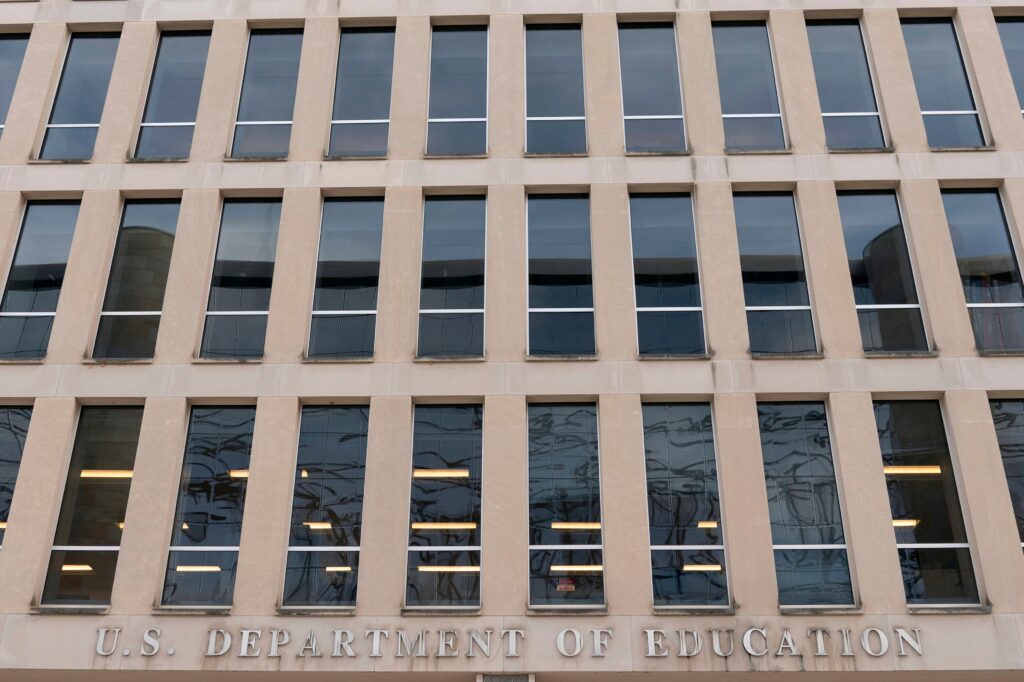
The Education Department on Thursday killed decades-old rules that have allowed statistical disparities to be used as proof of racial discrimination, the most recent move by the Trump administration to overhaul the government’s enforcement of civil rights law.
The move follows years of conservative complaints about “disparate impact analysis,” which incorporates use of data to show discrimination. Supporters say that discrimination is not always explicit and that data analysis is needed to uncover it. Conservatives say that proving discrimination should require proof that someone intended to treat people differently and argue that when people are being judged by data, they feel pressure to make decisions based on racial quotas.
At the Education Department, disparate impact analysis has been used in recent years to evaluate allegations that students of color were discriminated against by examining data showing they were disciplined at higher rates than White students.
The Education Department said Thursday that eliminating the data analysis will assure that schools can address discipline problems without fear of drawing a federal investigation.
“The left’s notion of ‘equity’ should never prevent teachers from keeping their classrooms and students safe. With these changes, schools will be empowered to address classroom issues without fearing the federal government will weaponize antidiscrimination laws,” Kimberly Richey, assistant secretary for civil rights, said in a statement.
The change was made without an opportunity for public comment, which is unusual for major regulatory action. The rules were announced on Thursday and took effect immediately.
The government’s action scrapped guidelines that were adopted in 1979, reinterpreting a key plank of the Civil Rights Act of 1964 which bars discrimination on the basis of race, color or national origin in programs receiving federal funding.
Supporters of disparate impact analysis say it is a critical tool because finding “smoking gun” evidence to prove someone intended to discriminate is difficult. And even if the intent wasn’t to discriminate, advocates say institutions should be held accountable for discriminatory effects.
A statement Thursday signed by 60 civil rights and education groups predicted the change will enable discrimination against students of color to go unaddressed.
“Today’s action has no basis in law or morality and is further evidence that this administration is determined to undermine our laws, abandon civil rights enforcement, and deny the existence of systemic discrimination,” the groups said.
The groups added that for decades, “courts have acknowledged that discrimination is not always explicit or overt.”
The Trump administration has been working since last year to excise disparate impact analysis across government. Beyond education, the tool has been used to investigate banks for discouraging people of color from applying for loans and by the Justice Department examining alleged racial discrimination in police departments.
In April 2025, Trump declared the use of disparate analysis unconstitutional and issued an executive order that kicked off a review of civil rights regulations, enforcement actions and settled cases. In December, the Justice Department rolled back its disparate impact regulations.
Even as the administration rejects the idea that data can prove discrimination in certain cases, it has deployed data in its investigations of university admissions practices.
Last year, President Donald Trump ordered the Education Department to collect admissions data, including the grades and test scores of applicants and admitted students, broken down by race. In May, the Justice Department cited data on test scores and grades as it accused Yale School of Medicine of discriminating based on race by favoring Black and Hispanic applicants over White and Asian ones.
Without disparate impact analysis, the administration will have to prove intentional discrimination.
The legal standard around disparate impact analysis dates back to Griggs v. Duke Power, a landmark 1971 Supreme Court decision that became a staple of civil rights litigation. In that case, attorneys relied on statistical evidence to show how standardized testing prevented Black employees in North Carolina from advancing at the energy company.
The legal analysis has been consistently recognized by the Supreme Court, written into federal regulations and enshrined into employment law by Congress. In a 2015 housing case, the high court upheld the approach by a narrow 5-4 vote, in an opinion written by Justice Anthony M. Kennedy, who is now retired. Some conservatives have predicted that the new, more conservative court might decide the same matter differently.


The Industry Newspaper unveils 2026 ‘Top 50’ Nigerian Companies of Impact

Modi Caught Off Guard as India’s Economic Failings Inflame Young People

World Cup winners Ruiz, Gavi honoured with 150kg of tomatoes (Photos)

ADC to Tinubu: Trump’s letter will not help you

‘Don’t let me die’ – Actress Ngozi Nwosu solicits financial help for life-saving surgeries [VIDEO]

Investigation Into Missing Teens Who Disappeared at a Concert 53 Years Ago Refuses to Go Cold

Reps minority caucus walks out of plenary over Tinubu’s state police bill

 Investigation2 days ago
65-year-old married female teacher blindfolded and tied 10-year-old schoolboy to bed before having s3x with him
- Investigation2 days ago
âBusinesses are dy!ng in South Africa. Nobody is making money – South African man decries low patronage days after anti-immigrant protest
- Investigation2 days ago
"I ‘m fine and healthy" – Video of late Mary Habila debunking her d3ath rumours 3 days before she d!ed at Umahi’s residence
- World3 days ago
Trump Is Caught in the Trap He Set
- Investigation3 days ago
FIFA President Gianni Infantino presents Spanish players with their FIFA World Cup winnersâ rings (Video)
- Investigation3 days ago
âTimi Dakolo, youâve proven you lack integrityâ â DJ Timmy intensifies criticism of singer amid contract dispute
- National2 days ago
CBN opened domiciliary accounts for Gbajabiamila-linked PFIPC on accountant-general’s order before N400 million bribe probe: Cardoso
- National2 days ago
INEC Officials Accused of Demanding ₦2,000 for PVCs in Onitsha [VIDEO]