Society
Energy transition: Stakeholders caution FG against reckless solid mineral exploration

Environmental experts, academics, traditional rulers and civil society stakeholders on Tuesday warned the Federal Government against indiscriminate exploration of solid minerals in the rush to meet global energy transition demands, cautioning that weak governance could trigger fresh insecurity, environmental degradation and widespread loss of livelihoods.
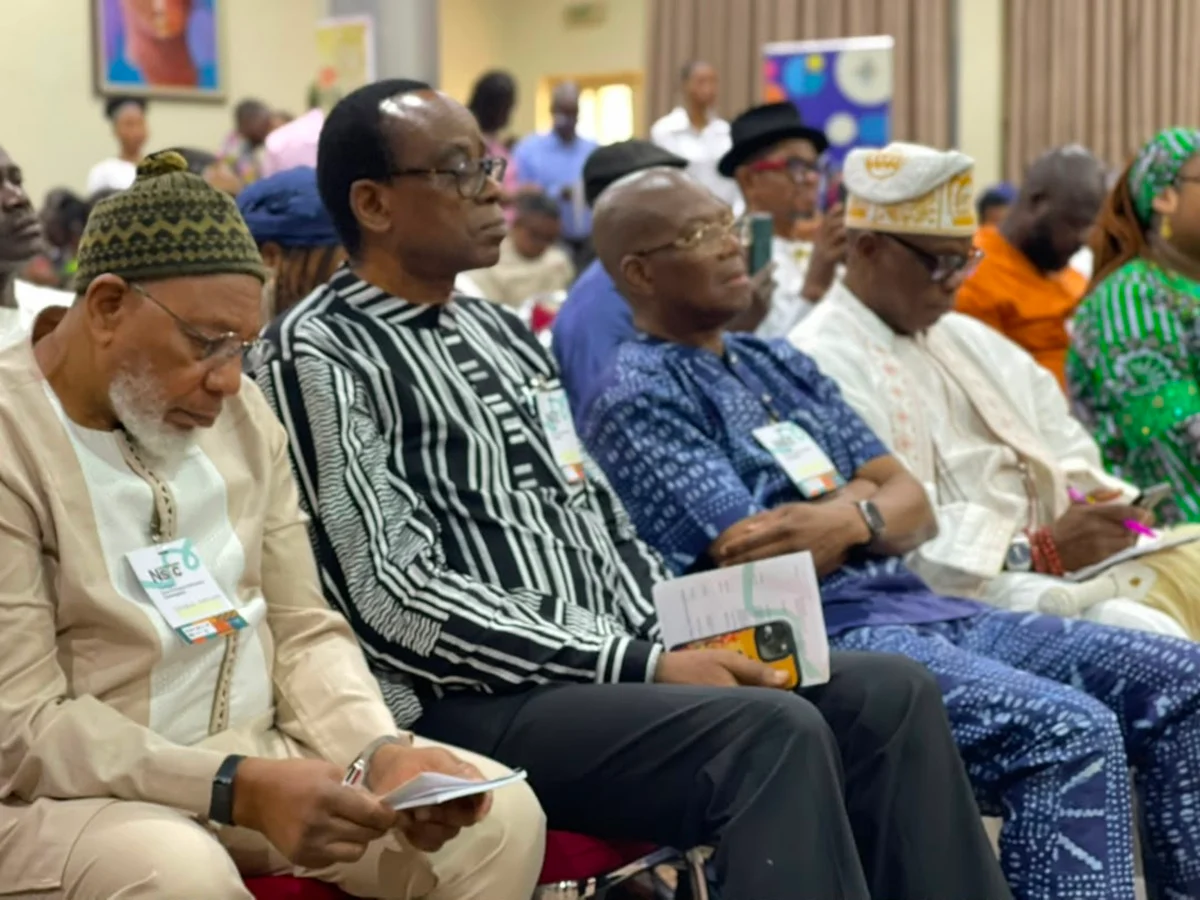
The warning came at the 3rd Nigeria Socio-Ecological Alternatives Convergence (NSAC), organised by the Health of Mother Earth Foundation (HOMEF) in Abuja, where stakeholders urged the government to establish a robust governance framework to ensure that the country’s transition from fossil fuels to cleaner energy does not replicate the environmental and social injustices associated with decades of oil exploitation.
Delivering the keynote address, titled “Critical Minerals as the New Oil: Decarbonisation and the Perils of Energy Transition in Nigeria,” Professor Omolade Adunbi of the Department of Anthropology and Afroamerican and African Studies said the global race for lithium, cobalt, nickel, copper and other critical minerals could deepen Nigeria’s security challenges if poorly regulated.
“It is therefore not only a law-and-order problem; it is also a resource governance problem,” Adunbi said, warning that the scramble for critical minerals could unleash “chaos, banditry, insecurity and loss of livelihoods” where weak institutions allow what he described as “disaster capitalism” to flourish.
Drawing parallels with the Niger Delta experience, he cautioned that Nigeria must not repeat the mistakes of the oil era, stressing: “Extraction without justice produces conflict, while development without consent produces instability.”
The professor further warned that, without deliberate reforms, the energy transition could leave oil-producing communities stranded, fuel reckless mining driven by declining oil revenues, worsen energy poverty and create what he described as “green sacrifice zones”, where host communities bear the environmental costs while others reap the economic benefits.
“A just transition cannot mean that fossil capital exits with profit while communities inherit the ruins of decades of capital accumulation,” he added.
Professor Adunbi argued that Nigeria’s clean energy agenda should prioritise improving electricity access through investments in solar mini-grids, clean cooking technologies and reliable electricity for schools, hospitals and small businesses, insisting that the success of the transition should be measured by improvements in people’s lives rather than carbon reduction targets alone.
To avert future conflicts, he proposed the creation of no-go zones prohibiting mining in forests, watersheds, biodiversity hotspots and major food-producing areas, while insisting on the principle of free, prior and informed consent before mining licences are granted.
“Consultation after a licence is granted is not consent. A signature by one local elite is not consent. Silence under armed security is not consent,” he declared.
Also speaking, the Executive Director of HOMEF, Dr Nnimmo Bassey, urged Nigeria to rethink its development model, warning that forests, rivers and local communities were increasingly being sacrificed in pursuit of short-term economic gains.
He said the warning had become more urgent following the Federal Government’s recent announcement of the discovery of a world-class polymetallic mineral province in Kaduna State containing platinum group metals, gold, nickel, copper, lithium and rare earth elements.
While acknowledging the economic opportunities such discoveries present, Bassey expressed concern that Nigeria had yet to confront the environmental implications of another extractive boom.
According to him, between 250,000 and 300,000 hectares of forest disappear annually in Nigeria, while primary forests now account for only 1.3 per cent of the country’s landmass.
“At the present rate of deforestation, there may be no forests in Nigeria by the year 2052,” he warned.
The HOMEF executive director described ecological crises as governance failures, stressing that environmental degradation could only be reversed by ending destructive human activities.
“Forest ecosystems that once protected biodiversity, regulated rainfall and sustained livelihoods are steadily shrinking under the pressures of commercial logging, agricultural expansion, infrastructure projects and mining. Every forest loss weakens our ecological resilience and increases our vulnerability to climate change,” Bassey said.
He further noted that although Nigeria was witnessing growing investments in lithium exploration, processing plants and mineral beneficiation, the country must first determine the kind of development it seeks.
“We are yet to have serious conversations on what sort of development we desire. Have we learned the lessons of almost seven decades of oil extraction in the Niger Delta?” he asked.
In his remarks, the Emir of Nasarawa lamented that relentless exploration of natural resources across Nigeria was accelerating environmental degradation while worsening human insecurity.
He said forests that had sustained livelihoods and preserved biodiversity for generations were disappearing at an alarming rate, while poorly regulated and illegal mining activities were displacing communities, contaminating rivers and farmlands, destroying livelihoods and fuelling conflicts over land and natural resources.
Drawing from the experience of Nasarawa State, which is richly endowed with lithium, tantalite and rare earth minerals, the monarch said the country must ensure that mineral resources are managed responsibly and transparently.
“While these resources hold immense potential for economic growth and national development, they must be managed responsibly, transparently and in ways that protect both the environment and the dignity of host communities,” he said.
He added: “Development should never come at the cost of human lives, environmental integrity or the future of generations yet unborn. Our natural resources are a blessing, but only if they are governed with justice, accountability and sustainability. Economic prosperity and ecological stewardship are not competing objectives; they are mutually reinforcing pillars of lasting national progress.”


“My Family Thinks I’m Still Jobless” — Man Secretly Lands New Job After Alleged Years of Mistreatment
“My Family Thinks I’m Still Jobless” — Man Secretly Lands New Job After Alleged Years of Mistreatment

Subaru issues recall for 541,000 SUVs

World Cup: Kyle Walker reveals Messi’s weakness, warns England against man-marking

Sam Amadi Reveals Why Peter Obi And Uzodinma Asked Him Not To Contest

Trump gives Iran one week to reach deal or face strikes on power plants

APGA Backs Tinubu For 2027 Presidential Election

 Investigation2 days ago
Each and every one of you is guilty РDanish aid worker Anja Ringgren Lov̩n slams Nigerians filming malnourished child accused of being a witch in viral video
- News3 days ago
Army officer killed during rescue of kidnapped Oyo pupils, teachers buried
- National2 days ago
Gbajabiamila: I borrowed N400 million to buy appointment in Tinubu’s government, says Adeyemi
- Society3 days ago
NPP Internal Elections: Bantama NPP Supporter Goes Half N@kɛd At Night, Invokes Curses On Delegates Over Disputed Constituency Election
- Investigation2 days ago
Twelve people arrested after âextreme right-wing terror threatâ against Islamic event in UK
- Investigation24 hours ago
Veterans demand â¦250,000 Minimum Wage for soldiers
- Investigation3 days ago
Parents to pay â¦50,000 to register each child for WAEC or NECO SSCE as govt approves 82% increase
- Investigation2 days ago
Female teacher admits to having s£x with boy, 16, as she splits from husband who first exposed her misconduct.