National
FG confirms moves to revive textile factories, Ajaokuta + Video

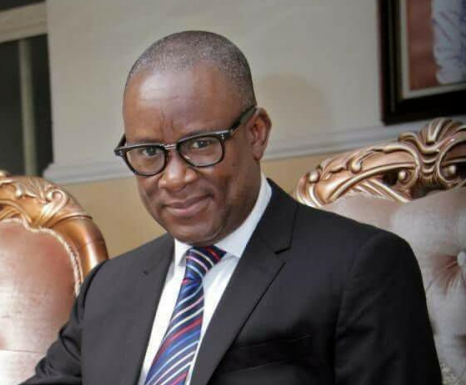
The Federal Government is currently holding advanced talks with international investors and development partners to revive moribund textile factories across the country and the Ajaokuta Steel Company as part of efforts to reposition Nigeria’s industrial sector and accelerate economic growth.
Minister of State for Industry, Senator John Enoh, disclosed this during an interview on Channels Television on Tuesday.
During his appearance, he said the President Bola Tinubu-led administration was implementing the National Industrial Policy (NIP) to boost manufacturing, create jobs and drive Nigeria’s $1 trillion economy ambition.
Speaking of efforts to revive the textile industry, Enoh said the government was engaging investors and development partners to restore the cotton, textile and garment value chain.
“We are working on the Cotton, Textile and Garment Industrial Transformation Programme.
“We are reconnecting cotton growers, textile manufacturers and garment producers because that has been the missing link.”
He added that discussions were also ongoing with investors interested in converting abandoned textile factories into industrial parks.
“We are in touch with development and investment partners that are interested in investing. We hope that within the next few weeks, the necessary agreements will be concluded.
“They are interested in establishing industrial parks in many of those moribund textile factories.”
On Ajaokuta Steel Company, the minister said discussions with international investors were progressing.
“There is no meaningful industrialisation without steel. Conversations are ongoing, and in the next few days I will be meeting with an international consortium that is interested in Ajaokuta.
“We are optimistic these engagements will yield positive results.”
Enoh described industrialisation as the foundation of the federal government’s economic agenda, stressing that production was critical to achieving sustainable growth.
“We cannot build a one-trillion-dollar economy without production. You can put fiscal and monetary policies in place, but production remains the key to economic growth.”
He said the National Industrial Policy, launched in February this year, was the first comprehensive industrial policy Nigeria had developed in decades and was backed by an implementation framework with defined responsibilities and quarterly reporting.
The minister said the government was targeting an increase in industry’s contribution to gross domestic product, GDP, to 25 per cent by 2030.
“Our aspiration is that by 2030, industry’s contribution to GDP should rise to about 25 per cent. Every industrialised nation has a strong manufacturing base, and that is the direction Nigeria is taking.”
He said the government was also promoting value addition to reduce raw material exports and expanding access to affordable long-term financing through institutions such as the Bank of Industry.
Enoh added that the Nigeria First Policy was being implemented to encourage patronage of locally manufactured goods, while efforts were also underway to reduce manufacturers’ energy costs.
“Energy accounts for about 40 per cent of manufacturers’ operating costs. That is why we are working on practical solutions that will make power more affordable and reliable for industry.”


Gov Otu reshuffles cabinet, swears in two new commissioners
âI didnât want to bring this to social media, but Iâm drained and genuinely need helpâ â Lady cries out over brotherâs alleged drug addiction

Primate Ayodele to Tinubu: Stay away from Osun election

Kano Task Force Warns Politicians Against Freeing Drug Suspects

Kaduna 2027: PDP’s Bawa unveils running mate

TikTokker ends her life after battling Alzheimer’s disease

Court Restores ADC And Four Other Political Parties After INEC Deregistration Ruling

 Investigation3 days ago
No restriction on movement during sanitation exercise â Lagos commissioner
- Investigation3 days ago
IG did not issue âshoot-on-sightâ order in Benue- Police
- Breaking2 days ago
âIf my son ever gets a girl pregnant, he’s leaving my house immediatelyâ â Cardi B shares parenting stance
- Society3 days ago
Transfer: Chelsea announce deal for Merrick
- Breaking2 days ago
âI used to think love was about finding the right person, but at 30, I don’t believe that anymoreâ â BBN star, Sheggz.
- Investigation2 days ago
âThe Olodo uprising term was not coined by meâ â Nigerian musician Ycee
- News3 days ago
African nations adopt plan for cheaper internet, smartphones
- Investigation3 days ago
Ebola d3aths in DR Congo surge past 1,300 as v!rus âspreading like a wildfireâ