Society
FG seeks sustainable financing to end financial barriers to critical care

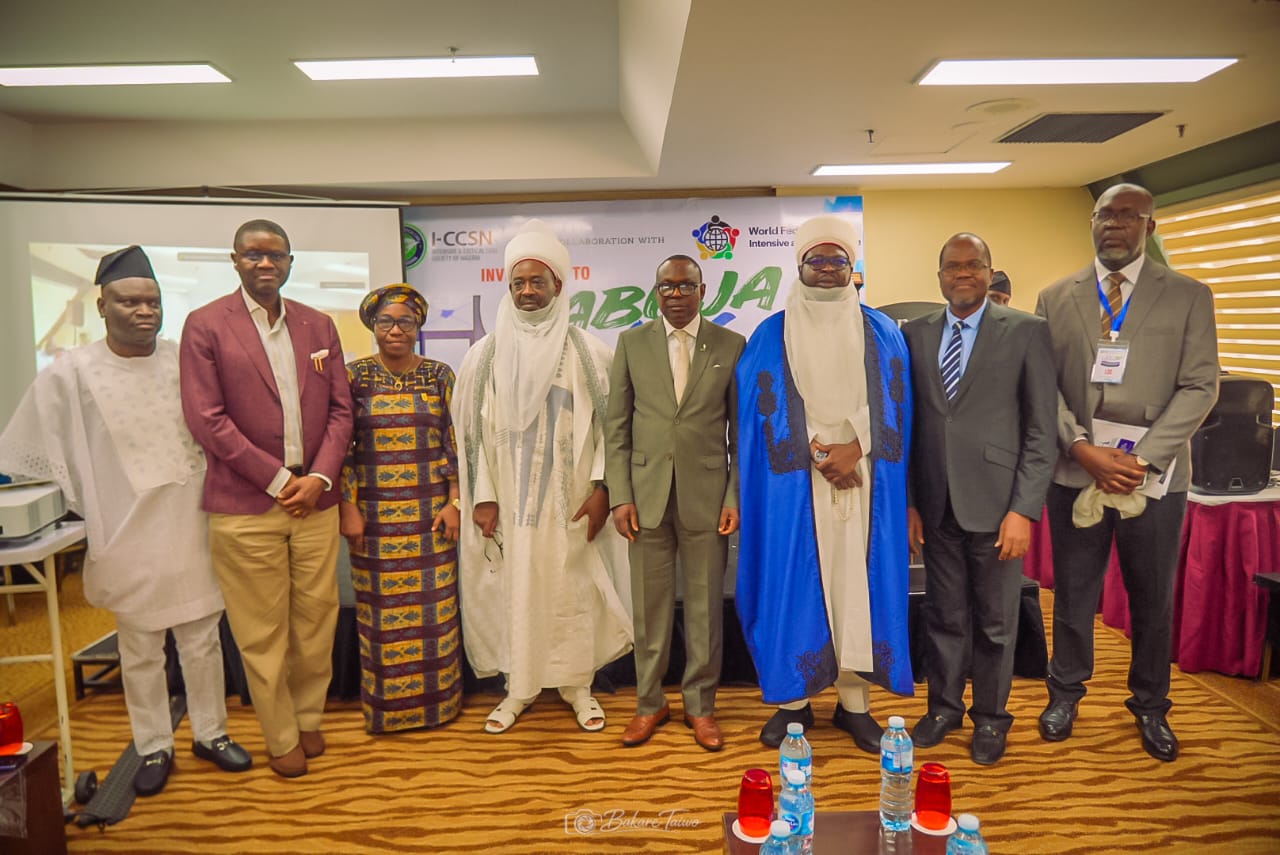
The Federal Government has called for sustainable financing of intensive and critical care services to ensure Nigerians can access life-saving treatment without being pushed into financial hardship.
The Minister of State for Health and Social Welfare, Dr Iziaq Adekunle Salako, made the call on Wednesday while declaring open the 11th Annual Scientific Conference and Annual General Meeting of the Intensive and Critical Care Society of Nigeria (I-CCSN) in Abuja.
Speaking on the conference theme, “Sustainable Financing for Intensive Care in Public Hospitals in Nigeria,” Salako said the country must develop financing mechanisms that strengthen public hospitals, improve financial protection for patients and ensure access to critical care is determined by medical need rather than the ability to pay.
He noted that critical illnesses, ranging from trauma and severe infections to maternal complications, cardiovascular diseases, respiratory failure and public health emergencies, require timely access to quality intensive care services, which often determine whether patients survive or suffer permanent disability.
ALSO READ: FULL LIST: NANS names 39 schools yet to refund students after NELFUND payments
According to him, sustainable financing remains one of the greatest challenges facing the development of intensive and critical care services, particularly in public health institutions.
“Intensive care is inherently resource-intensive. It requires purpose-built infrastructure, adequate bed capacity, highly trained multidisciplinary healthcare professionals, reliable medical oxygen systems, mechanical ventilators, patient monitoring systems, essential medicines and consumables, diagnostic services, biomedical engineering support, uninterrupted utilities, and effective systems of clinical governance and quality assurance,” he said.
The minister lamented that many Nigerian families still rely on out-of-pocket payments for critical healthcare, a situation he said delays treatment, interrupts care and exposes households to catastrophic financial hardship.
“No Nigerian family should be forced to choose between financial ruin and access to life-saving healthcare,” he said.
Salako said the Federal Government is strengthening emergency and critical care services as part of broader efforts to build a resilient healthcare system, advance universal health coverage and improve national health security.
He disclosed that the National Emergency Medical Service and Ambulance System (NEMSAS) has expanded from its pilot phase in the Federal Capital Territory to 34 states, with efforts underway to achieve nationwide coverage.
According to him, the government is also developing a digital emergency dispatch system that will connect callers, ambulances and emergency treatment centres to support real-time emergency response, patient tracking, referrals and claims management.
The minister stressed that improving intensive care services requires stronger coordination among emergency care, ambulance services, intensive care units, high-dependency units, operating theatres, medical oxygen systems, diagnostic services, health insurance schemes, workforce development and rehabilitation services.
He also called for stronger collaboration among the Federal Government, state governments, healthcare institutions, professional bodies, research institutions, the private sector, development partners and civil society organisations.
Salako urged the I-CCSN to continue supporting the government through technical expertise, policy development, research, professional education and advocacy to improve patient safety and the quality of care.
He identified investment in human resources as another critical priority, saying Nigeria needs more physicians trained in intensive care, specialised nurses, physiotherapists, pharmacists, biomedical engineers and technicians.
The minister further said the COVID-19 pandemic underscored the importance of reliable medical oxygen systems, adding that the Federal Government has responded by installing oxygen pressure swing adsorption plants in health facilities across the country.
He also advocated stronger referral systems, regional critical care networks, digital health technologies, tele-critical care and improved health information systems to reduce inequalities in access to life-saving services.
Salako called on participants to move beyond identifying challenges and develop practical, measurable and innovative recommendations that would strengthen the financing and delivery of intensive care services across Nigeria.
He said the Federal Ministry of Health and Social Welfare looks forward to implementing the conference’s recommendations in collaboration with the Intensive and Critical Care Society of Nigeria.


Towering trees more than 200 feet tall may not be as vulnerable to drought as scientists thought, new study reveals how Southeast Asia’s dipterocarps efficiently move water

Stock Recommendation for the Week of July 6, 2026

Transfer: Man Utd agree £50m deal with Chelsea for Andrey Santos

Zulum announces N500m cash support for vulnerable residents in five Borno LGAs

Connor Murphy cause of death: New details emerge after influencer's tragic death in Thailand

Video of Big Tigger and wife Alicia Brown engaged in physical altercation emerges as he’s arrested on battery charges

Donald Trump shares year-old photo in post boasting of Iran 'retribution' today

 Society3 days ago
H0rny Old Man Caught On Camera In Broad Daylight Trying To Chop Mad Woman At Roadside
- Investigation1 day ago
15-year-old student slashes schoolmate with cutlass for allegedly touching her brâ¬ast repeatedly during school clean-up exercise
- Investigation2 days ago
If this was AFCON the nonsense being said would be crazy â Former Congolese footballer Yannick Bolasie slams FIFA over Balogun red card reversal
- Society2 days ago
Chaos At Cemetery As Area Boys Hijack Dead Body In Coffin, Stops Family From Burial Over Unpaid Debt
- National1 day ago
May Yul-Edochie Urges Court To Shut Down Yinka Omolola Theisen, Others’ Social Media Accounts Over Alleged Cyberbullying
- Investigation2 days ago
âYouâre my best forever. You do everything for me.â â Little girl melts hearts with sweet voice note to her dad
- Society2 days ago
Watch Moment Husband Nearly Beats Pastor As Wife Donates Family Car To Him As Seed Offering
- Investigation2 days ago
The referee is a little bit suspect – President Trump confirms he spoke to FIFA president to review Folarin Balogunâs red card