National
Forced Online Scams: IOM warns trafficking networks booming

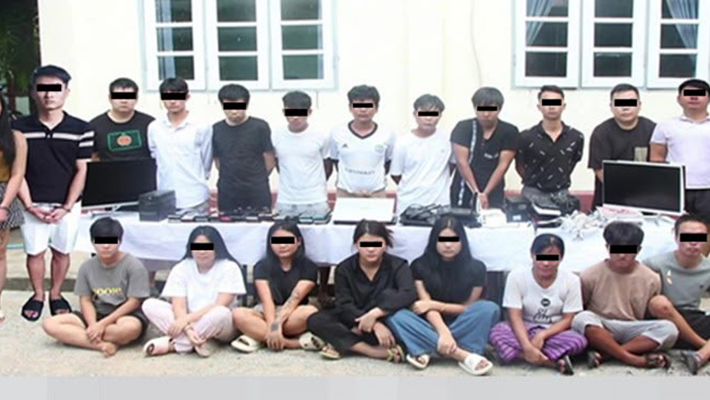
The UN International Organisation for Migration (IOM) on Tuesday warned of a rapidly expanding, multibillion-dollar criminal industry that turns job seekers into forced cybercriminals.
In its alert on forced online scams, IOM warned that trafficking networks were booming. The international migration agency warned that a job advert can hide a criminal network, and a single click can lead to a nightmare.
Hundreds of thousands of people are trafficked every year on the promise of legitimate work abroad, only to be held captive and forced into online scam operations, IOM said.
Amy Pope, IOM’s director-general, said in Geneva that victims from over 80 different countries are being trafficked into the scam centres, which are playing out across Asia. Recruiters target people who speak good English and often hold degrees, she said, advertising what look like ordinary jobs on social media.
According to her, once victims arrive, they are locked inside compounds, stripped of their passports and phones, and put under constant watch, with many being beaten or threatened and forced, through violence and debt bondage, to run scam operations targeting people worldwide.
“They’re often subjected to physical or mental abuse. They are often unable to leave,” Ms Pope said. The warning signs are there for anyone willing to look. What often presents as something that looks like an ideal job opportunity is just too good to be true.”
One red flag IOM identified is travel on a tourist visa rather than a work permit, a question every applicant should ask before departure. IOM insisted that people forced to run scams from inside these compounds are trafficking victims, not criminals, and should be protected rather than prosecuted.
“We’re seeing many of the survivors of trafficking actually being identified as criminals, but in reality, they are the victims of this crime,” Ms Pope said.
While the scam centres are based in Asia, IOM said traffickers recruited globally through social media, widening the network’s reach.
Between 2022 and 2025, IOM said it assisted more than 3,500 victims of forced criminality in South-East Asia, drawn from 39 countries, most from Indonesia, India, Sri Lanka, Ethiopia, Kenya and Bangladesh.
According to IOM, rescue is only the start of recovery, as survivors often return home facing trauma, stigma, debt, missing documents and fear of prosecution.
New UN Office on Drugs and Crime (UNODC) data decried that the scale of online scams is staggering.
The UNODC data put 2025 losses from scam offences across East and South-East Asia, Australia and New Zealand at between $88.3 billion and $114.1 billion, dwarfing the resources devoted to fighting trafficking.
Ms Pope warned that unless we take the issue quite seriously, it will continue to grow.
IOM called for greater investment in victim protection, safe return and reintegration, and wider public awareness of traffickers’ tactics.
(NAN)


INEC, Ooni Raise Concern Over Rising Tension Ahead of Osun Governorship Election

Atiku Accuses Tinubu Government of Losing Control Over Nigeria’s Finances

“Court Voids Reps’ ₦72.624bn Compensation Order Against Seplat” — Holds National Assembly Cannot Award Damages

Xenophobic attacks: Why Nigeria will stick to diplomacy — Minister

Chairman sentenced for stealing football club money to fund cocaine addiction

Legora’s buying spree has reached the courtroom

Super Falcons Stunned by Malawi in WAFCON Opening Clash

 Breaking3 days ago
âI used to think love was about finding the right person, but at 30, I don’t believe that anymoreâ â BBN star, Sheggz.
- Investigation2 days ago
âThe Olodo uprising term was not coined by meâ â Nigerian musician Ycee
- Investigation3 days ago
Family, friends unveil plans for Balamiâs 42nd birthday celebration, to induct 42 fellows
- Investigation3 days ago
Angelina Jolie and Robert De Niro among huge Hollywood stars to âhave private details leaked onlineâ
- Investigation3 days ago
Actress Lizzy Anjorin slams Iyabo Ojo for attending Soso Soberekonâs wedding with her daughter
- Breaking3 days ago
âI am in the era of overcoming my fear" – Nigerian acid attack survivor writes as she reveals her amazing transformation after getting a beauty makeover
- Society3 days ago
Investigate farmland buyers to stop drug labs in your communities- Marwa urges traditional rulers
- Investigation3 days ago
Suspected cable thief nabbed in Bayelsa community