World
Global Oil Prices Jump as Attacks Resume in the Middle East

This Video Is Trending Right Now
After climbing down last week from $100 a barrel, oil prices reversed direction on Wednesday as attacks resumed in the Middle East, jolting investors concerned about the flow of energy out of the region.
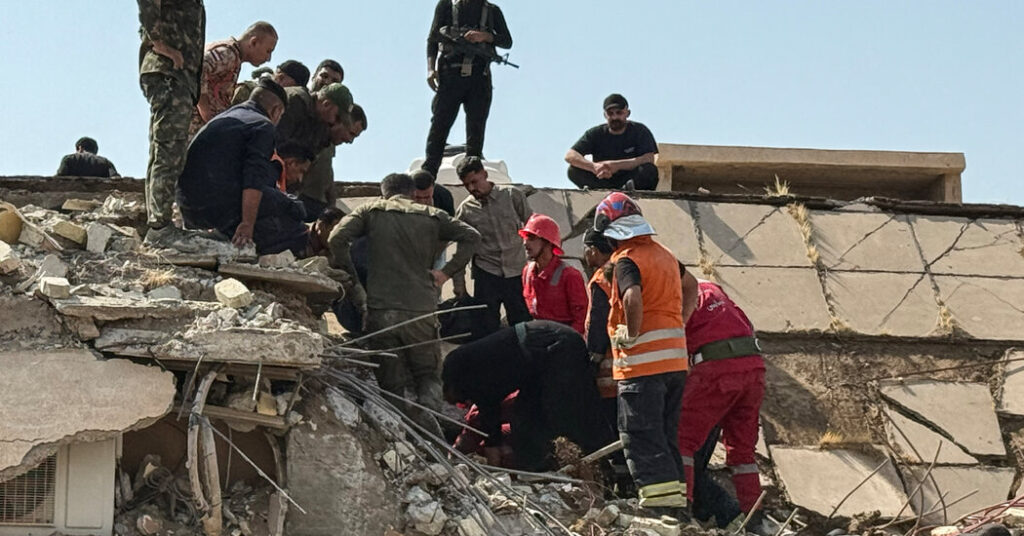
The United States and Saudi Arabia said they had struck Iranian-backed militias in Iraq, and Iran said it had fired missiles at U.S. military targets in the region. In addition, Iranian-backed Houthi militia in Yemen said on Tuesday that they had launched missiles at a Saudi oil tanker, the group’s latest attack since announcing a blockade of Saudi shipping in the Red Sea. Threats of the blockade had helped push the global oil price over $100 a barrel.
Oil prices eased this week along with several days without full-blown fighting between the United States and Iran.
Oil prices rise.
The price of Brent crude, the global benchmark, was up 3.5 percent at about $87 a barrel. That’s down from last week, but up 20 percent since the beginning of the war. That is for oil to be delivered in September. Oil for October delivery was up nearly 3 percent to about $84 a barrel.
West Texas Intermediate crude, the U.S. benchmark, rose about the same amount to about $82 a barrel.
Investors and analysts are focused on the continued disruption to shipping in the Strait of Hormuz, the narrow waterway between Iran and Oman that is a vital trading route for oil and natural gas that normally carries as much as one-fifth of the world’s oil supply. They are also watching the Houthis’ threat to restrict traffic in the Bab al-Mandeb strait at the southern end of the Red Sea, which Saudi Arabia has used as an alternative to Hormuz.
Global stocks were mixed.
Futures on the S&P 500 pointed to a slight increase when stocks resume trading in the United States on Wednesday.
Stocks in Asia, where markets have experienced a sell-off related to fears about tech companies overspending in the artificial intelligence race, were mixed. Chinese indexes showed small gains. South Korea’s Kospi index fell 6 percent, and the Nikkei closed 1.5 percent lower.
In Europe, the Stoxx 600, a broad-index that tracks the region’s largest companies, was little changed.
Gasoline prices tick lower.
Gas prices fell one cent on Wednesday to a national average of $4.09 a gallon, according to the AAA motor club. The increase has raised the cost for drivers by about 37 percent since the war began.
Gas prices don’t move in lock step with crude, usually trailing increases or drops by a few days.
The average price of diesel rose one cent to $5.33 on Wednesday, up 42 percent since the start of the war.


Nigerian Man Jailed in UK for Sexual Assault Near London Station

President Tinubu Welcomes NBA President-elect Oyinkansola Badejo-Okusanya to State House

Use Your Brain Sometimes!” — Asamoah Gyan Schools Young Footballers In Fiery Training Session Clip As He Starts His Coaching Career

Man, 61, Docked Alongside 2 Women Over Alleged Public Fight In Ajangbadi
âIâll never date a Yahoo boyâ â Yul Edochieâs daughter, Danielle speaks on relationships

Boomers Can’t Stop Gifting Their Grandkids AI-Generated Slop Books

Senator Donates 100 Motorcycles to Boost Security Operations in Benue South

 Investigation3 days ago
âThe Olodo uprising term was not coined by meâ â Nigerian musician Ycee
- Investigation3 days ago
Family, friends unveil plans for Balamiâs 42nd birthday celebration, to induct 42 fellows
- Investigation3 days ago
Angelina Jolie and Robert De Niro among huge Hollywood stars to âhave private details leaked onlineâ
- Investigation3 days ago
Actress Lizzy Anjorin slams Iyabo Ojo for attending Soso Soberekonâs wedding with her daughter
- Breaking3 days ago
âI am in the era of overcoming my fear" – Nigerian acid attack survivor writes as she reveals her amazing transformation after getting a beauty makeover
- Society3 days ago
Investigate farmland buyers to stop drug labs in your communities- Marwa urges traditional rulers
- Investigation3 days ago
Suspected cable thief nabbed in Bayelsa community
- Investigation3 days ago
Jay Jay Okocha’s daughter Daniella shares photos from her bachelorette party in Greece ahead of wedding