Society
Osun guber: EU observers raise concerns over security risks, misinformation

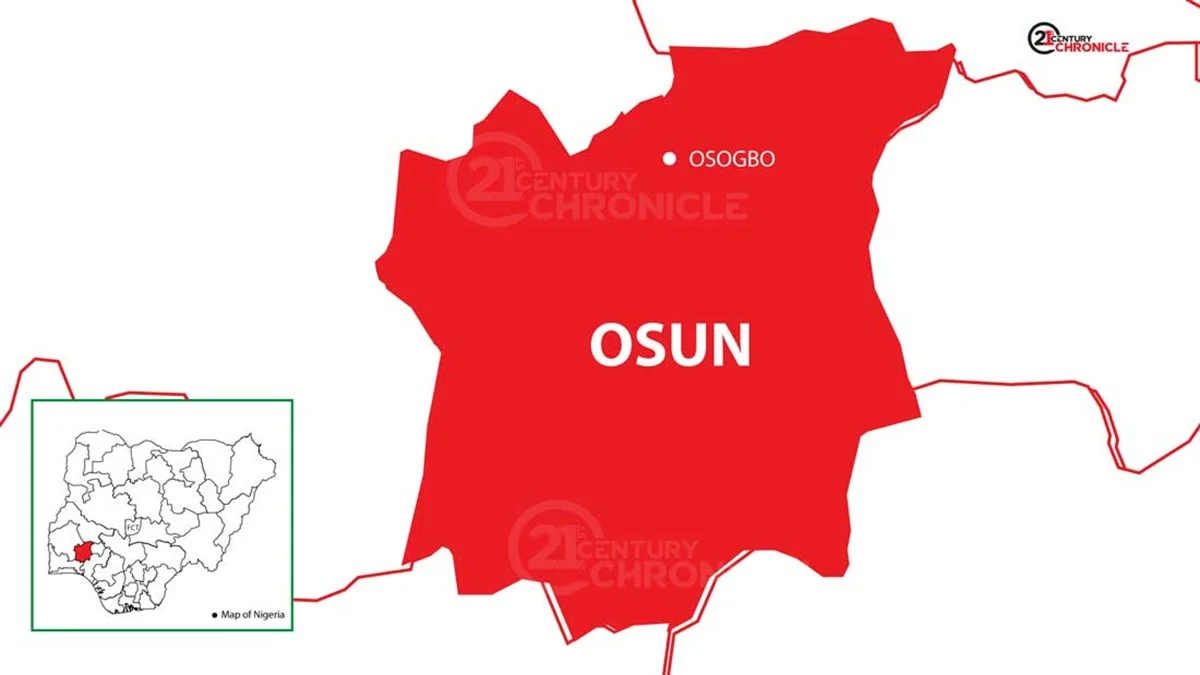
The Election Observation Hub under the European Union Support to Democratic Governance in Nigeria Phase II (EU-SDGN II) has raised concerns over security threats, misinformation and the exclusion of vulnerable groups ahead of the August 15, 2026, Osun State governorship election.
Presenting the Hub’s Pre-Election Assessment Report during a media briefing in Osogbo on Monday, the coalition described the poll as a critical test of Nigeria’s electoral institutions ahead of the 2027 general elections.
The Election Observation Hub comprises seven civil society organisations participating in the EU-SDGN II programme, namely Yiaga Africa, The Kukah Centre, the International Press Centre (IPC), CEMESO, ElectHER, the Nigeria Women Trust Fund (NWTF) and TAF Africa.
ALSO READ: Bus preaching ban not new law — Senate
The report identified 13 of Osun State’s 30 local government areas as high-risk flashpoints due to politically motivated killings, violent attacks and heightened political tension. The affected areas include Osogbo, Irewole, Boripe, Obokun, Ife North, Ife Central and parts of Ijesaland.
According to the Hub, the findings were based on field engagements across the state, desk research and integrated assessments conducted by the EU-SDGN II implementing partners.
The coalition noted that the governorship race involving the incumbent governor, Ademola Adeleke of the Accord Party, Asiwaju Bola Oyebamiji of the All Progressives Congress (APC) and Najeem Salaam of the African Democratic Congress (ADC) has made the contest more competitive and polarised than the recent Ekiti State off-cycle election.
The report also identified the lingering dispute over local government administration as a major source of political tension, warning that uncertainty surrounding council leadership could trigger conflict if not managed transparently and in accordance with the law.
On the preparedness of the Independent National Electoral Commission (INEC), the Hub said the commission had concluded the Continuous Voter Registration exercise, with about 2.33 million registered voters, and was preparing to deploy the Bimodal Voter Accreditation System (BVAS) and the INEC Result Viewing Portal (IReV).
However, it stressed that the success of the exercise would depend on the timely release of funds, efficient logistics and the recruitment, training and deployment of about 17,500 ad hoc personnel.
The coalition also urged INEC to provide assistive voting devices and other accessibility measures to enable Persons with Disabilities to participate fully in the election.
The report expressed concern over the state’s information environment, describing Osun’s media landscape as vibrant but deeply polarised.
It warned that the spread of misinformation and disinformation on social media could undermine informed voter participation, while noting that the physical safety and economic security of journalists covering the election remain significant concerns.
The Hub also decried the limited participation of women, youths and Persons with Disabilities in the electoral process, noting that only one female candidate is contesting the governorship despite the groups constituting a substantial proportion of registered voters.
On security, the coalition questioned public confidence in the neutrality of security agencies, particularly the Nigeria Police Force, following allegations of partisanship during the local government crisis.
It recommended intelligence-led deployment of security personnel to identified flashpoints and urged security agencies to demonstrate professionalism, political neutrality and strict adherence to the rule of law.
The Hub called on INEC to ensure timely deployment of election materials and transparent collation of results, while urging security agencies to protect voters, journalists and election officials.
It also appealed to political parties to sign and adhere to the Osun State Peace Accord, reject vote-buying, political violence and hate speech, and called on the media and civil society organisations to promote conflict-sensitive reporting, strengthen fact-checking efforts and sustain election observation.
The coalition pledged to deploy both long-term and short-term observers across the state, adding that its full Pre-Election Assessment Report would be published on the EU-SDGN II website and partner platforms.


Men’s coach, Gehgeh warns men insulting his wife’s physical appearance

Anthropic exec shares how she uses AI to help manage her team

I apologise for saying if you don’t pay tithe, you won’t make it to heaven. I’m sorry, I was wrong, it’s not in the Bible

Mitch McConnell’s latest proof-of-life picture sparks internet firestorm

U.S.—Canada bridge opens to traffic in Detroit amid Trump tariffs strain

Tanzania charges 61 with terrorism

Betye Saar, influential assemblage artist who ‘liberated’ Aunt Jemima, dies at 99

 Investigation3 days ago
âThey believe Presidency will write resultsâ â Kwankwaso speaks about Governors joining the APC
- Investigation2 days ago
Iâm running for a fourth term as President of the United Statesâ – President Trump
- Breaking2 days ago
âIf my son ever gets a girl pregnant, he’s leaving my house immediatelyâ â Cardi B shares parenting stance
- Investigation2 days ago
Iâve never seen N1bn cash in my life – Senator Ali Ndume says as he denies intermediary claim
- Investigation2 days ago
IG did not issue âshoot-on-sightâ order in Benue- Police
- Investigation1 day ago
âThe Olodo uprising term was not coined by meâ â Nigerian musician Ycee
- News3 days ago
NATA begins university tour with UNILAG screening
- News3 days ago
AMCRON to discuss media, democracy relationship