News
Reps dump own state police bill, adopt Tinubu’s version

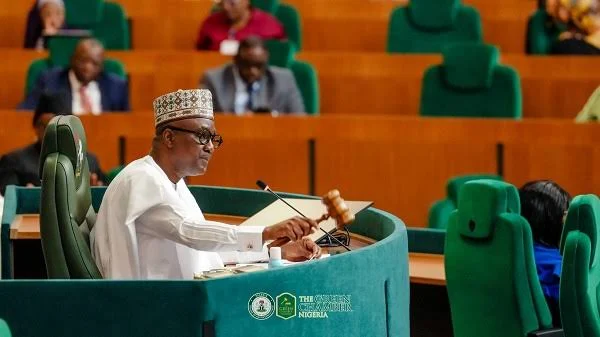
The House of Representatives has resolved to withdraw its earlier State Police Bill and adopt the Executive Bill transmitted by President Bola Tinubu, signalling a major shift in the National Assembly’s ongoing constitutional amendment process on one of Nigeria’s most consequential security reforms.
The Speaker of the House, Tajudeen Abbas, announced the decision on Tuesday at the opening of the 2026 National Assembly Open Week in Abuja, saying the Executive Bill was “more robust and more comprehensive” than the version previously passed by the Green Chamber.
The decision effectively halted plans to harmonise the House and Senate versions of the earlier proposal, with lawmakers now set to begin fresh legislative work on the President’s proposal.
Explaining the decision, Abbas said the executive proposal incorporated additional safeguards developed by a presidential committee chaired by the Chief of Staff to the President and former Speaker of the House, Mr Femi Gbajabiamila.
“The deeper lesson of Oyo is that a nation of this magnitude cannot be policed in perpetuity from a single command in Abuja. On this question, this House has already acted.
“In the course of the constitutional reform ably led by our Deputy Speaker, this House passed a State Police Bill and placed the matter squarely before the nation. Tomorrow’s roundtable carries that work forward, in the open and before you.
“I am, indeed, able to share a development that speaks to the seriousness with which this administration regards the safety of Nigerians.
“His Excellency the President has now transmitted to the National Assembly an executive version of the state police bill, one that is more robust and more comprehensive than the version this House earlier passed.
“That bill is the product of a dedicated committee inaugurated by the President and chaired by a distinguished former Speaker of this House, Rt Hon Femi Gbajabiamila,” he said.
Abbas pledged the readiness of lawmakers to consider the president ‘s proposals.
“The House will therefore recall the version it earlier passed, and accord the executive bill the expedited consideration that a matter of this urgency deserves,” he said.
The Speaker also dismissed concerns that the legislation was being hurried through the National Assembly without public input, assuring Nigerians that the bill would undergo full legislative scrutiny.
“To the thoughtful citizens and to the members who have observed that they are yet to see the draft bills and who fear that this matter is being settled beyond public view, I offer this reassurance: nothing here is concealed. The bill will pass through a public hearing and open scrutiny.
“And I give this assurance to every Nigerian: the framework will carry robust safeguards. A state must satisfy clear and demanding standards and safeguards before it may be entrusted with a police service.
“There will be accountability, the protection of fundamental human rights, and firm boundaries between federal and state authority, so that no state police force may ever be reduced to the private instrument of a governor,” he assured.
According to him, the parliament was aware of how power conducted itself in the absence of restraint, stressing that lawmakers “have no intention of repeating that error.”
He said, “This roundtable is our invitation to examine the draft and to submit your memoranda before it becomes law. Your security is far too grave a matter to be designed behind closed doors.”
President Tinubu had formally transmitted the Constitution of the Federal Republic of Nigeria (Alteration) (State Police) Bill, 2026, to the House in a letter dated June 15, urging lawmakers to accord it expedited consideration as part of his administration’s efforts to restructure the country’s security architecture.
According to the President, the legislation seeks to create “a constitutional pathway for the establishment of State Police Services” capable of complementing the Nigeria Police Force in addressing the country’s growing security challenges.
“This bill builds on the significant work already done in this regard by the House of Representatives and incorporates additional safeguards to ensure that the creation of a dual policing structure to address our nation’s evolving national security challenges can be achieved quickly and effectively to the benefit of all Nigerians,” Tinubu wrote.
He added, “The proposed legislation is a critical component of our administration’s strategy to reorganise Nigeria’s security architecture to better protect our citizens, and I am confident that the House of Representatives will act quickly to consider and pass this bill.”
Before the President’s intervention, both chambers of the National Assembly had independently advanced constitutional amendment bills seeking to establish a state police.
The House version, sponsored through the Constitution Review Committee chaired by Deputy Speaker Benjamin Kalu, proposed constitutional recognition of state police while retaining the Nigeria Police Force as the federal policing institution.
Among its key provisions were the establishment of State Police Services by state governments, creation of State Police Service Commissions responsible for recruitment, discipline and promotions, and constitutional delineation of the responsibilities of federal and state police authorities.
The proposal also sought to provide mechanisms for cooperation between federal and state police formations, while preserving the overriding constitutional responsibility of the Federal Government for national security, defence, border protection, terrorism and other offences with national implications.
Similarly, the Senate’s version of the amendment endorsed the creation of state police but proposed elaborate safeguards to prevent abuse.
The Red Chamber recommended constitutional limits on the deployment of state police officers outside their territorial jurisdiction, strengthened oversight by State Police Service Commissions, federal supervisory mechanisms where constitutional order is threatened, and clear procedures governing funding, recruitment, discipline and operational accountability.
Both chambers also recognised the need for coordination between federal and state policing institutions to avoid jurisdictional conflicts and ensure seamless intelligence sharing.
The executive bill is expected to consolidate these proposals while introducing additional constitutional safeguards recommended by the presidential committee established to review the framework for decentralised policing.
Although details of the executive draft have yet to be made public, Abbas disclosed that it contains stronger accountability measures and stricter conditions that states must satisfy before establishing their own police services.
The proposed legislation represents the most significant attempt to decentralise Nigeria’s policing system since the country’s return to democratic rule in 1999.
Nigeria currently operates a single, centrally controlled police structure under the Nigeria Police Force, with operational authority vested in the Federal Government.
For more than two decades, state governors, security experts, constitutional scholars and civil society organisations have argued that the existing centralised model has become increasingly overstretched in responding to terrorism, banditry, kidnapping, communal conflicts and other violent crimes.
Those calls intensified with the establishment of regional security outfits such as the Western Nigeria Security Network (Amotekun), Ebube Agu in parts of the South-East and numerous state-backed vigilante organisations created to complement federal security agencies.
Supporters of state police argue that decentralised policing would strengthen intelligence gathering, improve response time, deepen community policing and enhance local ownership of security.
Critics, however, have consistently warned that state police could be manipulated by governors to intimidate political opponents, interfere in elections and undermine civil liberties if adequate constitutional safeguards are not entrenched.
Under Section 9 of the 1999 Constitution, the proposed amendment must secure the approval of two-thirds of members of both the Senate and the House of Representatives before being transmitted to the 36 State Houses of Assembly, where it must be ratified by at least 24 legislatures before it can become part of the Constitution.
With the House now aligning with the Executive proposal, attention is expected to shift to public hearings and stakeholder consultations as lawmakers begin consideration of what could become the most far-reaching reform of Nigeria’s internal security architecture in more than two decades.








NIPSS DG meets Gbong Gwom, apologises over Berom militia group comment

Falkland Islands row 'could be put lid on' in just hours as England stars to face Messi

NFIU Launches Women Network To Strengthen Fight Against Financial Crimes

Grieving Son Reveals Village Group’s Demands Following Mother’s Death From Cancer

Tinubu Moves To Keep Cocoa Wealth In Nigeria Through Local Processing

Martin Lewis explains what's likely to happen to energy bills – 'it ain't looking good'

NIGERIA TO THE WORLD: CIS Students Sweep 35 Medals at Global STEM Olympiad!

 Investigation2 days ago
Each and every one of you is guilty РDanish aid worker Anja Ringgren Lov̩n slams Nigerians filming malnourished child accused of being a witch in viral video
- News3 days ago
Army officer killed during rescue of kidnapped Oyo pupils, teachers buried
- National2 days ago
Gbajabiamila: I borrowed N400 million to buy appointment in Tinubu’s government, says Adeyemi
- Society3 days ago
NPP Internal Elections: Bantama NPP Supporter Goes Half N@kɛd At Night, Invokes Curses On Delegates Over Disputed Constituency Election
- Investigation2 days ago
Twelve people arrested after âextreme right-wing terror threatâ against Islamic event in UK
- Investigation23 hours ago
Veterans demand â¦250,000 Minimum Wage for soldiers
- Investigation3 days ago
Parents to pay â¦50,000 to register each child for WAEC or NECO SSCE as govt approves 82% increase
- Investigation2 days ago
Female teacher admits to having s£x with boy, 16, as she splits from husband who first exposed her misconduct.