Investigation
Reps pass state police bill as opposition lawmakers stage walkout

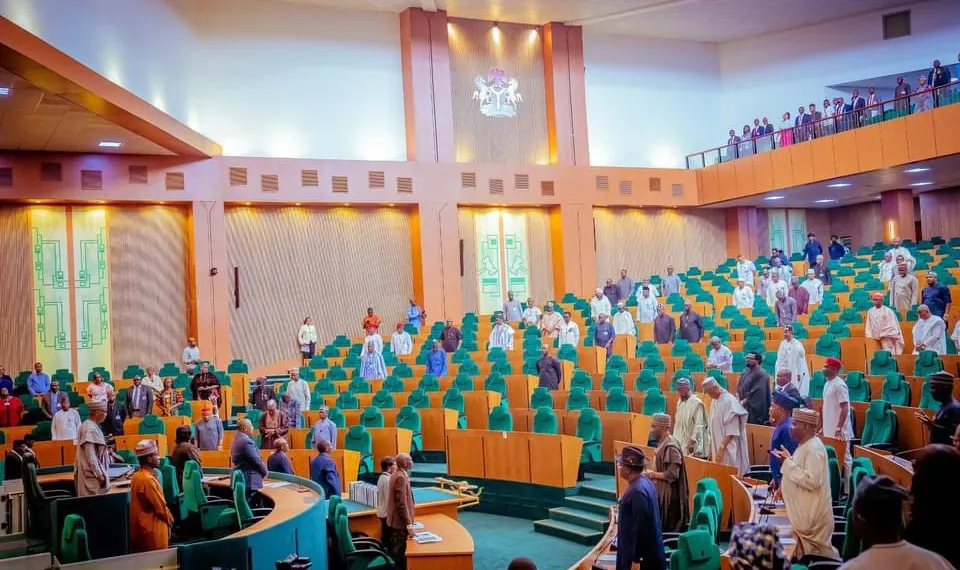
The House of Representatives has passed the constitutional amendment bill seeking to establish state police after 311 lawmakers voted in favour of the proposal, meeting the required two-thirds majority needed for constitutional changes.
The bill’s passage, however, triggered a protest from members of the minority caucus, who staged a walkout, alleging that due process was not followed during its consideration.
Deputy Speaker Benjamin Kalu, who chairs the House Committee on Constitution Review, led the consideration of the committee’s report and urged lawmakers to support the proposed legislation before the House proceeded to electronic and virtual voting. A total of 311 lawmakers voted in support of the bill, satisfying the constitutional threshold for its passage.
Despite supporting the idea of state police, members of the minority caucus opposed the process used to pass the bill. Led by Minority Leader Fred Agbedi, the opposition lawmakers walked out of the chamber before later addressing journalists.
The minority lawmakers said they supported the establishment of state police but alleged that there were breaches of the Constitution and the House Standing Orders during the consideration of the bill. Meanwhile, Chairman of the House Committee on Defence, Babajimi Benson, defended the process adopted by the House.
The House also approved a separate bill establishing the Federal College of Fisheries Technology and Marine Engineering in Rivers State before adjourning plenary until September 15, 2026. The passage by the House comes four weeks after the Senate approved the same constitutional amendment.
Under the proposed legislation, Nigeria’s existing policing structure would be replaced with a dual system comprising a Federal Police Service and State Police Services. One of the key provisions empowers state governors to appoint commissioners of police for their respective states, subject to confirmation by the state Houses of Assembly.
The bill also outlines the relationship between governors and state police commands. Section 17(6) provides that a governor may issue lawful written directives of a general policy nature to the state Commissioner of Police on matters relating to public safety and public order. To address concerns over potential abuse of state police, lawmakers included safeguards aimed at protecting political rights and civil liberties.
Section 17(7) states that a state Commissioner of Police “shall not arrest, detain, investigate or deploy force against any person, political party or group merely for criticizing the government except in accordance with the law.” The provision is intended to prevent state police from being used against political opponents, journalists, activists and other critics while ensuring all law enforcement actions comply with existing legal procedures.
President Bola Tinubu transmitted the executive bill to the National Assembly as part of efforts to reform Nigeria’s security architecture. According to the President, the legislation seeks to establish a legal framework that allows states to operate their own police services alongside the Federal Police Service.
Tinubu said the proposed amendment is a key component of broader efforts to strengthen the country’s security system, improve internal security, enhance grassroots intelligence gathering and boost the capacity to respond to emerging security threats.


Intel Benefits From a New Shift in A.I. Spending

Tinubu’s civil forfeiture case long resolved, Presidency tells Atiku

NSIB begins probe on Enugu air incident

Coke on its rebrand accidentally nailing Gen Z’s ‘fridge cigarette’ joke: ‘building on on the things people already know and love’

Weâve passed darkest tunnel and now running a stable economy â Tinubu

Saudi prince found de@d in luxury London hotel with cocktail of party drugs found in his system pictured for the first time

Democratic Voters Keep Defying the Party Establishment

 Investigation2 days ago
65-year-old married female teacher blindfolded and tied 10-year-old schoolboy to bed before having s3x with him
- Investigation2 days ago
âBusinesses are dy!ng in South Africa. Nobody is making money – South African man decries low patronage days after anti-immigrant protest
- World3 days ago
Trump Is Caught in the Trap He Set
- Investigation2 days ago
"I ‘m fine and healthy" – Video of late Mary Habila debunking her d3ath rumours 3 days before she d!ed at Umahi’s residence
- National2 days ago
INEC Officials Accused of Demanding ₦2,000 for PVCs in Onitsha [VIDEO]
- National2 days ago
CBN opened domiciliary accounts for Gbajabiamila-linked PFIPC on accountant-general’s order before N400 million bribe probe: Cardoso
- Investigation2 days ago
âl did not k!ll him, he d!ed on top of me" – Sani Abacha’s mistress says
- News3 days ago
Police nab two suspects over ₦39m bank account theft in Borno