World
The cost of running the White House, from staff salaries to subscription services

This Video Is Trending Right Now
Keeping the White House running is no small feat — and comes at no small cost.
With 132 rooms, 35 bathrooms, and a kitchen capable of serving dinner to as many as 140 guests and hors d’oeuvres to more than 1,000, looking after the residence is a lot of work.
Then there’s the cost of White House operations, which includes tens of millions of dollars a year in staff compensation and travel.
Business Insider compiled a list of costs associated with running the White House using data from the Office of Management and Budget and government spending data.
They include a mix of approved funding, money committed to be spent, and full-year estimates. Typically, White House expenses are funded by taxpayers through congressional appropriations. Some costs, such as current renovation work, are listed as reimbursable, meaning that another source will repay the account.
Here’s a breakdown of some of the costs of running the White House.
White House Executive Residence personnel

Butlers, housekeepers, chefs, doormen, florists, and electricians, among other staff, work to keep the White House running, all under the purview of the White House’s chief usher.
About 90 to 100 staff work at the Executive Residence, according to the White House Historical Association.
The Executive Residence reported roughly $9 million in personnel-compensation obligations for fiscal 2025. That included roughly $8 million for permanent full-time staff and $1 million in other employee pay. It also reported about $3 million in employee benefits.
OMB estimates the same compensation and benefit costs for fiscal 2026. For fiscal 2027, it proposes about $11 million in compensation and $4 million in benefits.
Executive Residence supplies

For fiscal 2025, communications, utilities, and miscellaneous charges were roughly $1 million, and another roughly $1 million in supplies and materials.
The OMB estimates similar amounts for fiscal 2026 and proposes the same figures for fiscal 2027.
White House Office personnel compensation
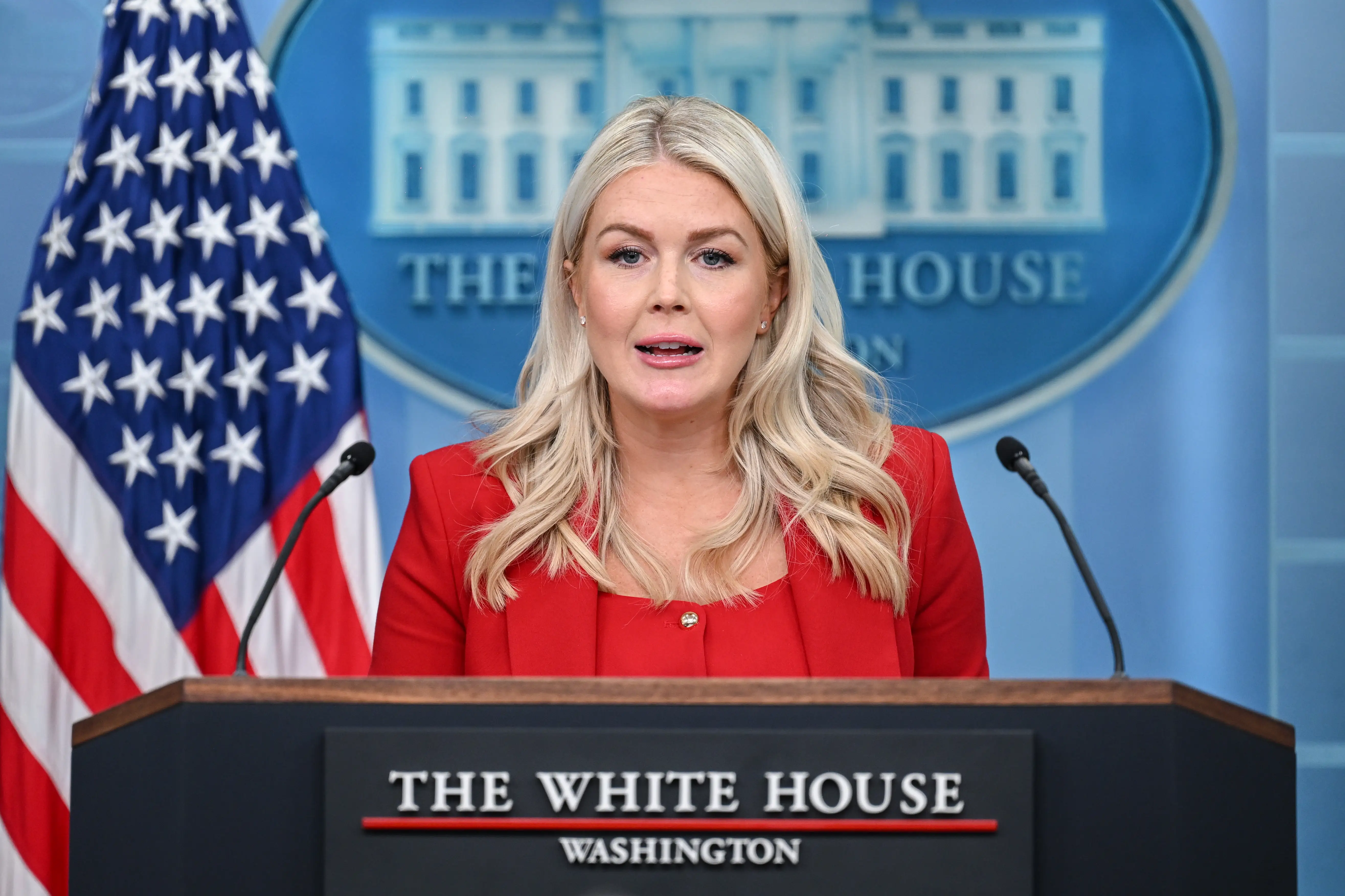
A separate account pays for White House Office staff and operations, including advisors and administrative staff who directly support the president. As of July 1, 2026, there were 411 White House staffers, including 365 employees and 46 full- or part-time detailees, according to the annual report to Congress on White House Office Personnel.
Salaries and employee benefits make up most of the White House Office’s operating budget.
Some of the highest-paid White House staffers include Chief of Staff Susie Wiles, Press Secretary Karoline Leavitt, and Director of Speechwriting Ross Worthington, who each earn $195,200, according to a recent personnel report. While nothing to sniff at, these government salaries lag behind what professionals often earn in the private sector.
Congress appropriated $78.9 million for White House staff and operations in fiscal 2026, the same amount appropriated for fiscal 2025.
For fiscal 2025, the White House Office recorded about $43 million in compensation for permanent full-time staff. OMB estimates that this will rise to about $51 million for fiscal 2026 and proposes the same amount for fiscal 2027.
The president’s compensation

The salary for the president is fixed at $400,000, plus a $50,000 allowance for official expenses.
Before taking office in 2017, Trump said he would not take home his presidential salary. During his first term, he accepted the payments and donated them to federal agencies.
Trump has said he is continuing to forgo the salary during his second term. The White House has not publicly detailed where the payments have gone instead,
“In the history of our country, there’s never been a president that waived his salary. I’m the only schmuck. I get no credit for it,” he said at an event in Rome, Georgia, in February.
The New York Times reported that John F. Kennedy and Herbert Hoover also donated their presidential salary to charity.
White House Office personnel benefits
Another major White House Office staff and operations expense is personnel benefits, such as health insurance, life insurance, and retirement plans.
In fiscal 2025, the White House Office recorded about $15 million in civilian employee benefits. OMB estimates about $16 million for fiscal 2026 and proposes the same amount for fiscal 2027.
The White House Office also recorded about $1 million in benefits for former personnel in fiscal 2025.
Transport of personnel
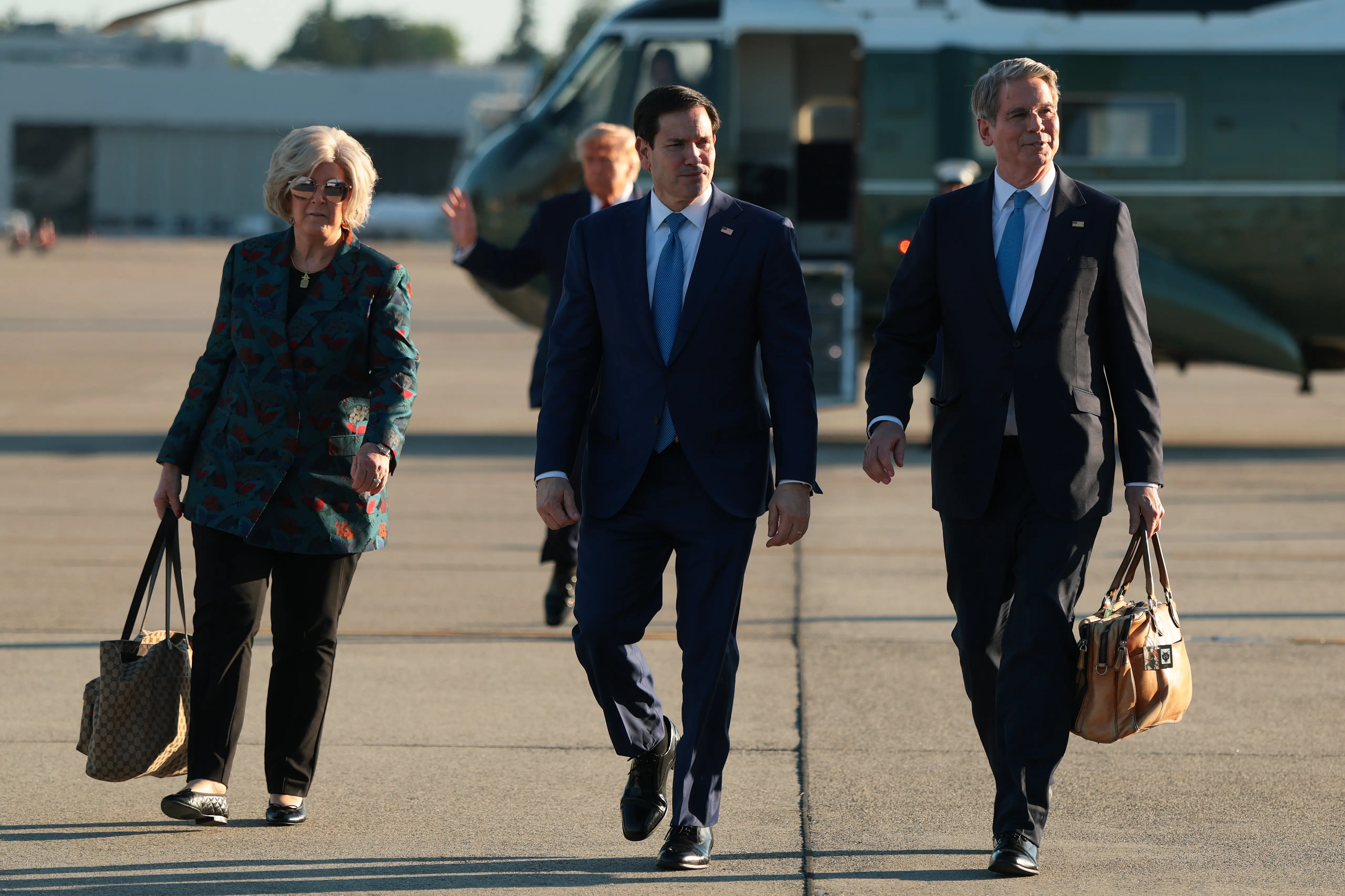
One of the White House Office’s largest non-personnel expenses is employee travel and transportation.
In fiscal 2025, the White House Office committed about $3 million for travel and transportation of persons. OMB estimates $4 million for fiscal 2026 and proposes the same amount for fiscal 2027.
Tools and outside services

Similar to the Residence, White House Office supplies and materials totaled $1 million in fiscal 2025, with similar amounts estimated for fiscal 2026 and proposed for fiscal 2027.
Figures for printing and reproduction were also at $1 million.
In fiscal 2025, communications, utilities, and miscellaneous charges were $2 million, with $1 million estimated for fiscal 2026 and the same proposed for fiscal 2027.
Some of the charges include subscriptions and media services. Federal spending records show obligations of $58,294 for Bloomberg access and $25,000 for a music subscription for fiscal year 2026.
Repairs and restoration
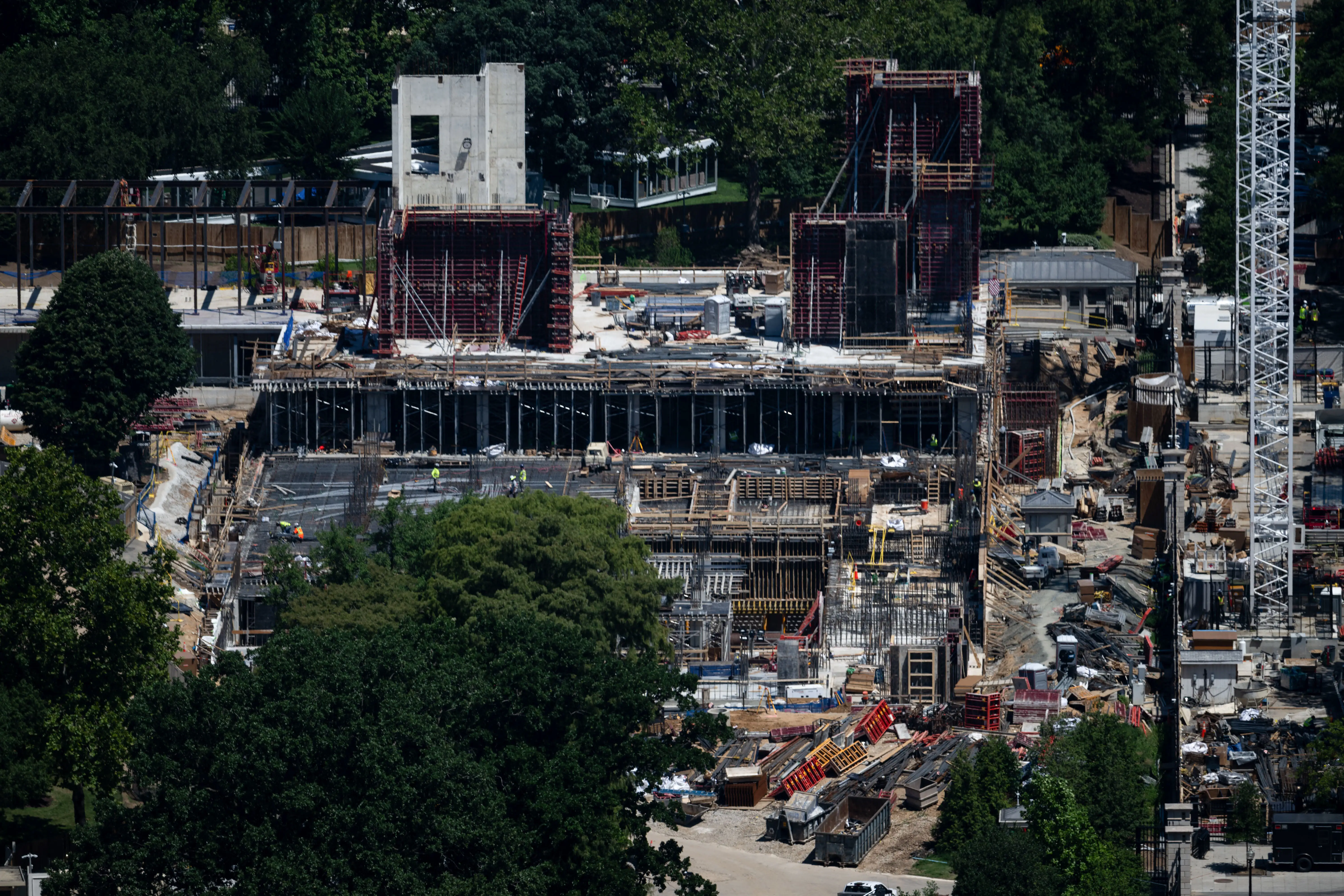
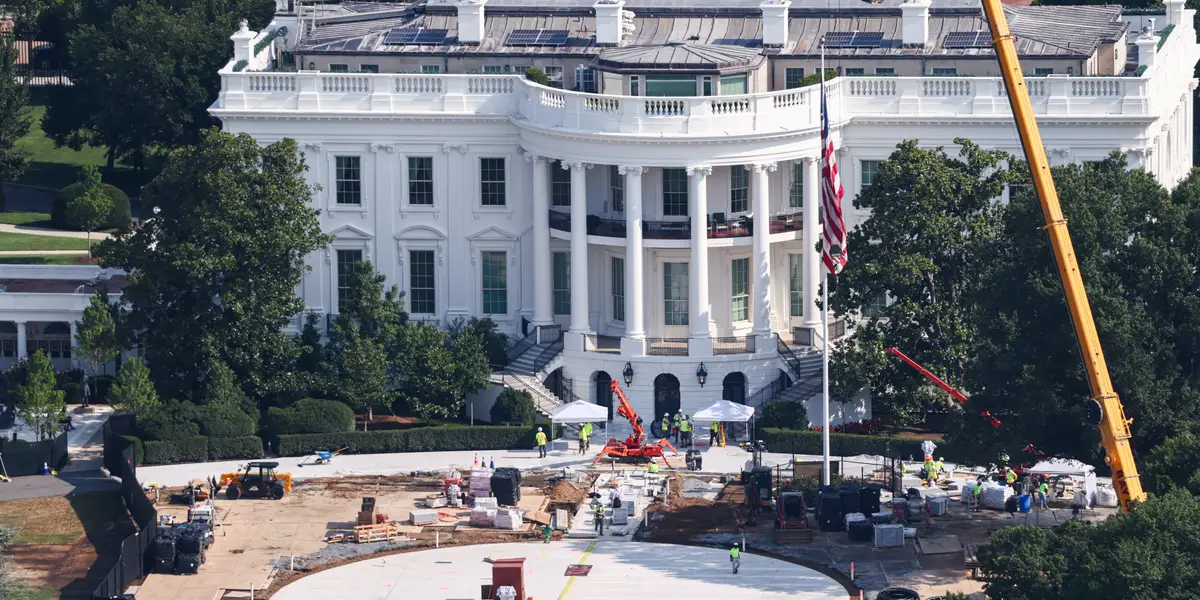
As a historic building, the White House requires regular maintenance and has undergone several restoration projects over the years.
For fiscal 2026, Congress appropriated about $2.5 million for routine White House repairs and restoration, including maintenance, safety and health work, and preventive maintenance.
Separate renovation costs have risen significantly. OMB estimates $377 million in reimbursable repair and restoration obligations for fiscal 2026. The budget document does not specify which projects the figure covers, or whether it’s related to the White House ballroom project.
President Trump announced plans to build a White House ballroom, which was originally estimated to cost about $200 million, though he said it could be between $300 million and $400 million in March.
Trump has said multiple times that the ballroom itself would be paid for by him and private donors, which include companies like Apple, Amazon, and Meta, as well as individual donors.
Security

White House security is funded through the broader Secret Service budget.
Congress appropriated approximately $3.25 billion for the United States Secret Service for fiscal 2026, including about $1.4 billion in protection-specific funding. Those figures cover the agency as a whole, rather than the cost of protecting the White House alone.
Security funds aren’t just for protecting the president and his immediate family. The agency also protects the vice president, the president-elect and vice president-elect and their immediate families, as well as former presidents, their spouses and their children under 16.
The Secret Service said it does not provide “detailed public reporting on its use of funding or personnel for protective missions, and staff move back and forth between protection and criminal investigation activities as duties require.”
Read the original article on Business Insider


Habila’s Body Flown to Abuja for Autopsy Following Death at Umahi’s Residence
Global economy gets a lift as AI chip boom meets low U.S. jobless claims

Fake Or Real?? — Pastor Chris Heals 10 Crippled People And 10 Bedridden Patients On The Spot

Police probe killing of Ebonyi neighbourhood watch operative

IMF Sounding Alarm: Central Banks Must Fortify AI Governance Against Systemic Financial Risks
âOne of my colleagues took the HIV prevention injection, Lenacapavir, and started experiencing this reaction shortly afterâ â Nigerian nurse

GOP silent amid accusations it’s using shady group to meddle in Dem primary

 Investigation2 days ago
Iâm running for a fourth term as President of the United Statesâ – President Trump
- Investigation3 days ago
âI hate when men call women gold diggers. If you can’t afford it, don’t dateâ â Actress Bukky Wright shares her views on relationships
- Investigation3 days ago
âI am in the era of overcoming my fear" – Nigerian acid attack survivor writes as she reveals her amazing transformation after getting a beauty makeover
- Investigation3 days ago
âThey believe Presidency will write resultsâ â Kwankwaso speaks about Governors joining the APC
- Investigation21 hours ago
âThe Olodo uprising term was not coined by meâ â Nigerian musician Ycee
- Society3 days ago
16-Year-Old Girl’s Multiple Marriage Proposals Spark Debate as Sister Seeks Opinions
- Investigation2 days ago
Iâve never seen N1bn cash in my life – Senator Ali Ndume says as he denies intermediary claim
- Investigation2 days ago
IG did not issue âshoot-on-sightâ order in Benue- Police