World
Trump has no remaining levers to pull as oil hovers near the $100 ‘psychological’ threshold

This Video Is Trending Right Now
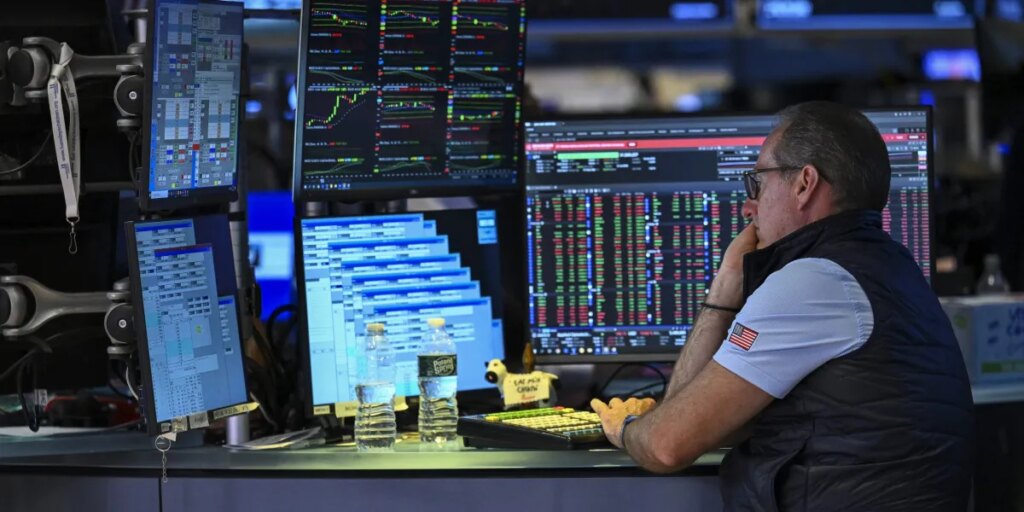
President Donald Trump is essentially out of “levers” to pull during a second phase of the Iran war as oil prices again flirt with the $100 per barrel “psychological” threshold that makes energy markets jittery.
With global oil and fuel emergency reserves already dwindled and fighting spreading to the Red Sea—Saudi Arabia’s alternative outlet for oil exports—the concern is the U.S. faces either escalation or capitulation, energy and geopolitical analysts said. That means expanding the military operation to include so-called boots on the ground or ceding the now-infamous Strait of Hormuz to Iran to control and charge de-facto tolls, called service or administrative fees in a thinly veiled effort to avoid violating international maritime laws.
The big question now is whether Trump—after some short-term period of escalation—will choose the so-called “TACO” route, said Dan Pickering, founder of the Pickering Energy Partners consulting and research firm. The “Trump Always Chickens Out” term was coined last year after Trump repeatedly backed down from higher tariffs and other threats. And market sentiments remain that something will likely have to give well before the November midterm elections.
“You either ‘TACO’ or you turn up the heat—and things get worse before they get better,” Pickering told Fortune. “If you think that the midterms are the pressure point, doing something that influences price and sentiment in the short run just looks challenging.”
After the interim peace deal was shredded and the military conflict escalated earlier this month, oil prices rapidly rose back above $100 per barrel—before dipping back below on Friday—after the Yemeni Houthis opened fire on two Saudi Arabian oil tankers in the Red Sea’s Bab el-Mandeb strait.
The U.S.—and the rest of the world—has depleted most of its emergency reserves; a gas tax holiday is unlikely because it requires approval from a splintered Congress; U.S. oil producers and refiners already are churning out products near all-time highs; and the administration has already waived the Jones Act—allowing allow more ships to move fuelfrom the U.S. Gulf Coast to the more barren West and East coasts. Elsewhere, China already has dramatically decreased its oil imports—keeping prices from spiraling near record highs.
“Most of these things have already been put in place in round one,” Pickering said. “There’s not a lot of other demand levers that you can pull.”
If both the Bab el-Mandeb and the Strait of Hormuz are nearly shuttered, Pickering said, the oil price could easily rise in August back near the late-April high of $124 per barrel. Already, the average price of a gallon of regular unleaded gasoline in the U.S. is back above $4.10 and rising.
“If we wind up with a de-facto closure of the strait and this Houthi threat shuts down the Red Sea, then I think it gets bad pretty fast during August,” Pickering said. “We don’t have multiple months because we’re already starting from a tougher spot. It’s going to be on us pretty quickly.”
And a flashing $100 oil signal is adding more pressure, he said, even if there’s a negligible physical difference from $99 per barrel. “Triple-digit [oil] is bringing people out of the woodworks. It makes people pay attention. There’s this psychological barrier of triple-digit oil prices that signals more significant problems than a $93 oil price.”
The Iran perspective
Iran now sees itself operating from a position of leverage and strength, showing a willingness to kill the interim peace deal and draw out the conflict, even having sustained immense losses to its leadership and economy.
Iran wants full control over the Strait of Hormuz and seems unwilling to settle, analysts said.
“It’s unlikely Iran is going to open the strait—at least for now, under current conditions—unless the U.S. agrees to let [Iran] control it and toll it,” said Andy Laperriere, head of U.S. policy at Piper Sandler, in a note. “[Iran] probably figures the deal it will get tomorrow is better than the deal it can get today, so it keeps playing with Trump.”
The blunt bottom line is that Trump has no “real compromise” choice.
“There is no ‘diplomacy’ option available to Trump. He can either fight—with likely unsatisfactory results—or surrender control of the Strait of Hormuz to Iran,” the note added. “For now, he chooses to fight.”
But the clock is ticking and the math is publicly available data. Just look at the U.S. Strategic Petroleum Reserve (SPR).
The SPR peaked above 726 million barrels during the last week of 2009 and it’s down nearly 60% to 311 million barrels as of last week—the lowest level since early 1983 when it was first being filled up. The SPR was at 415 million barrels as recently as late March, losing more than 100 million barrels in just four months.
Trump authorized the withdrawal of up to 172 million barrels, which would bring the SPR just below the historic, consensus minimum operation threshold of about 250 million barrels. Below that level, it becomes difficult to pump oil out of the depleted underground salt caverns in Texas and Louisiana that comprise the SPR.
The U.S. Department of Energy recently countered that “cavern mechanics” would allow the SPR to go as low as 70 million barrels. Even if that’s technically accurate, it would still become much more challenging to extract the oil well below 250 million barrels, likely leaving any technical minimum irrelevant. And oil markets are not interested in even flirting with such low numbers.
“We’re no longer talking about hundreds of millions of barrels; we’re talking about tens of millions of barrels,” Pickering said. “Additional SPR releases beyond what’s authorized would seem like you’re getting close to scraping [storage] bottoms. That’s not just in the U.S., but other places as well.”
So, what’s the solution? “Your answer is to get a deal with the Iranians, and they don’t seem to want to make a deal.”


What a Journey Through Wartime Iran Revealed

Insecurity: Some army chiefs must be held accountable – Sam Amadi

Wildfire Smoke Chokes Skies in Spain and France

He rears camels – Nigerian army says as it clears man detained over alleged ISIS links

Some Attacks and U-Turns, but Ships Sail Red Sea Despite Houthi Blockade

I’m a former McKinsey consultant who finally found joy after leaving the corporate world to start my own microbakery

Who Are the People Out Protesting in India?

 Investigation3 days ago
Married woman humiliated after allegedly being caught cheating on her husband with another man in Kogi community
- Investigation2 days ago
âIt is an honour to stand with you in fight against terroristsâ- Trump tells Tinubu
- Society2 days ago
FULL TEXT: Trump’s letter to Tinubu
 Breaking2 days ago
âFailed nation, failed parenting and lack of home training’- Lawyer, Deji Adeyanju blasts podcast host for saying a poor man has no place in her heart’
- Investigation3 days ago
âDon’t let anyone pressure you to stop repeating your clothesâ â Businesswoman Sharon Adeleke encourages repeating outfits
- News3 days ago
Yomi Gold Breaks Silence After Business Losses
- Breaking3 days ago
âl did not k!ll him, he d!ed on top of me" – Sani Abacha’s mistress says
- Investigation3 days ago
ââGo home, Nigeria is your home. We wonât accept you in South Africa”- South African women hurl anti-immigrant slurs at former Miss Universe Nigeria, Chidimma Adetshina amidst her deportation court case