World
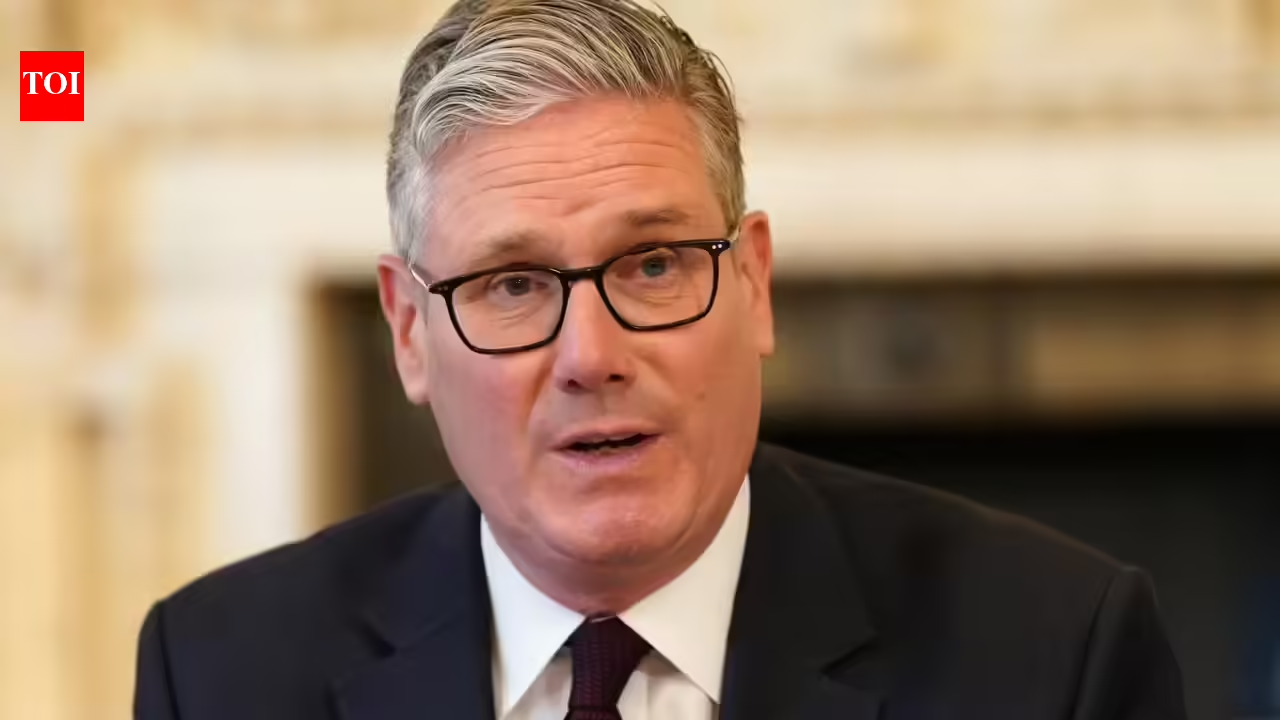
Why did Keir Starmer leave 10 Downing Street? Former UK PM opens up on 'intensely personal' decision

This Video Is Trending Right Now
Outgoing UK Prime Minister Sir Keir Starmer has said his decision to resign as Labour Party leader and prime minister was an ‘intensely personal’ one, taken with his wife and children during a family weekend away at Chequers, the official country residence of the British prime minister.Speaking to the BBC in his first interview since announcing his resignation, Starmer said the decision came after careful consideration of what was best for himself, the country and the government.“I grappled with what was the best thing to do for me, for the country, for the government. In the end it became an intensely personal decision. And that’s why it was a decision taken ultimately when Vic and I were away with the kids,” Starmer said.Starmer said he reached his final decision during a family getaway at Chequers, where he spent two days with his wife Victoria and their children before making the announcement on June 22.“We just spent two days together as a family and that’s when I came to my final decision. Taking the decision that your political career is over, it is an intensely personal matter, or at least it was for me,” he said.The 63-year-old Labour leader also confirmed that he would continue to serve as the Member of Parliament for his central London constituency after leaving office but would avoid interfering in the work of his successor.“(I will be) keeping my mouth shut, rather than giving constant advice to my successor about what they should be doing,” he said.Starmer’s resignation has triggered a Labour leadership election, with former Greater Manchester Mayor Andy Burnham widely expected to succeed him.Although Burnham is seen as the frontrunner, Starmer said he would fully support whoever becomes the next Labour leader and prime minister.“I’ve never had any personal animosity towards Andy Burnham,” he said, adding that he would ‘do everything I possibly can to make sure’ the next government succeeds.Reflecting on his time in office, Starmer warned that his successor would continue to face the same international and domestic challenges.“Whoever is my successor is going to face the same global conflict. We keep saying, and it’s true, we’re in a more dangerous and volatile world than we’ve been in for probably most of my lifetime. That’s not just a phrase, that’s reality,” he said.“That’s not going to change. And the domestic challenges aren’t going to change,” he added.Responding to criticism that he spent too much time dealing with international affairs, Starmer rejected suggestions that future prime ministers could focus less on global diplomacy.Asked whether his successor could spend less time on international issues, he replied, “No, I don’t think it is possible.”“There’s often this discussion – what’s the right balance between dealing with international affairs and dealing with domestic affairs? They’re one and the same thing,” he said.Starmer also defended his record as Labour leader, saying his years rebuilding the party before the 2024 general election formed a key part of his political legacy.“The Labour Party arguably could have been lost, but I stepped up as leader and with others we saved the Labour Party,” he said.He described Labour as being ‘politically, financially and morally bankrupt’ when he became leader and said rebuilding it had been ‘hard and bloody work.’However, Starmer acknowledged that he stepped down because Labour MPs no longer believed he was the right person to lead the party into the next general election.Despite leaving office, he said he planned to remain in Parliament until at least the next general election.


NDDC Donates Relief Materials to Nigerian Correctional Service in Rivers

Ex-Jigawa Governor Lamido criticises Pantami over past ‘infidel party’ remark on PDP

2026 World Cup: Brahim Diaz names team he wants Morocco to play in quarter-final

Ukraine confirms devastating strike on major oil terminal in Russia's St Petersburg
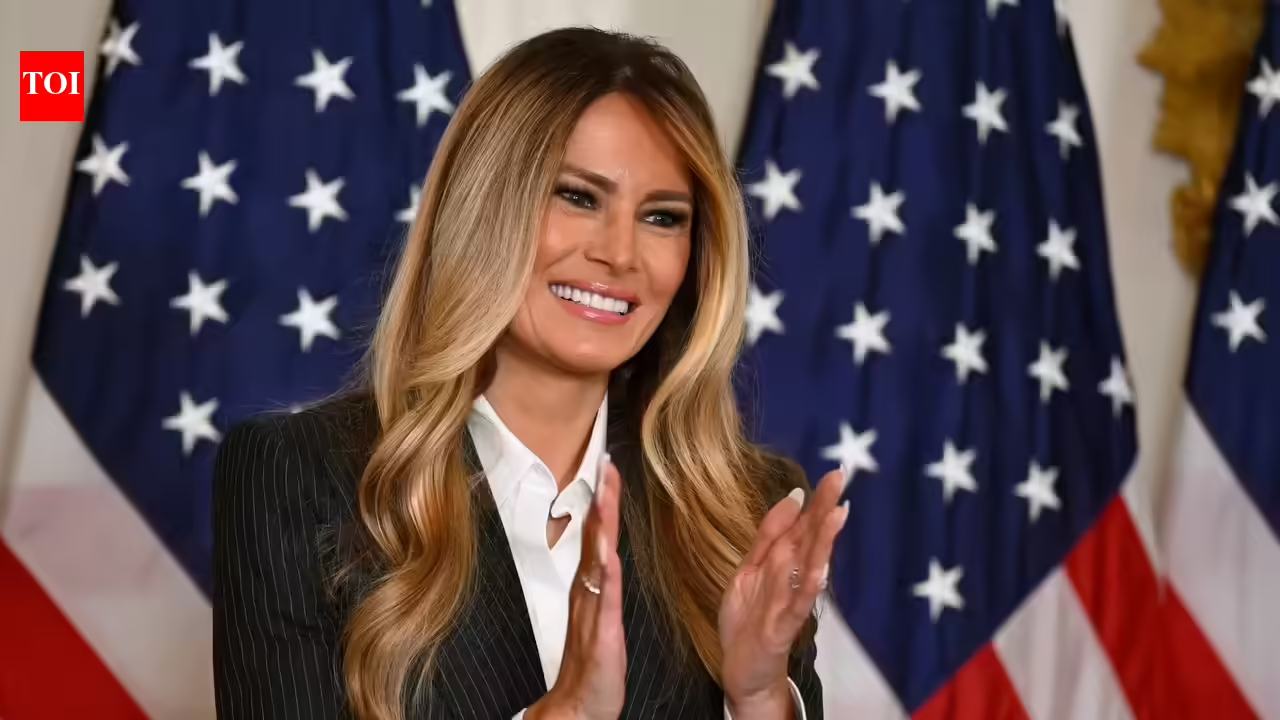
'I want this on Donald's desk by August recess': Melania Trump gives Congress private deadline to pass her bill

100 riot police guard England hotel as team receive hostile reception in Mexico
100 riot police guard England hotel as team receive hostile reception in Mexico

 Society2 days ago
Iyabo Obasanjo clarifies father’s real age
 National10 hours ago
Against Nigerian Law, CBN Deputy Governor Emem Usoro Allows Her Eleven Years Old Twin Daughters To Be Company Boss
- Investigation2 days ago
Eight de@d and 13 injured after being hit by truck ‘being driven by child’
- Breaking3 days ago
"I would have contacted HIV or Hepatitis B if I had stayed" – Nigerian woman says as she reflects on her failed marriage
- Breaking2 days ago
Panelists and guests on a podcast burst into laughter after 54-year-old US woman âmarriedâ to a 36-year-old Nigeria-based man, who she sends money to every month, laments about lack of love from him
- World2 days ago
WW3 fears explode as Cuba warns Donald Trump it's 'preparing for war'
- World3 days ago
Monaco bombing: Ukrainian oligarch's alleged mistress loses both legs as wife speaks out
- Investigation2 days ago
Man who took sister-in-law to court over his brotherâs £5m fortune lands huge bill after losing battle