Society
Why FG’s CNG policy fails to address high cost of transport fare in Nigeria — Experts

In late 2023, President Bola Ahmed Tinubu inaugurated the Presidential Compressed Natural Gas Initiative (PCNGI) with the aim of rolling out subsidy programmes and financing options to cover a large percentage of the upfront conversion costs for commercial transport operators, in a bid to lessen the burden of transportation following the removal of the fuel subsidy earlier that year.
With petrol prices rising to around N950 per litre at the time, Compressed Natural Gas (CNG) became an attractive option, considering that it is significantly cheaper, often retailing at a fraction of that cost per kilogramme, and can reduce vehicle running costs by between 40 and 70 per cent, according to analysts.
Although CNG presents a viable alternative to petrol and diesel, experts have reiterated that the implementation of the policy in Nigeria has not yielded the desired results, as transport fares remain high.
An economic expert, Mr Eric Igulla, explained that CNG conversion is very expensive, emphasising that although the Federal Government has introduced interventions to encourage adoption, such interventions have been largely insignificant.
He said, “To install CNG at a cost of between N1 million and N1.5 million is expensive for most households. If the government is saying the installation of CNG is cheap, it should bring down the cost of conversion to as low as N10,000 to N20,000, depending on the location.
“At that price, I think every taxi driver or car owner will be able to convert their vehicle. Aside from that, the distance from your house to a CNG station should not be more than five to 10 kilometres. At the moment, within my area, I have not seen any CNG station.
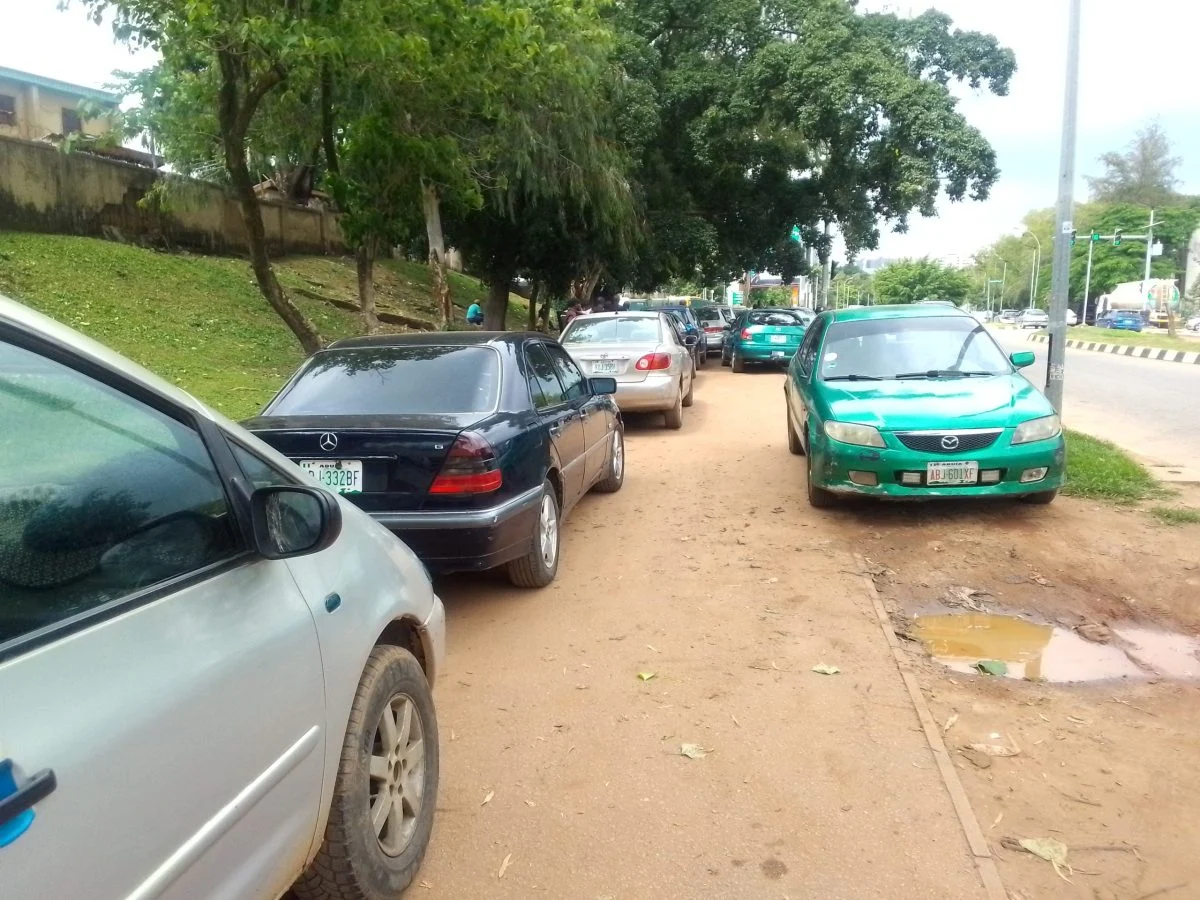
“What we see more are petrol stations. If you are using CNG and want to embark on a very long journey, you still have to buy petrol. Why? Because, as you travel, you will eventually get to a point where there is no CNG station to refill. Even if you find one, it takes time because there is always a queue.”
He explained that out of every 100 vehicles, only about two per cent use CNG, adding that conversion rates remain low because of the challenges associated with the fuel in the country.
Another challenge facing the policy is access to the product. A taxi driver who uses CNG, and who spoke to the Nigerian Tribune while waiting in a queue in Abuja, said: “I have been here since 5:44 a.m. this morning. If I am lucky, I will buy today. If not, I will have to wait until tomorrow.”
John Odeh told Tribune online that CNG is “cheap. Here at NNPC, it’s only N400 per Standard Cubic Metre (SCM), so with just N5,000 worth of CNG, I will be able to work for two days. The problem is getting the product,” he stated.
For another taxi driver, Philip Nuhu, spending one or two days trying to obtain CNG means there is little incentive to reduce transport fares.
“Remember the time you have lost trying to buy CNG. You have to recover that lost time,” he stated.
According to data recently released by the National Bureau of Statistics (NBS), “the average fare paid by commuters for bus journeys within cities per trip increased by 2.43 per cent, rising from ₦1,397.27 in April 2026 to ₦1,431.25 in May 2026.
“On a year-on-year basis, the average fare recorded a significant increase of 38.63 per cent compared to the ₦1,032.46 paid in May 2025.
“In another category, the average fare paid by commuters for an intercity bus journey per trip stood at ₦9,699.55 in May 2026, representing a 0.96 per cent increase compared to ₦9,607.41 recorded in April 2026. On a year-on-year basis, the average fare rose by 21.89 per cent, from ₦7,957.41 in May 2025,” the data revealed.
Analysts said the CNG policy lacks the infrastructure, technical skills and access to products required to make a meaningful difference. They explained that insufficient investment has gone into building refilling stations across the country.
“Even within major cities like Abuja and Lagos, there are few functional CNG filling stations,” said Emmanuel Ukar, a transport expert.
He lamented that it was difficult to identify vehicles using CNG.
“That is why transport fares have remained the same. Those using CNG charge the same fares as those using petrol-powered vehicles.
“There is no enforcement from any quarter, no means of identifying CNG vehicles, and no Federal Government CNG mass transit bus system robust enough to create an impact that will force transport fares down,” he noted.
In November 2023, President Bola Ahmed Tinubu unveiled plans to introduce one million Compressed Natural Gas (CNG)-powered vehicles by 2027.
Speaking at the launch of a pilot conversion centre in Abuja, the then Minister of Transportation, Senator Saidu Alkali, said the initiative was one of the measures introduced to cushion the effects of the removal of the petrol subsidy.
While launching the initiative at the Nigerian Institute of Transport Technology (NITT), Alkali said adopting a cleaner energy source such as CNG would reposition the transportation sector in urban centres across the country.
The minister, represented by the then Acting Director of Road Transport and Mass Transit Administration in the ministry, Akhidenor Cynthia, said, “The major consumption of fuel in the country is by vehicles, whose numbers have continued to increase. It is therefore believed that CNG is a cheaper and cleaner energy source.
“In a similar vein, studies have shown that CNG can earn the Federal Government over N200 billion from every one million cars converted,” the minister noted.
Also at the launch, Mr Toyin Subair, Senior Special Assistant to the President on Domestic Affairs, speaking on behalf of the Presidential Initiative for CNG, said, “I believe that, on behalf of my bosses, I can say to you that your labour has not been in vain. Your patience, investment and training to move Nigeria towards CNG have not been wasted.
“Compressed natural gas is the way to reduce the cost of transportation. We have the gas here, yet the government spends six billion dollars annually importing petrol, when we could instead earn foreign exchange and create all kinds of jobs here,” he stated.
Three years later, however, analysts believe that not enough has been done by the government to achieve the target of one million vehicle conversions, as the country still relies largely on petrol-powered vehicles for transportation, while commuters continue to bear rising transport costs driven by global fuel price fluctuations.


Troops foil ambush after IED attack in Borno

Alleged Forgery, Misconduct: LPDC rejects application to dismiss petition against SAN, 2 other lawyers

Egg companies made $1.22 billion as Americans paid over $6 a dozen; now they'll donate 53 million eggs in DOJ settlement

China Invitational: Golden Eaglets fall to Tanzania in opener
"Tinubu shame unto you…" Ozonna Soludo dances to song insulting politicians and their supporters, including his father

Udom Emmanuel hails Tinubu’s reforms, urges Nigerians’ support

Transcript: NASA administrator Jared Isaacman on "Face the Nation with Margaret Brennan," July 5, 2026

 National1 day ago
Against Nigerian Law, CBN Deputy Governor Emem Usoro Allows Her Eleven Years Old Twin Daughters To Be Company Boss
 World3 days ago
WW3 fears explode as Cuba warns Donald Trump it's 'preparing for war'
- Investigation2 days ago
Inside American businessman Michael Rubinâs annual White Party with A-list celebrities in attendance (photos/video)
- World1 day ago
Girl, 16, repeatedly raped by her older brother who 'saw his late wife in her'
- Investigation2 days ago
Oyo state govt denies VDMâs claim of paying ransom for release of abducted students and teachers
- Investigation2 days ago
"Sometimes a man can genuinely love a woman and still not marry her because his spirit isn’t at peaceâ â X user shares opinion
- News2 days ago
‘Villa of Love’ Announces New Reality Show with ₦100 Million Grand Prize and Interactive App
- Investigation2 days ago
âMay God protect meâ – Texas mom of fiveâs chilling last post before she was allegedly killed by two sisters