National
2027: N605 will be our starting price for petrol – Olawepo-Hashim

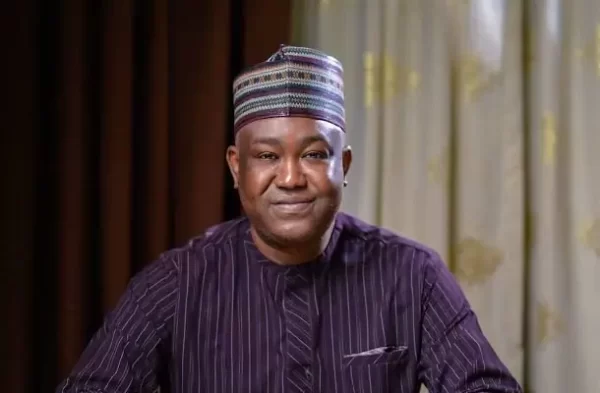
The Presidential Candidate of the Accord Party, Dr. Gbenga Olawepo-Hashim, has said Nigerians should not have to pay more than N605 per litre for petrol under an Accord administration, with the price potentially falling to between N200 and N300 if production costs and the exchange rate are stabilised.
Olawepo-Hashim, who has consistently opposed the removal of petrol subsidy, said the proposed ₦605 price would not amount to an artificial subsidy, insisting that it could be achieved without reducing government revenue or Federation Account Allocation Committee (FAAC) revenues.
“N605 per litre is our starting sustainable price for petrol. Nobody will buy petrol above N610 under our government. It could be as low as N200,” he said.
The Accord candidate argued that the focus should be on determining the actual cost of producing, refining, transporting and distributing petrol in Nigeria, rather than automatically benchmarking domestic prices against international market prices.
He described the previous justification for petrol subsidy removal as “accounting magic”, arguing that the difference between the domestic price and an international benchmark should not automatically be classified as a subsidy loss.
“Any time you sell a product above its legitimate cost of production, refining, transportation and insurance, you cannot call the difference between that price and an international benchmark a subsidy loss. That is opportunity cost,” he said.
Olawepo-Hashim said Nigeria needed an independent forensic audit of the petroleum value chain to establish the actual cost of delivering a litre of petrol to consumers.
He said such an audit should cover crude oil production, contracting, procurement, refining, transportation, storage, insurance, pipeline operations and distribution.
“Show Nigerians the books. Publish the production cost. Publish refinery cost. Publish transportation. Publish insurance. Publish every margin. Let the data speak,” he said.
According to him, the high cost of petroleum products in Nigeria should not simply be passed on to consumers without first examining the factors responsible for the cost.
Olawepo-Hashim questioned Nigeria’s relatively high oil production costs compared with other major oil-producing countries, citing contracting, procurement, insecurity, operational inefficiencies and possible cost inflation as areas requiring scrutiny.
“Before asking Nigerians to pay more, government must first explain why it costs so much to produce our own oil. If the cost is genuine, show us the evidence.
“If it is inefficiency, corruption or inflated contracting, fix it,” he said.
He said Nigerians were effectively bearing the cost of inefficiencies in the petroleum sector through higher production costs and pump prices.
“The Nigerian people should not pay for inefficiency twice. They should not pay for inflated costs inside the system and then be told that the resulting high price is the inevitable consequence of subsidy removal,” he said.
The Accord candidate said his proposed pricing framework would be anchored on two key factors — an appropriate production cost and an appropriate exchange rate.
He said an Accord government would target an exchange rate of between N525 and N700 to the dollar, arguing that exchange-rate stability would reduce the naira cost of petroleum-sector inputs and ease pressure across the wider economy.
“We will achieve this strictly by ensuring appropriate production cost and appropriate exchange rate,” he said.
Olawepo-Hashim stressed that lowering the pump price would not come at the expense of government revenue.
“The reduction will not be at the detriment of government revenue or below current FAAC. We are not going to make petrol cheaper by making government poorer,” he said.
He argued that lower energy costs could stimulate production, reduce transportation and manufacturing expenses, increase household purchasing power and ultimately broaden the economic base from which government generates revenue.
“Our objective is not simply cheap petrol. Our objective is a productive Nigerian economy in which affordable energy, stronger production and stronger government revenue reinforce one another,” he said.
Olawepo-Hashim said the projected N200 to N300 per litre price should be viewed as a potential medium-term outcome of reforms to Nigeria’s production costs and exchange-rate management, rather than an immediate price commitment.
“N605 is the starting sustainable price. If we get production costs right and achieve the exchange-rate target, the price could come down to N200 or N300,” he said.
He also proposed accelerated domestic refining, greater transparency in the petroleum value chain and measures to reduce waste and leakages.


Yinka Quadri Reveals Ogogo Last Words Hours Before His Death

Kano Declares September 1 Public Holiday for Takutaha Celebration

Police arrest man over N3.5m romance scam and s3xtortion

Abia at 35: Chidoka challenges Otti, public servants to build institutions that outlive governments

Lagos Twins Make History at LASU With First Class and Top Student Awards

Prince Harry, Meghan Markle and kids land in the UK six years after Megxit

Master of Escapes Arrested After Breaking Out of Prison 4 Times

 Investigation3 days ago
ISWAP leader orders Shura council memberâs execution over defiance
- Investigation2 days ago
How I survived as my husband and two children di£d after eating amala â Widow speaks
- Investigation3 days ago
Bayelsa police rescue woman after 26 days in kidnappersâ den, arrest suspect
- National3 days ago
Police uncover adulterated drinks warehouse in Warri
- Society2 days ago
Truck Driver Documents How Police At Tema Harbour Entrance Demand ¢20 Bribes But “Kills” Stubborn Drivers Who Fail To Pay
- Breaking3 days ago
Tinubu renews tenure of NAN MD, NTA DG
- National3 days ago
Aiyedatiwa won’t support candidate against APC – Aide
- Politics2 days ago
Nigeria’s latest inflation figures paradox of conflicting narratives – Ife